The US Department of Justice has made public a substantial but heavily censored collection of documents related to its investigations into the convicted sex offender Jeffrey Epstein. The release, which occurred on Friday, marks a significant moment in the long-running saga but has immediately drawn criticism for extensive redactions and potential non-compliance with a recent transparency law.
A First Batch with Notable Gaps
This initial tranche of files, dating back to a 2006 probe into Epstein on child prostitution charges, is just the first set planned for public disclosure. In a letter to Congress obtained by Fox News, Deputy Attorney General Todd Blanche stated that the volume of materials necessitates a rolling release. He acknowledged extensive redactions, including the protection of identifying details for more than 1,200 victims and their family members.
Among the viewable materials were photographs depicting Epstein socialising with a host of high-profile individuals. These images included former US President Bill Clinton, entertainers such as Michael Jackson, Chris Tucker, and Diana Ross, entrepreneur Richard Branson, and former British royal Prince Andrew. One notable photo shows Clinton in a swimming pool with Epstein's convicted accomplice, Ghislaine Maxwell.

Bipartisan Criticism Over Transparency Failures
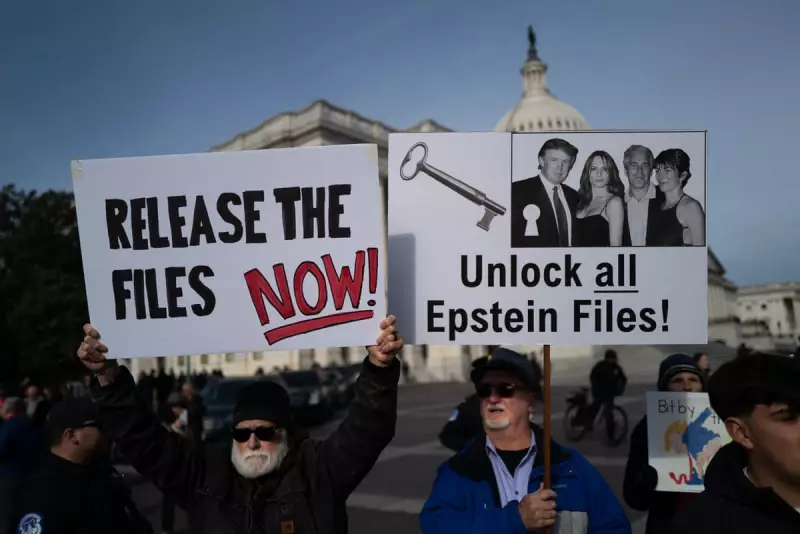
The document release has sparked bipartisan accusations that the Trump administration failed to fully adhere to the Epstein Files Transparency Act. This legislation, signed into law by President Donald Trump on 19 November, required the Justice Department to release all relevant, unclassified materials by 19 December.
Democratic Congressman Ro Khanna, a key proponent of the law, stated, "Technically they're not in compliance." He highlighted that the law demands the release of all unclassified documents and explanations for any redactions, criteria he believes were not met. Senate Democratic leader Chuck Schumer echoed these concerns, vowing to "pursue every option to make sure the truth comes out."
Republican Thomas Massie also joined the critique, writing on social media that the release "grossly fails to comply with both the spirit and the letter of the law." Conversely, White House Deputy Press Secretary Abigail Jackson defended the action, claiming it proved the Trump administration's transparency and that it had "done more for the victims than Democrats ever have."
Complex Backdrop and Ongoing Revelations
The release follows a complex political journey. Trump, who had previously opposed public disclosure and called concerns over his Epstein ties a "Democrat hoax," reversed his position in November, urging Republican lawmakers to support the transparency bill. Epstein, who was awaiting trial on federal sex-trafficking charges, died in jail in 2019.
Prior to this Justice Department release, congressional committees had already been publishing materials obtained from Epstein's estate. These included:
- Email exchanges from 2011, 2015, and 2019, with one in which Epstein claimed Trump "knew about the girls."
- Over 20,000 documents released by House Republicans.
- Dozens of photographs highlighting Epstein's connections to figures like Trump, Clinton, and Prince Andrew.
- A recent batch containing photos of lines from Vladimir Nabokov's novel Lolita written on a woman's body, travel documents, and images of notable people including Bill Gates and Woody Allen.
Angel Ureña, a spokesperson for Bill Clinton, sought to distance the former president, stating that those who cut ties with Epstein before his crimes came to light are distinct from those who continued associations afterwards.
The law does include exemptions, such as for materials that could jeopardise an active investigation, meaning the full transparency sought by many victims and lawmakers may not be achieved. Experts had warned that the disclosures might leave many questions about Epstein's network unanswered. The Justice Department now has 15 days from the release to provide Congress with a detailed list of what was published, what was withheld, and a summary of the redactions applied.