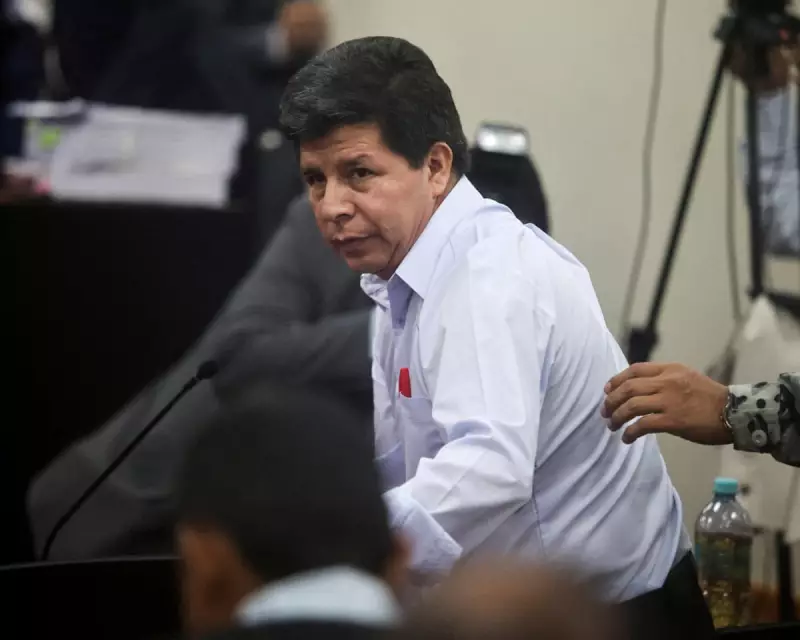
Peru's former president Pedro Castillo has been handed a significant prison sentence for his dramatic attempt to dissolve the nation's Congress and assume power by decree in late 2022.
The Verdict and Its Context
The Supreme Court of Peru delivered its judgment on Thursday, sentencing the ousted leftwing leader to 11 years, five months and 15 days in prison. The conviction specifically relates to charges of rebellion following his attempt to disband the opposition-dominated Congress on 7 December 2022.
Castillo, a 56-year-old former rural schoolteacher and trade unionist who had never held elected office before his presidency, was impeached by Congress and arrested on the very same day as his failed power grab. His decision to dissolve the legislative body was widely seen as an attempt to avoid an impeachment vote against him for alleged corruption.

A Failed Gambit and Immediate Aftermath
The former president's political manoeuvre backfired spectacularly when members of his own government turned against him. While attempting to reach the Mexican embassy with his family to seek political asylum, Castillo was intercepted and taken into custody.
Prosecutors had initially pursued a much harsher 34-year prison sentence and charged him with rebellion, abuse of power, and disturbing public order. The court ultimately acquitted him of the latter two charges while convicting him on the primary charge of rebellion.
Castillo has been detained at a special penitentiary facility in Lima reserved for former presidents, joining other incarcerated ex-leaders including Ollanta Humala (2011-2016) and Alejandro Toledo (2001-2006).
Broader Political Implications
The verdict arrives amidst significant political turbulence in Peru. Remarkably, it was delivered just one day after another former leftwing president, Martín Vizcarra, received a 14-year prison sentence for accepting bribes during his tenure as a regional governor.
Castillo's arrest and removal from office in 2022 triggered widespread protests among his core supporters—Peru's rural working class. The government's harsh response to these demonstrations resulted in at least 50 fatalities.
His successor, former vice-president Dina Boluarte, proved deeply unpopular during her tumultuous 22-month leadership period, which was marked by a severe security crisis before she too faced impeachment in October.
The case took another dramatic turn earlier this month when Castillo's former prime minister, Betssy Chávez, who was also facing charges, was granted asylum by the Mexican embassy. This development prompted Peru to sever diplomatic relations with Mexico, with Peruvian authorities not ruling out the possibility of storming the embassy to apprehend Chávez.