
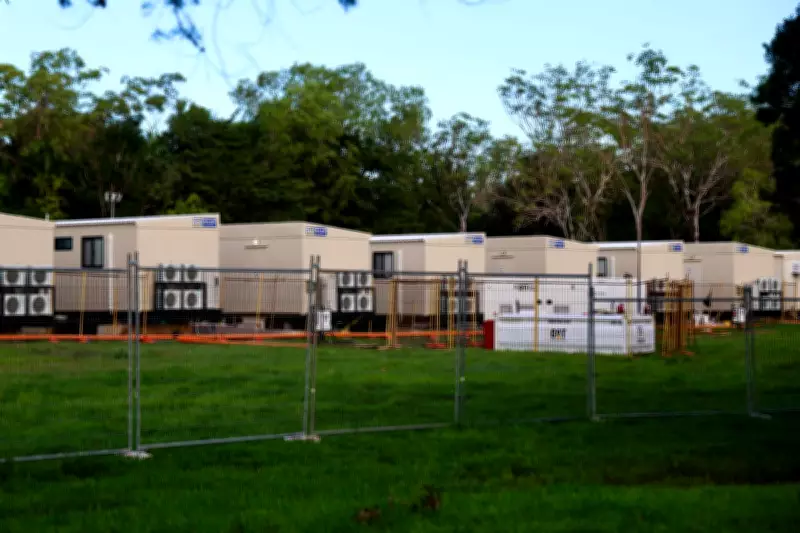
The Northern Territory government has relocated families from flooded remote Indigenous areas to a compound at the Batchelor Institute, where residents must sign in and out at a security gate, and vehicles and bags are routinely searched. Many evacuees have likened the facility to a 'prison camp'.
Evacuation Amid Record Flooding
In March, the Daly River in the NT reached a record peak of 23.93 metres, forcing families from Palumpa and Nauiyu to flee for the second time in four weeks. As the scale of the damage became clear, the NT government moved families from an evacuation shelter in Darwin to student accommodation and temporary dongas at the Batchelor Institute, about 100km south of the city.
Conditions at the Evacuation Centre
Residents say the once idyllic education setting on the edge of Litchfield National Park is now surrounded by a 10-foot temporary ringlock fence, erected after the evacuees moved in. Children run along the fence line while families wait anxiously for news to return home. Nauiyu traditional owner James Parry described the experience as being in a 'prison camp'. 'At night guards shine their torches into the window of my room, checking if people are sleeping. You don't do that to people,' he said. Residents must sign in and out at a security gate, and vehicles and bags are routinely searched. 'Women's bags are checked by men when they come back from the shops. Every car that comes in and comes out, they stop and search ... that's not a home. This is because we are Aboriginal people ... I just want my freedom.'
Exclusion of Support Services
Several Aboriginal organisations, including the Northern Land Council (NLC), Danila Dilba Health Service, and the Northern Australian Aboriginal Justice Agency (NAAJA), have been excluded from the emergency response and blocked from entering the evacuation centres without permission. Federal minister Malarndirri McCarthy was also prevented from entering the Batchelor site shortly after residents were relocated. NLC chair Matthew Ryan said he was refused entry when attempting to meet with traditional owners and was told future access would require 24 hours' notice and ministerial approval. 'It is disappointing and appalling behaviour,' he said. 'Traditional owners wanted to see me and speak to me ... but we were refused entry.' Ryan said security acted like 'pork chops' and treated his people with 'total disregard' by restricting access to services, family, and community leaders.
Financial Concerns
Residents are also facing financial challenges. Despite the NT government saying in March that it would freeze rent payments, evacuees are still being charged rent. The Aboriginal Housing NT CEO, Leeanne Caton, said evacuees were told they would have payments deducted to cover rent arrears, and regular rent payments are being taken and applied as credit to their accounts without individual consent. Additionally, flood payments for evacuees from remote communities have been quarantined, though the government says this is to ensure families replenish spoiled food.
Return to Damaged Homes
The Palumpa and Nauiyu communities have been evacuated due to floods four times in the past decade. On Sunday, nearly half of the residents were suddenly returned to Palumpa despite a boil water alert and 19 of the community's 50 houses remaining uninhabitable. The community has no power, no store to buy food, and damaged road access. On Monday, residents were told that if they did not agree to leave by Friday, they would have to make the 300km journey on their own. Barak Sambono said Palumpa has lost everything but the treatment in the evacuation centre has compounded people's trauma. 'We are just monkeys in a cage to them. This evacuation ... It's the biggest nightmare I ever had.'
Health and Education
Access to food remains limited, with residents relying on deliveries of dry goods. The local clinic has been heavily damaged and remains closed, with a temporary 'health hub' set up in a residential building for basic care. Nurses are working 24-hour fly-in, fly-out shifts with limited resources. School is for three hours a day, running as an 'activities-based program' out of a tin house and outdoor gazebos, despite temperatures exceeding 35C. NT Health said it is working with agencies to monitor the situation and assess health risks.




