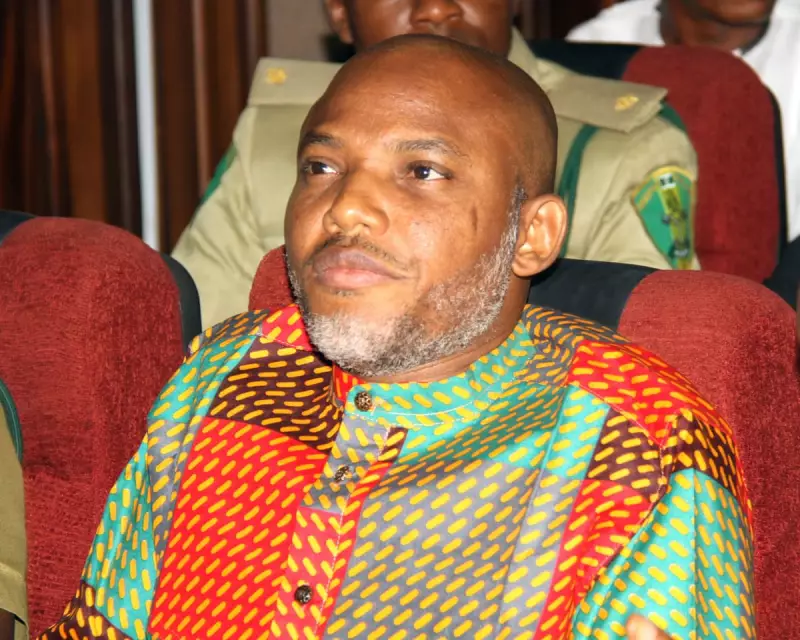
Biafran Separatist Leader Found Guilty in Nigerian Court
A Nigerian court has delivered a guilty verdict for Nnamdi Kanu, the leader of the separatist group Indigenous People of Biafra (IPOB), on charges related to terrorism. The presiding judge, James Omotosho, ruled that the prosecution successfully demonstrated how Kanu used his position to incite violent acts against both security personnel and civilians in south-eastern Nigeria.
Judge Omotosho was unequivocal in his judgment, stating, "His intention was quite clear as he believed in violence. These threats of violence were nothing but terrorist acts." The 58-year-old, who also holds British citizenship, represented himself during the proceedings after dismissing his legal team. His conduct in court was described as "unruly", leading to his ejection from the courtroom after he challenged the judge on the legal basis of the charges.
A Long-Running Legal Battle and Separatist Agitation
The legal troubles for the IPOB leader are not new. Kanu was initially taken into custody in October 2015, facing a series of charges that included treasonable felony. After being granted bail eighteen months later, he disappeared from public view until a highly controversial extradition from Kenya in 2021, an event his supporters have labelled an extraordinary rendition.

The conviction sits within the complex and volatile context of the Biafran separatist movement. The short-lived Republic of Biafra, which existed in the old eastern region of Nigeria, was reintegrated into the country after a brutal civil war that ended in 1970. Since then, various groups have emerged, protesting against the perceived political and economic marginalisation of the region.
IPOB, widely considered the most significant of these movements, long relied on Kanu's powerful oratory broadcast from Peckham-based Radio Biafra to rally support. During his imprisonment, a splinter faction known as the Biafran Government in Exile (BGIE) formed. Its self-declared prime minister, Simon Ekpa, was himself sentenced to six years on terrorism charges by a Finnish court in September.
Violence, Human Rights, and International Lobbying
Both IPOB and its offshoots have been accused of orchestrating a campaign of terror in south-east Nigeria. A key tactic has been the violent enforcement of "sit-at-home days" every Monday, which shut down businesses, schools, and all other activities. According to the consultancy SBM Intelligence, separatist militants have been linked to as many as 700 deaths since 2021. This includes an ambush in Abia state in May 2024 that killed five soldiers and six others.
The conflict has been marked by allegations of human rights abuses committed by military personnel as well. In 2017, the Nigerian government officially designated IPOB as a terrorist organisation. Since that time, Kanu has engaged US lobby firms in an effort to influence international opinion. These efforts have been tied by some Nigerian reports to the recent designation of Nigeria as a "country of particular concern" by former US President Donald Trump, who cited unverified claims of a 'Christian genocide'.
Ahead of the final verdict, it emerged that Kanu had written directly to Trump, alleging that a "Judeo-Christian genocide" is underway in south-east Nigeria, further internationalising the long-standing domestic conflict.