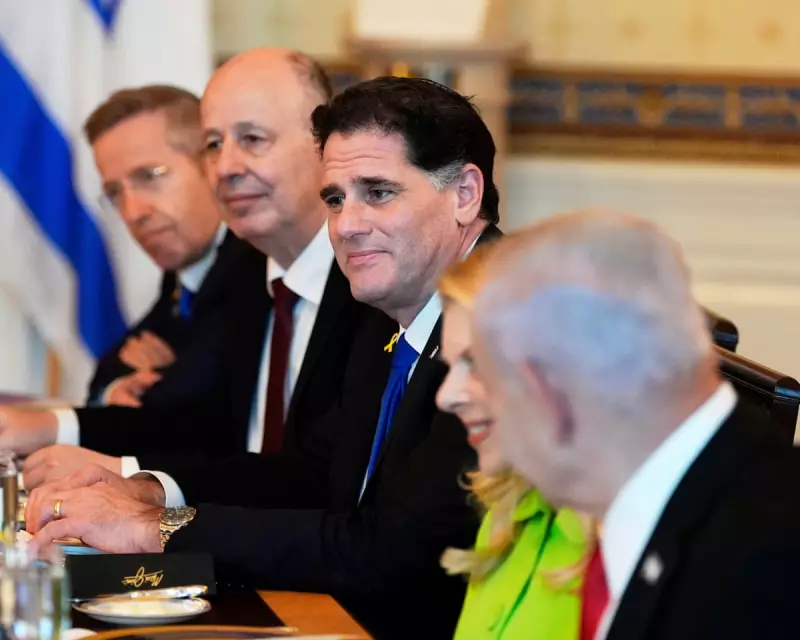
Ron Dermer, one of Benjamin Netanyahu's most trusted ministers, has stepped down from his role as Israel's strategic affairs minister following weeks of intense speculation within Israeli media circles.
Departure of a Key Netanyahu Ally
The US-born politician, who served as a crucial right-wing figure in Israel's government, confirmed his resignation after leading months of complex negotiations that ultimately resulted in the US-brokered Gaza ceasefire agreement implemented last month.
In his official resignation letter, the 54-year-old Dermer explained that he had committed to his family to limit his ministerial service to no more than two years. He had been originally appointed to the position back in 2022.

Dermer offered strong praise for Prime Minister Netanyahu's leadership, stating that the current government would be historically defined by both the Hamas attack on October 7th, 2023, and the subsequent two-year military campaign that followed.
Controversial Legacy and Political Fallout
The former ambassador to Washington wrote passionately in his departure message: "We rejected moral equivocation and fear to confront our enemies with clarity and courage. Two years later, we have dealt a devastating blow to Iran's terror axis and are now powerfully positioned to usher in an age of security, prosperity and peace."
However, Dermer's tenure attracted significant criticism from various quarters. Several commentators accused him of contributing to the prolonged duration of the Gaza conflict, with some suggesting he assisted Netanyahu in extending hostilities to potentially avoid the prime minister facing corruption charges if removed from office.
Dermer's appointment as lead negotiator for the truce talks in February had initially raised eyebrows among political observers. His limited military background, rare appearances in Hebrew-language media, and perceived insufficient grasp of Israeli language and culture made his selection particularly controversial.
Broader Political Context and International Dimensions
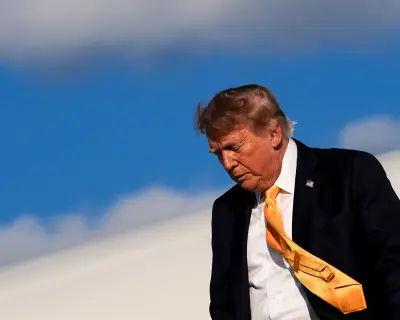
The ministerial resignation coincides with other significant political developments. On the same Wednesday, Israeli President Isaac Herzog received a remarkable communication from US President Donald Trump, who urged consideration of a presidential pardon for Netanyahu regarding his ongoing legal challenges.
Trump's letter stated: "While I absolutely respect the independence of the Israeli justice system, and its requirements, I believe that this 'case' against Bibi, who has fought alongside me for a long time, including against the very tough adversary of Israel, Iran, is a political, unjustified prosecution."
The ceasefire agreement that Dermer helped negotiate has yielded some tangible outcomes. Hamas has released all 20 living hostages it was holding captive and has returned the remains of 24 other deceased individuals. Four bodies reportedly remain unreturned.
The human cost of the conflict has been staggering. The Hamas incursion into southern Israel in October 2023 resulted in approximately 1,200 fatalities, predominantly civilians, with 250 people taken hostage. Israel's subsequent military offensive in Gaza claimed nearly 69,000 lives, again mostly civilians.
Meanwhile, Netanyahu has recently rejected renewed opposition demands to establish a powerful state inquiry into the security failures that enabled Hamas to launch its initial attack. The prime minister argued that such an investigation would lack "broad-based support" and suggested alternative formats might prove more effective.
Opposition politicians remain concerned that any government-appointed commission would possess limited powers and be more susceptible to political influence compared to an independent inquiry headed by the supreme court president.
With Israeli elections mandated within the coming year, many political analysts anticipate the possibility of earlier polling as the nation continues to grapple with the aftermath of the conflict and ongoing political realignments.