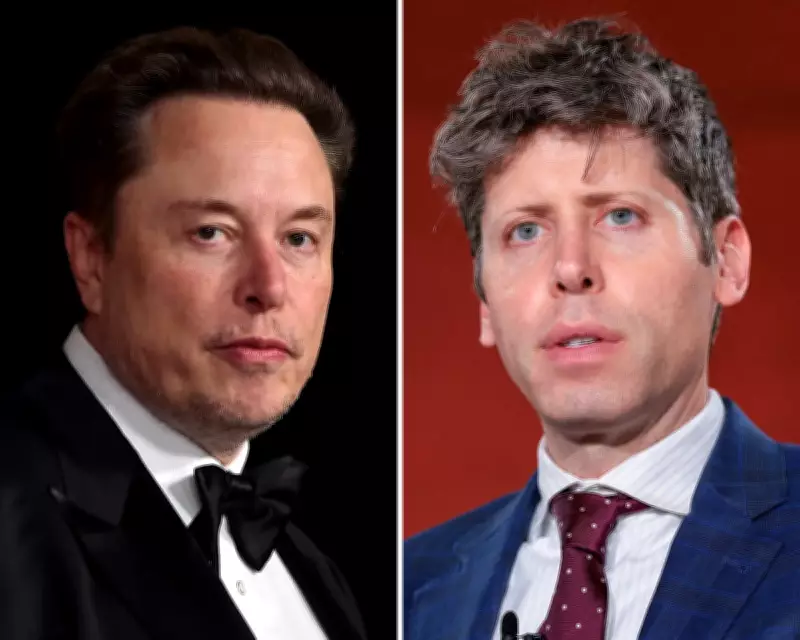
Elon Musk and Sam Altman faced off in a California courtroom on Tuesday as the trial over OpenAI's corporate structure began with dramatic opening arguments. The case, which pits the world's richest man against the CEO of the leading AI company, centers on claims that Altman and OpenAI president Greg Brockman violated a foundational agreement to prioritize humanity's benefit over profit.
Opening Statements: Two Versions of History
Musk's attorney, Steven Molo, told the jury that Altman and Brockman 'stole a charity' by pivoting OpenAI from a non-profit to a for-profit entity. 'They're going to make this lawsuit very complicated, but it's actually quite simple,' Musk testified. 'Which is, it's not OK to steal a charity. That's my view.'
OpenAI's lead attorney, William Savitt, countered that Musk's lawsuit is 'motivated by jealousy' and characterized him as an embittered co-founder seeking revenge after failing to take total control. 'Mr. Musk comes to this court saying promises were made to him ... that's not why we're here,' Savitt said. 'We're here because Mr. Musk didn't get his way at OpenAI.'
Musk's Testimony: From Co-Founder to Critic
Musk testified that he co-founded OpenAI in 2015 as a counterweight to Google's AI efforts, after a conversation with Google co-founder Larry Page. Musk said he asked Page, 'What if AI wipes out all humans?' and Page responded: 'That'll be fine as long as artificial intelligence survives.'
Musk detailed his role in launching OpenAI, including drafting the initial press release and recruiting top AI engineers. He claimed he was not opposed to a for-profit arm as a 'small adjunct' to the non-profit, but insisted it should not 'wag the dog.'
Savitt, however, argued that Musk wanted OpenAI to be for-profit from the start and promised $1 billion in investments but failed to deliver because he couldn't gain full control. 'Musk never cared about whether OpenAI was a non-profit … what he cared about was Elon Musk being on top,' Savitt alleged.
Microsoft's Role and Stakes
Microsoft's counsel, Howard Ullman, said the company has been a 'responsible partner' and rejected claims that it aided a breach of trust. The trial's outcome carries enormous stakes: OpenAI is seeking to go public at a $1 trillion valuation, while Musk seeks to undo its restructuring, remove Altman and Brockman, and obtain $134 billion in damages.
Judge Yvonne Gonzalez Rogers assured the court that the case 'won't get technical at all' and is simply about 'promises and breaches of promises.' Nine jurors were seated after a selection process that revealed many had negative views of Musk.
The trial is expected to last three weeks, with potential witnesses including Microsoft CEO Satya Nadella and Neuralink executive Shivon Zilis. Musk's testimony continues Wednesday with cross-examination by OpenAI's attorneys.