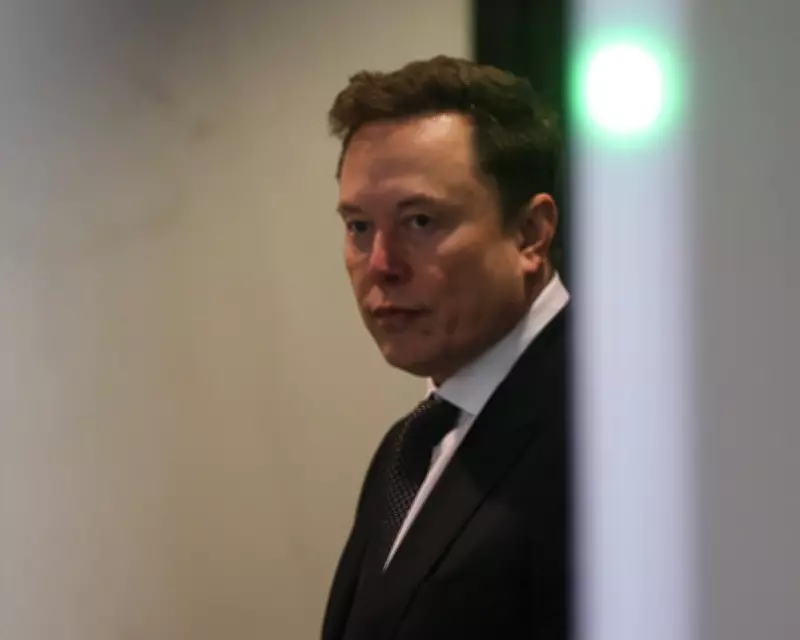
Elon Musk faced a combative second day on the witness stand in his lawsuit against Sam Altman and OpenAI, with the Tesla CEO repeatedly accusing Altman of stealing a charity and endangering humanity with artificial intelligence. The trial, held in federal court in Oakland, California, saw OpenAI's attorneys press Musk on his allegations, leading to testy exchanges and multiple interventions from Judge Yvonne Gonzalez Rogers.
Musk often refused to answer questions directly, prompting the judge to instruct him to give simple yes-or-no responses. At one point, Musk told OpenAI's counsel, William Savitt, “Your questions are not simple, they are designed to trick me, essentially.” The judge had to cut off Musk when he began a hypothetical about wife-beating, causing gasps in the courtroom.
Musk alleges that OpenAI's co-founders broke the founding agreement to build AI for humanity's benefit, shifting the nonprofit to a for-profit structure and enriching themselves. He seeks the removal of Altman and Greg Brockman, the reversal of the for-profit conversion, and $134 billion in damages to be redistributed to OpenAI's nonprofit arm.
OpenAI rejects Musk's claims as “motivated by jealousy,” stating that Musk was always aware of the for-profit plans and left after a failed takeover bid. The company maintains that his $38 million investment was a tax-deductible donation, giving him no control. OpenAI also emphasizes it remains overseen by the original nonprofit.
During cross-examination, Savitt presented emails showing Musk's awareness of for-profit plans. One email from Musk's company Neuralink suggested that “setting it up as a nonprofit might be the wrong move.” Musk responded that creating a for-profit adjunct to a nonprofit does not break a promise. Another document from a meeting at a haunted mansion in San Francisco showed Musk proposing a for-profit structure.
Savitt also questioned Musk about poaching OpenAI employees for Tesla, including engineer Andrej Karpathy. An email from Musk to Tesla's Jim Keller stated, “The OpenAI guys are going to want to kill me” regarding the recruitment. Musk admitted he wanted to build an “enormous AI-enabled robot army” but ensure safety to avoid a “terminator situation.”
Musk's lawyers attempted to paint him as a humanitarian tech pioneer. They showed emails praising his tech knowledge and a document where Musk called OpenAI's safety team “jackasses,” which Musk said was a joke. “You occasionally have to use strong language to get people to change their course,” he testified.
Musk claimed his concerns about OpenAI's nonprofit shift began around 2017, after an email exchange with Altman. He said he felt like a “fool” for funding OpenAI to create a billion-dollar company, but continued due to Altman's assurances. Musk left the board in 2018, citing busyness, but believed the company would remain a nonprofit.
OpenAI argues that Musk left after attempting to take control and merge with Tesla. The company insists Musk was aware of for-profit plans and that the nonprofit still oversees the business. Musk testified that he felt hoodwinked in late 2022, around ChatGPT's release, saying, “I lost trust in Altman, and I was really concerned they were trying to steal a charity.”
The trial is closely watched in Silicon Valley as it pits two tech titans against each other. The judge has asked both parties to minimize social media posts. The outcome could affect OpenAI's planned IPO at a $1 trillion valuation. The trial, with a nine-person jury, is expected to last three weeks.