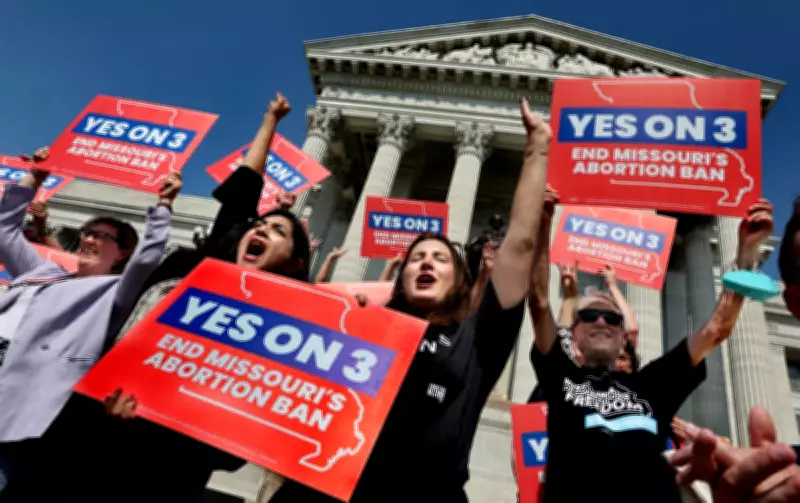
Missouri Abortion Rights Supporters Celebrate Court Ruling Amid Ongoing Legal Struggles
Demonstrators gathered in Jefferson City, Missouri, on 10 September 2024 to celebrate a significant state supreme court ruling. This moment of jubilation came after a prolonged legal battle that has tested the resilience of abortion rights in the state, even following a decisive voter mandate.
The Rocky Path from Ballot Box to Courtroom
In 2024, Missouri residents voted to repeal the state's near-total abortion ban and enshrine abortion rights directly into their constitution. Advocates moved swiftly, filing a lawsuit the very next day. This legal action challenged not only the constitutionality of the existing ban but also a complex web of additional restrictions that providers argued made delivering care virtually impossible.
More than a year later, the fight continues. A recent two-week trial concluded, examining the legality of dozens of Missouri's abortion regulations. However, Missouri is not alone in this protracted struggle. Similar legal conflicts are unfolding in Arizona, Michigan, Montana, Nevada, and Ohio, where activists are working to realise the full potential of voter-approved measures designed to expand access.

"A ballot measure changes the constitution and it says that the voters want reproductive rights and freedom to be protected, but the amendments don't make everything go away on their own," explained Amy Myrick, senior counsel at the Center for Reproductive Rights. "The courts and the legislatures have to follow through to strike down restrictions when they're unconstitutional."
Targeted Regulations and Legislative Pushback
During the trial, Missouri abortion providers argued that the voter-approved measure rendered many state restrictions unconstitutional. These include a ban on prescribing abortion pills via telehealth, a requirement for physicians to create detailed complication plans, and a mandatory 72-hour waiting period after an initial consultation.
Providers contend these laws represent "targeted regulations of abortion providers" (TRAP laws), subjecting abortion to scrutiny unlike any other medical procedure. Dr. Margaret Baum, chief medical officer with Planned Parenthood Great Rivers, testified about the disparity, noting she performs vasectomies without such burdensome requirements.
Meanwhile, state officials defended the restrictions as necessary for women's health protection. A final ruling is not expected for several months.
A National Pattern of Resistance
The legal battles extend far beyond Missouri's borders, largely focusing on similar TRAP laws. In Arizona, advocates are challenging requirements for two in-person clinic visits 24 hours apart and telemedicine bans. Ohio and Michigan activists target comparable waiting-period laws, while Montana faces potential clinic closures due to new licensing rules.
Perhaps more concerning is the legislative pushback in some states. Despite clear voter mandates, conservative lawmakers continue introducing bills that could undermine these constitutional protections. In Ohio, legislators proposed strengthening "fetal personhood" doctrine after 57% of voters supported abortion rights in 2023. Arizona's Republican-controlled statehouse has advanced three fetal-personhood bills this year, directly contradicting the 62% of voters who protected abortion rights in 2024.
Jos Raadschelders, an Ohio State University professor, characterised such legislative efforts as "an act of arrogance" and "democratic backsliding."
An Uncertain Future Despite Voter Mandates
Even if abortion providers prevail in Missouri, access remains precarious. Anti-abortion activists have already placed a new measure on the 2026 ballot that could repeal the 2024 constitutional amendment and restore the state's abortion ban.
"There was so much back and forth around the ballot, solving everything in one go, but it was never going to be that simple," said Mallory Schwarz, executive director of Abortion Access Missouri. "It's going to take a concerted effort, a multi-pronged legal organising advocacy, a grassroots strategy."

As at least three more states prepare to vote on pro-abortion-rights ballot measures this November, advocates hope to join the twelve states that have passed such measures since Roe v. Wade fell. However, the ongoing battles in Missouri and elsewhere serve as a stark reminder that constitutional amendments alone cannot guarantee accessible care, with courts and legislatures playing crucial roles in determining whether voter mandates translate into tangible reproductive freedom.