Mandelson Emails Reveal Epstein Bonus Policy Lobbying Efforts
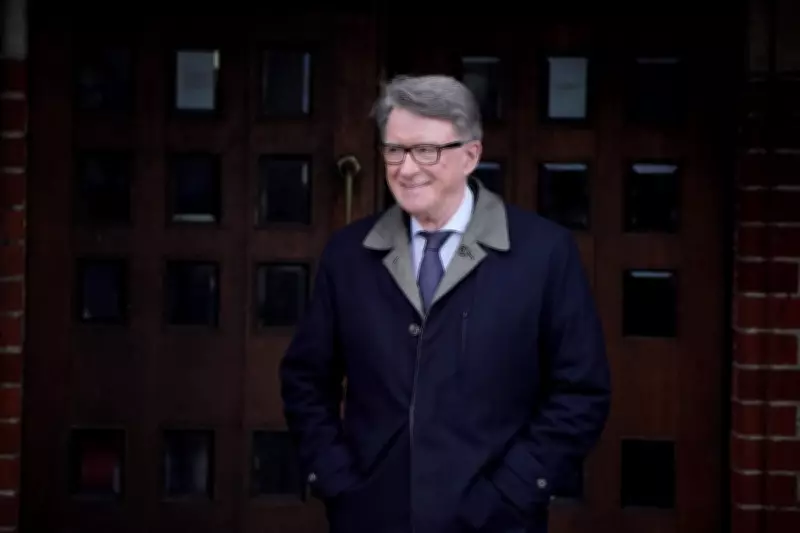
Newly released documents have revealed that former UK business secretary Peter Mandelson told convicted sex trafficker Jeffrey Epstein he was "trying hard" to change government policy on bankers' bonuses at Epstein's request. The emails, released by the US Department of Justice on Friday, provide fresh insight into the relationship between the disgraced financier and the British politician.
Financial Transactions and Policy Influence
The correspondence reveals that just months after Epstein had paid thousands of pounds to Mandelson's husband, the Labour peer appeared willing to intervene on financial policy matters. In September 2009 emails, Epstein agreed to wire £10,000 to Mandelson's husband, Reinaldo Avila da Silva, for expenses including an osteopathy course. Da Silva confirmed the money had arrived in his account the following morning.
Separate emails from December 2009 show Mandelson, then serving as business secretary in Gordon Brown's government, discussing efforts to amend the controversial bankers' bonus tax policy. This followed Chancellor Alistair Darling's announcement of a 50 per cent 'super tax' on bonuses intended to prevent pay inflation following taxpayer-funded bank bailouts.

In a redacted email exchange from 15 December 2009, Epstein asked Mandelson if the policy could be changed. Mandelson responded that he was "trying hard to amend" the policy, claiming the Treasury was "digging but I am on the case." The timing was particularly sensitive, coming just 18 months after the 2008 financial crisis and subsequent state rescue of major banks.
Ongoing Relationship and Career Discussions
The released files show the pair maintained regular communication, with exchanges including:
- Sharing details about their whereabouts and travel plans
- Making arrangements for in-person meetings
- Discussing Mandelson's career options following Labour's 2010 election defeat
- Conversations about then Prime Minister Gordon Brown's election prospects
Richard Branson's Epstein Connections
Separate email chains reveal interactions between Epstein and Virgin founder Sir Richard Branson. In September 2013 correspondence, Branson told Epstein he would love to see him again as long as he brought his "harem." The exchange occurred shortly after Epstein had visited Branson, with the financier seeking Branson's thoughts on a public relations matter.
Earlier emails from April 2013 show discussions about Epstein visiting Branson's private Necker Island. Epstein's assistant inquired about bringing along several individuals, including:
- Bill Gates associate Boris Nikolic
- Other unnamed individuals
- "2 Russian girls"
Following the file release, Conservative MP Alicia Kearns questioned Branson on social media, asking why it appeared he was giving Epstein advice on reputation laundering and helping explain away his abuse of women and girls.
Virgin Group's Response
A Virgin Group spokesperson addressed the revelations, stating that any contact between the Bransons and Epstein occurred "on only a few occasions more than twelve years ago" and was limited to group or business settings. The spokesperson emphasized that when Epstein offered a charity donation, due diligence uncovered serious allegations, leading to:
- Virgin Unite declining the donation
- The Bransons deciding not to meet or speak with Epstein again
- A clear statement that with full information, there would have been no contact whatsoever
The spokesperson added that Richard Branson believes Epstein's actions were abhorrent and supports justice for his many victims. The released documents continue to shed light on the extensive network of influential figures who maintained contact with Epstein despite growing awareness of his criminal activities.