The political world has been rocked by the publication of intercepted phone calls revealing how a key adviser to former President Donald Trump allegedly coached senior Russian officials on how to gain influence with the Trump administration.
The Explosive Content of the Leaked Calls
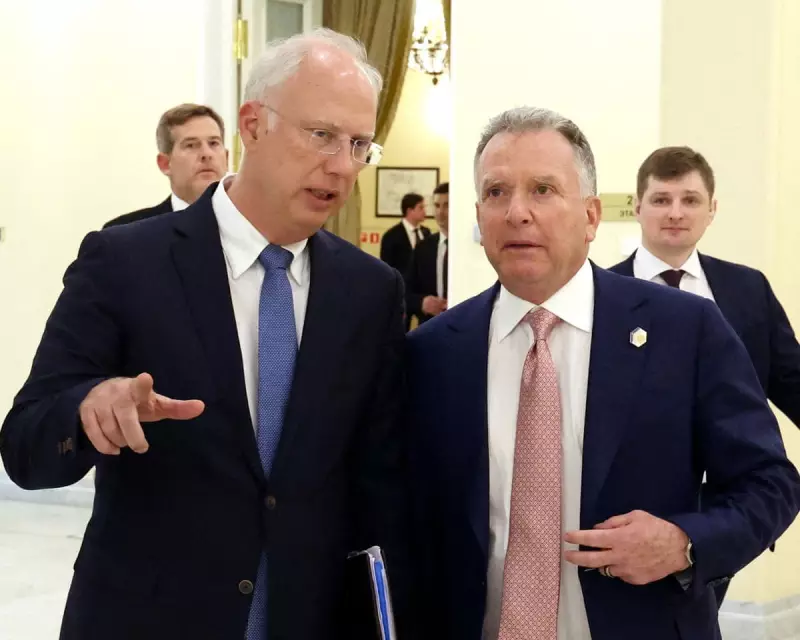
Bloomberg News obtained and published audio of two separate conversations. One call featured Trump aide Steve Witkoff speaking with Yuri Ushakov, a top Kremlin aide to Vladimir Putin. The second call was between Ushakov and Kirill Dmitriev, a Russian envoy deeply involved in negotiations with the Trump White House.
The news agency published its scoop without a byline or dateline, a highly unusual move presumably taken to protect the identity of its source. Bloomberg stated it had "reviewed and transcribed audio" of the calls but provided no further details on how the material was obtained or verified.

In a significant development, Yuri Ushakov appeared to confirm the authenticity of the recordings. While speaking to the Russian newspaper Kommersant, he claimed some parts were "fake" but declined to comment on the remainder, stating the calls were confidential. He notably suggested the conversations might have occurred on WhatsApp, remarking that "certain conversations on WhatsApp that, generally speaking, someone might somehow be able to listen to."
The Mystery of the Leak's Origin
The content of the calls provides startling evidence of Witkoff's alignment with Russian negotiating positions, but the question of who leaked the sensitive audio is provoking intense speculation among intelligence experts.
Daniel Hoffman, a former CIA Moscow station chief, noted the difficulty in pinpointing the source, suggesting it "could be 100m different things, including somebody on the Russian side trying to hurt Witkoff's reputation."
While Russian intelligence agencies have a long history of intercepting and releasing sensitive political calls, there seems to be little obvious motive for Moscow to compromise Ushakov, a key Putin aide, and Witkoff, considered Russia's most sympathetic contact within the Trump administration.
One senior former intelligence official pointed towards a source within the US system. "My strong suspicion is that this came from the US side, and if that's the case, you have two entities who are capable of doing this, the CIA and the NSA," the official stated.
Other potential culprits include European intelligence agencies, who may have been horrified by Witkoff's pro-Russian stance, or Ukraine, which has been deeply uneasy about his role in negotiations. However, the technical capability required to monitor a WhatsApp call outside Ukrainian territory, coupled with the risk of a catastrophic diplomatic fallout with the US, makes this possibility less likely.
Significant Implications and Intelligence Fallout
The publication of the raw audio, rather than just a transcript, is a critical detail. It suggests the source was either directly involved in the intelligence collection or held a senior position granting them access to the original recording.
What makes the leak so surprising to intelligence veterans is the operational cost. If an agency had successfully penetrated Ushakov's communications, releasing the information would almost certainly cause him to change his devices and habits, thereby closing a valuable intelligence window.
One former official summarised the paradox: "It's completely unsurprising that any number of agencies might have got hold of this recording, but it's extremely surprising that someone would leak it." The move represents a high-stakes gamble, revealing the depth of concern within certain circles about the nature of the relationship between Trump advisers and the Kremlin.