Epstein Document Dump Condemned as 'Outrageous' by Survivors' Legal Teams
Legal representatives for survivors of Jeffrey Epstein's extensive sex trafficking network have issued scathing criticism of the US Justice Department's recent release of approximately three million investigative files. The attorneys argue that the document tranche, which may represent the final batch of government-held records, is riddled with what they describe as 'ham-fisted redactions' that inadvertently expose victim identities while protecting powerful figures allegedly connected to the operation.
Systemic Failures in Victim Protection
Sigrid McCawley, a partner with Boies Schiller Flexner who represents multiple survivors, emphasised that Epstein and his convicted associate Ghislaine Maxwell operated a sophisticated trafficking scheme designed to provide young women and girls to wealthy and influential individuals. This practice, according to McCawley, granted the pair 'control and power over individuals who were implicated in the sex trafficking.' She further noted that those implicated in the newly released information would likely attempt to distance themselves, despite the documents revealing the operation's true nature.
Brad Edwards, another attorney representing victims, revealed to ABC News that the release contained thousands of errors that identified survivors who had never previously come forward publicly. 'We are getting constant calls from victims because their names – despite them never coming forward, being completely unknown to the public – have all just been released for public consumption,' Edwards stated, highlighting the profound breach of privacy and potential for re-traumatisation.

Political and Legal Repercussions
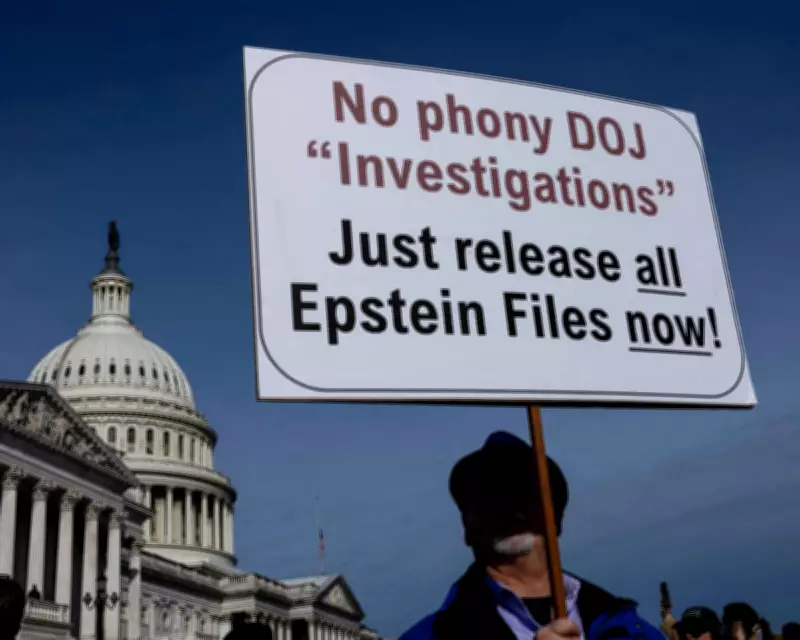
The document release has sparked significant political controversy, with bipartisan sponsors of the Epstein Files Transparency Act demanding access to unredacted files to fulfil congressional oversight duties. California Democrat Ro Khanna and Kentucky Republican Thomas Massie formally requested that Deputy Attorney General Todd Blanche permit congressional review of complete records, asserting that 'Congress cannot properly assess the department's handling of the Epstein and Maxwell cases without access to the complete record.'
Democratic Senate Minority Leader Chuck Schumer accused Attorney General Pam Bondi of failing to comply with legal requirements, stating on the Senate floor that 'every member of this body voted that all the Epstein files should be released. We are not satisfied that the law is being complied with. We believe it is not.' This sentiment was echoed by Bronx US House Democrat Alexandria Ocasio-Cortez, who noted on social media that the released documents represent only a minority of the total files, with the Justice Department allegedly continuing to withhold the majority in violation of statutory obligations.
Justice Department Response and Ongoing Concerns
In response to mounting criticism, the Justice Department issued a statement acknowledging coordination with victims and their legal teams to implement necessary redactions. The department established a dedicated email inbox (EFTA@usdoj.gov) for victims to report redaction concerns, pledging to 'immediately correct any redaction errors that our team may have made.' However, this measure has done little to assuage the anger of survivors and their advocates.
Jennifer Freeman, an attorney for victims, characterised the Justice Department's handling as 'a mess from the start,' accusing officials of 'hiding the names of perpetrators while exposing survivors.' Freeman also highlighted that the release missed a congressionally mandated deadline from December, vowing that victim-survivors and their supporters 'won't allow the federal government to simply dump a couple million documents and wash their hands of one of the largest law enforcement failures in US history.'

Survivor Statements and Maxwell's Legal Position
A collective statement from twenty Epstein survivors condemned the document release as a mechanism that shields powerful figures while exposing those who suffered harm. 'As survivors, we should never be the ones named, scrutinized, and re-traumatized while Epstein's enablers continue to benefit from secrecy,' the statement read. 'Once again, survivors are having their names and identifying information exposed, while the men who abused us remain hidden and protected. That is outrageous.'
This position creates an uncomfortable alignment with Ghislaine Maxwell, who referenced 'secret settlements' between twenty-five alleged Epstein accomplices and their accusers in court papers seeking to overturn her 2021 conviction. Maxwell's legal team argued that none of these men have been prosecuted or revealed to her, preventing their testimony during her trial. She received a twenty-year prison sentence in 2022 for her role in the trafficking operation.
Broader Implications and Public Scrutiny
The released files contain references to prominent individuals, including multibillionaire entrepreneur Elon Musk and commerce secretary Howard Lutnick, both of whom have been associated with Epstein but face no accusations of wrongdoing. Attorney Spencer Kuvin cited victim testimony indicating that Epstein provided girls to famous and notable people 'usually' as favours, expecting reciprocal benefits. Kuvin asserted that 'the recent documents only confirm what the victims have been saying all along.'
Deputy Attorney General Todd Blanche acknowledged public 'hunger or thirst for information' regarding the Epstein case but suggested the document review might not satisfy this curiosity. 'There's nothing I can do about that,' Blanche remarked before the files' release. The Justice Department withheld several categories of pages, including victims' personally identifying information, medical files, images depicting child sexual abuse, and documents related to ongoing cases.
This controversy unfolds against the backdrop of Epstein's 2019 death in federal custody, which many survivors and observers view as denying full accountability for his crimes. The ongoing legal and political battles over document transparency underscore persistent questions about institutional failures and the protection of vulnerable individuals within high-profile criminal investigations.