In a groundbreaking development for Colombia's justice system, more than two hundred women with caring responsibilities have been granted early release from prison under the country's innovative Public Utility Law. This legislation, enacted in 2023, represents a significant shift in penal policy, allowing first-time female offenders who serve as heads of households to apply for community-based sentences instead of remaining behind bars.
A Miraculous Release from El Buen Pastor
Jennifer Chaparro Pernet became the first beneficiary of this progressive law when she walked out of El Buen Pastor women's prison in Bogotá on 4 May 2024. The 36-year-old mother, who was four years into a twelve-year sentence, described the moment as overwhelming and miraculous. "I was overwhlemed, I could hardly believe it. I thought, 'God exists, it's a miracle'," she recalled, having fallen to her knees after passing through the prison gates.
Despite applying immediately when the legislation became active, Chaparro Pernet faced three rejections before finally receiving approval. Her release was met with jubilant celebrations from fellow inmates, who banged, cheered and stomped as she departed with a small bag of belongings. While reluctant to detail her criminal history, she revealed she began stealing at fifteen as a single mother and was later forced to join a gang at twenty-seven, resulting in an initial eighteen-year sentence reduced to twelve on appeal.

The Human Stories Behind the Statistics
Sandra Julieth Cantor experienced a similar liberation ten months later on 8 March 2025, having served five years of a ten-year sentence for drug smuggling. The mother of one carried 6,055 grams of cocaine, with those extra fifty-five grams pushing her into a higher sentencing bracket. "I know the exact figure – because it was the 55 that pushed me into a higher sentence bracket," she explained. "If I had been carrying 6,000 or less would have been four years."
Both women's motivations centered overwhelmingly on reuniting with their children. Chaparro Pernet lost contact with her two daughters during incarceration, while Cantor's family concealed her imprisonment from her nine-year-old daughter – a deception that nearly drove the child to take her own life. Their stories reflect the complex realities facing many of Colombia's approximately 6,000 incarcerated women, about half of whom are serving sentences for drug offences.
Implementation Challenges and Campaigner Concerns
While 216 women have been released under the Public Utility Law according to the most recent figures, campaigners express disappointment with the implementation pace. Isabel Pereira, drug policy coordinator at Colombian thinktank Dejusticia, noted: "We were expecting at least half of the 6,000 women in prison would be released within two years, so just over 200 is very disappointing."
The law requires released women to complete a minimum of twenty hours weekly of voluntary service and report regularly to a judge, though they are not electronically tagged. However, inconsistent judicial interpretation creates significant barriers, with some judges applying strict criteria while others show more leniency. Additionally, lack of awareness among the female prison population presents another substantial challenge.
Post-Release Support Systems
Claudia Cardona, a former prisoner who runs the campaign group Mujeres Libres and contributed to the law's development, acknowledges progress while highlighting systemic shortcomings. "From our experience as women who were incarcerated we believe that, although the number of women who have benefited is still small, every woman who is now free and with her family matters," she stated.
Both Pereira and Cardona identify the lack of integrated post-release support as a critical flaw, advocating for better coordination between justice, education, work and health ministries. Cardona emphasised: "Without public policy for women released from prison, it is very difficult to move forward and ensure that women can maintain their freedom and rebuild their lives with dignity."

Rehabilitation Through Second Chances
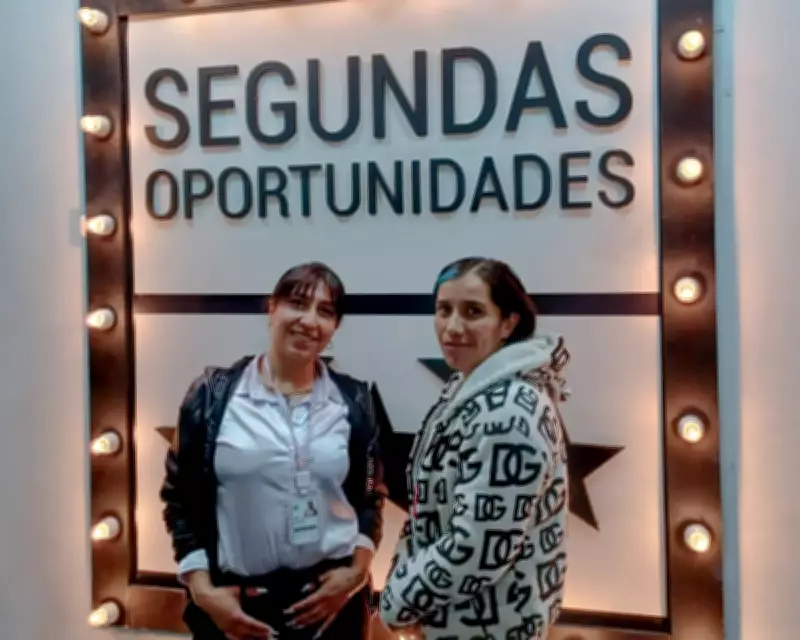
Johana Bahamón's Acción Interna Foundation has become a crucial support system for women like Chaparro Pernet and Cantor. The former successful actor established the non-profit after a transformative 2012 prison visit, beginning with drama workshops that evolved into public performances. "I thought, you can be deprived of your freedom but you don't have to be deprived of your dignity, and that is my motivation to keep working," Bahamón explained.
The foundation's "second chances" programme, which inspired Colombia's 2022 Second Chances Law, provides training alongside psychosocial and legal support. Despite these efforts, stigma against formerly incarcerated individuals creates substantial employment barriers. Chaparro Pernet secured temporary restaurant work through the programme but remains without stable employment nearly two years after release, while Cantor pursues hairdressing training.
Camilo Higuera, the foundation's communications director and a former prisoner himself, observed: "These are very strong women who are really fighting to leave the past behind. They are the epitome of why you need to give someone a second chance – they only think about their family. We admire them."
As Colombia continues implementing this pioneering approach to penal reform, the experiences of these released mothers highlight both the transformative potential of progressive legislation and the ongoing challenges of ensuring genuine rehabilitation and reintegration for women seeking to rebuild their lives beyond prison walls.