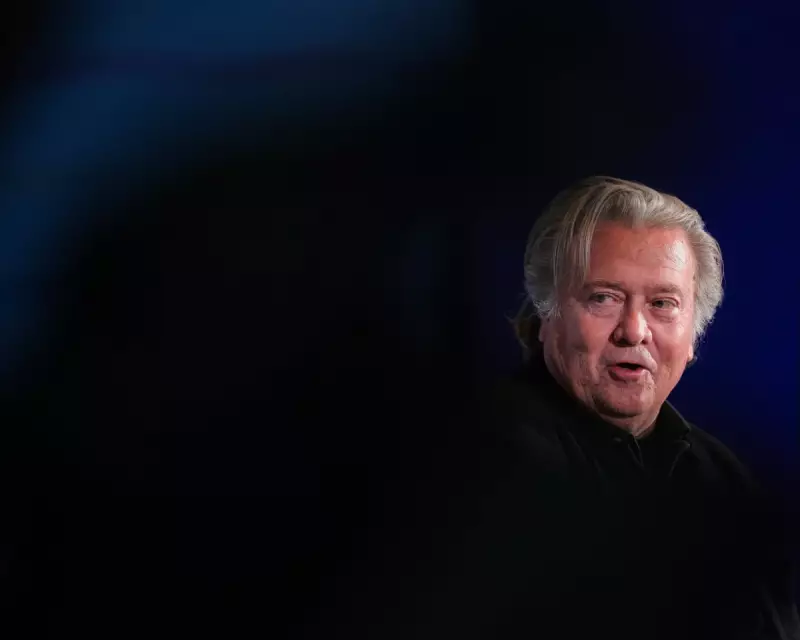
Hundreds of text messages spanning nearly a year have exposed a secret collaboration between former Trump strategist Steve Bannon and convicted sex offender Jeffrey Epstein, revealing their extensive efforts to rehabilitate Epstein's tarnished public image.
The Beginning of the Partnership
As early as June 2018, long before Epstein became widely known as a notorious sex criminal, Bannon was already advising the financier on how to handle mounting public scrutiny. The released communications show Bannon describing the renewed attention on Epstein's criminal history and powerful connections as a "sophisticated op" - suggesting an orchestrated campaign rather than legitimate public concern.
The texts, made public by the House Oversight Committee on Wednesday, document how the pair developed responses to growing outrage about Epstein's criminal background, his favourable treatment within the justice system, and his relationships with influential figures across business, politics and academia.

Media Strategy and Damage Control
Throughout their exchanges, Bannon provided Epstein with strategic counsel on handling media outlets, the justice system, and his accusers. In February 2019, when Republican Senator Ben Sasse publicly called Epstein a "child rapist," Bannon advised against responding directly, warning that engagement would "make it way worse."
Epstein frequently acknowledged his disastrous public perception, referring to himself as "the monster" and discussing ways to "humanize" his image. The messages reveal their consideration of a professionally produced interview or video presentation, with Epstein noting they needed to "humanize the monster" and later discussing how to "deal with the pervert hermit image."
The Documentary Project
By April 2019, their collaboration had evolved into planning a documentary film aimed at redeeming Epstein's reputation. Bannon cautioned that certain allegations were beyond redemption, stating: "Can't redeem unredeemable -- you are a lot of things - which we will show -- but you are NOT that."
The texts detail practical arrangements for filming, including crew size and even Epstein's appearance, with Bannon recommending "slight growth" of facial hair. Media reports in 2024 would later confirm Bannon recorded approximately 15 hours of footage with Epstein for this planned documentary.
Their discussions also touched on concealing Epstein's involvement in financing the project, suggesting awareness that his association could undermine their rehabilitation efforts.
Political Connections and Shared Agendas
Beyond Epstein's personal crisis, the messages show both men strategizing about promoting Bannon's right-wing populist agenda and the political fortunes of Donald Trump. Epstein occasionally positioned himself as having significant leverage, notably claiming in December 2018 that he was "the one able to take him down" regarding Trump.
The communications also reveal Epstein offering advice on undermining Christine Blasey Ford's accusations against Supreme Court nominee Brett Kavanaugh in September 2018. Epstein suggested Republicans should question Ford about her medications, asserting "she couldn't recall if the lie detector was given the same day as her mothers funeral or the next day.? MEDS."
Bannon's identity in the correspondence is confirmed through contextual clues, including his documented activities, business details, and in one instance, an unredacted phone number matching one linked to Bannon in legal proceedings against Trump advisor Roger Stone.
The collaboration continued until shortly before Epstein's dramatic re-arrest on July 7, 2019, with both men expressing optimism about legal developments just weeks earlier. The extensive text exchange provides unprecedented insight into how powerful figures coordinate to manage public perception during escalating scandals.