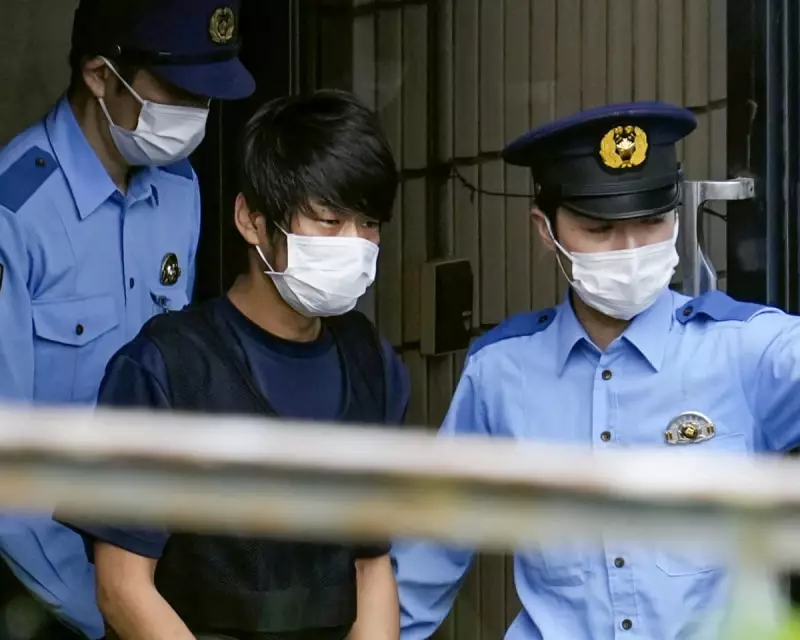
Life Sentence for Shinzo Abe's Assassin in Landmark Japanese Case
A Japanese court has handed down a life imprisonment sentence to Tetsuya Yamagami, the man who assassinated former Prime Minister Shinzo Abe in July 2022. The 45-year-old had previously pleaded guilty to the killing, which occurred during an election campaign speech in the western city of Nara. This high-profile case has sent shockwaves through Japan, a nation where gun violence is exceptionally rare, and has brought to light controversial connections between politicians and a prominent religious organisation.
A Shocking Attack in Broad Daylight
Shinzo Abe, Japan's longest-serving prime minister, was fatally shot from behind with a homemade weapon while campaigning. Although not the first post-war Japanese politician to be murdered, his violent death in a suburban street during daylight hours profoundly unsettled the public. Yamagami was swiftly apprehended by Abe's security team immediately after the shooting. He entered a guilty plea when his trial commenced in October of the previous year.
Prosecution and Defence Arguments
Prosecutors described the crime as "unprecedented in postwar history" and sought a life sentence, though notably did not request the death penalty, which in Japan is typically reserved for cases involving multiple homicides. In contrast, Yamagami's defence team argued for a prison term not exceeding 20 years. Under Japanese law, life imprisonment allows for the possibility of parole, yet legal experts note that many inmates serving such sentences ultimately die in prison. The trial proceeded despite Yamagami's guilty plea, as is standard procedure within the country's legal system.

Motive Tied to Religious Group and Family Ruin
As the government controversially planned a state funeral for Abe, who resigned in 2020 after his second term, details of Yamagami's motive emerged. The former member of Japan's maritime self-defence forces stated that the assassination was an act of revenge against Abe for his association with the Unification Church, often referred to as the Moonies. Yamagami blamed the church for his family's financial devastation, citing his mother's excessive donations. Reports indicate she contributed over ¥100 million (approximately $1 million at the time) to the organisation two decades ago, leading to bankruptcy.
Political Ties and Public Fallout
Abe, who had spoken at events related to the church, was among numerous Japanese politicians, primarily from the ruling Liberal Democratic Party (LDP), whose links to the group were revealed following his death. The Unification Church, founded in South Korea in 1954 by Sun Myung Moon and viewed by critics as a cult, began influencing Japanese politics in the 1960s. It aligned with conservative figures, including Abe's grandfather, former Prime Minister Nobusuke Kishi, who supported its anti-communist stance and opposition to trade unions.
During the trial at Nara District Court, a prosecutor stated that Yamagami believed killing someone as influential as Abe would "draw public attention to the church and fuel public criticism of it." Yamagami explained he decided to target Abe after viewing a video message the former leader sent to a church-affiliated group, aiming to damage the organisation and expose its relationship with the politician.
Public Sympathy and Legal Reforms
The revelations sparked public outrage, forcing the LDP to distance itself from the Unification Church. Subsequently, the church's Japanese branch lost its tax-exempt religious status and was ordered to dissolve. Interestingly, some members of the public expressed sympathy for Yamagami, highlighting the severe impact his mother's church devotion had on his family. He was compelled to abandon higher education, attempted suicide in 2005, and later lost his brother to suicide.
This case highlighted the struggles faced by other children of Unification Church followers in Japan and prompted the introduction of new legislation designed to protect individuals from aggressive financial solicitations by religious and similar groups. Thousands signed petitions calling for leniency towards Yamagami, and care packages were sent to his relatives and the detention centre where he was held.