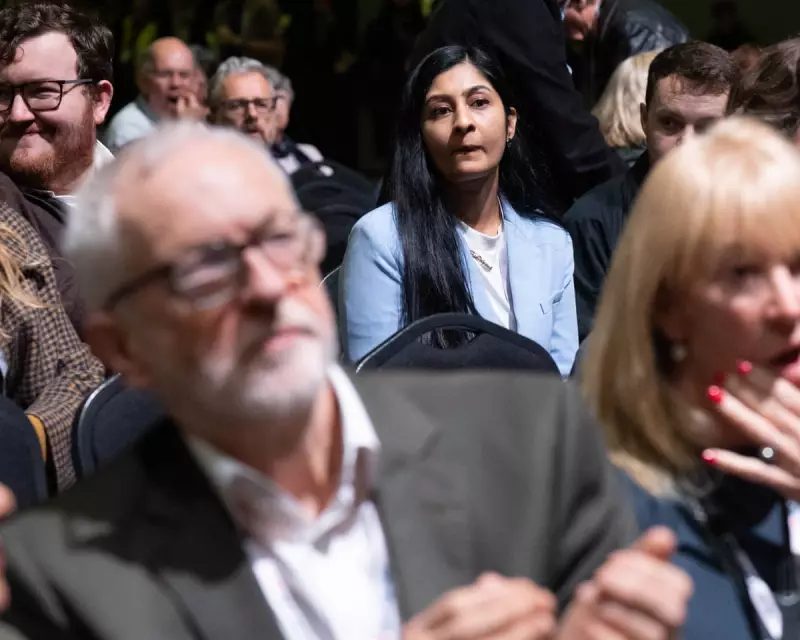
The founding conference of Your Party in Liverpool this past weekend was meant to be a moment of unity and hope for the British left. Instead, it laid bare a series of bitter internal divisions that threaten to derail the project before it has properly begun.
A Launch Marred by Schism and Legal Threats
When Your Party launched in late July 2025, an astonishing 800,000 people registered their interest, signalling a potentially transformative moment for radical politics in Britain. However, by the time delegates gathered at the Liverpool conference on 30 November 2025, that initial wave of optimism had been severely dampened by public disputes between its two leading founders.
The conflict between Jeremy Corbyn and Zarah Sultana has played out in full public view. It includes threats of legal action, public denunciations, and anonymous briefings to right-wing newspapers. The core of the dispute stems from Sultana's unilateral announcement of the party's launch and a membership portal, which was disavowed by Corbyn and other colleagues. This move raised hundreds of thousands of pounds, leading to mutual legal threats and a situation where, as Corbyn revealed, the party was recently worried about being able to pay for the conference itself.

The Green Party Capitalises on Disillusionment
While Your Party has been consumed by internal process, the political landscape has shifted. Many disillusioned voters and activists have turned their attention to Zack Polanski's Green Party, which has repositioned itself firmly on the left. The Greens have been rewarded with a membership surge to 170,000 and polling that sometimes places them ahead of Labour. Their effective, optimistic social media strategy, reminiscent of figures like Zohran Mamdani, presents a stark contrast to the infighting seen in Liverpool.
In this context, Your Party's conference attendance of 2,500 delegates and a total sign-up of 55,000 people—nearly as many as the Liberal Democrats—is still significant. Yet, it represents a dramatic scaling down from those initial 800,000 expressions of interest.
Conference Drama and Ideological Battles
The Liverpool conference did little to quell the drama. Sultana boycotted the first day after a small number of delegates, mostly from the Socialist Workers Party (SWP), were banned from attending. She described the situation as a "witch-hunt," a sentiment echoed by some delegates who criticised a move towards a "central dictatorship."
The conference became a battleground for the party's future direction. A faction called Democratic Socialists, led by activist Max Shanly, successfully argued for a radical democratisation of the party's structures, including a collective leadership of 20. This sets up an experiment: will Your Party become a beacon for a new politics, or merely a new arena for established revolutionary sects to recruit and battle?
Corbyn's speech invoked the spirit of his 2017 campaign, offering his signature unpolished, heartfelt socialism. However, Sultana and her supporters are pushing a more overtly ideological and militant line, seeking to distinguish the party from the Greens on wedge issues like immediate withdrawal from NATO and nationalising the entire economy.
Does the Left Have the Luxury of Time?
The fundamental question hanging over the conference, voiced by one delegate as "the last throw of the dice," is whether the left has the luxury of time for such internal struggles. With a surge in far-right politics, multiple economic and social crises, and the looming climate catastrophe, the famous maxim of "socialism or barbarism" felt urgently relevant to many in attendance.
Yet, the very public spats over process, money, and control risk repelling the very people Your Party needs to attract: those receptive to radical politics but allergic to the traditional blights of infighting and sectarianism. The project that began with unprecedented potential now stands at a crossroads, needing to consign its internal dramas to the past if it is to become the credible, inspiring alternative its founders promised.