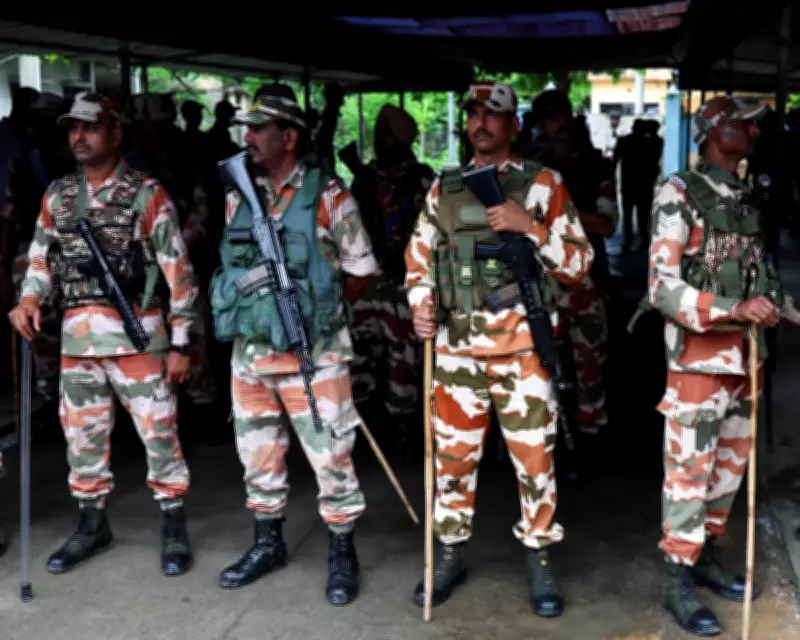
Security forces are guarding a hospital in Kolkata as a postmortem is conducted on Chandranath Rath, an aide to the Bharatiya Janata Party (BJP) leader in West Bengal. The incident has escalated tensions in the state following a contentious legislative election.
Violence Erupts After Election Results
Tensions have been high in the Indian state of West Bengal after a top political aide from Prime Minister Narendra Modi's party was shot dead in the street, and hundreds were arrested as violence broke out following elections this week. The BJP claimed victory in the West Bengal elections on Monday, defeating the Trinamool Congress (TMC), which had ruled the state legislature for 15 years. Turmoil rocked the state after the results were announced. Figures from TMC, including its leader Mamata Banerjee, said there had been widespread irregularities in the vote and accused the BJP of “looting” the election. Banerjee stated she would refuse to resign, asserting that she had “not been defeated.”
Shooting of BJP Aide
Late on Wednesday evening, Chandranath Rath, an assistant to Suvendu Adhikari, the head of the BJP in West Bengal, was shot dead in the streets of Kolkata by gunmen on a motorcycle. He was pronounced dead at the hospital. Adhikari, the frontrunner to become the state's next chief minister, told reporters that the BJP was “shocked, pained and hurt” by the incident and alleged that the killing occurred “because I defeated Mamata.” He stated that police believed the killing was a “pre-planned and cold-blooded murder that was carried out after a recce for two to three days.” TMC denied any involvement in the killing and called for an independent investigation, stating that “violence and political killings have no place in a democracy and the guilty must be held accountable at the earliest.”

Widespread Arrests and Violence
Rath was one of three people killed in violence that erupted across West Bengal from Monday. The state's police chief, Siddh Nath Gupta, reported that more than 200 criminal cases have been registered and 433 people have been arrested for involvement in post-poll violence. TMC workers accused the BJP of setting fire to their party offices and bulldozing one in Kolkata, allegations that the BJP has denied.
Historical Context and Electoral Controversy
Post-election violence is not uncommon in West Bengal, dating back decades to when the state was under communist rule. However, the recent election has proven particularly controversial after the government carried out a special revision of the electoral roll to purge “illegal” voters. This process resulted in millions of people—the majority of them Muslims or from minority groups—losing their right to vote just before the election. During the voting in April, India's election commission ordered an unprecedented number of police and paramilitary forces to be deployed to the state to ensure security, and that deployment will remain in place for the next 60 days.
Political Fallout and Constitutional Crisis
The BJP's win in West Bengal is seen as a significant political coup for the Hindu nationalist party, securing its control over the east of the country and ensuring it now governs more than 70% of India at the state level. Banerjee's refusal to step aside threatens to cause an unprecedented constitutional crisis. On Thursday night, the West Bengal governor unilaterally dissolved her government and cabinet. TMC confirmed they would challenge the election results in the Supreme Court. Despite TMC's objections, Adhikari stated that the new West Bengal state government, including the next chief minister, would be sworn in by Saturday.