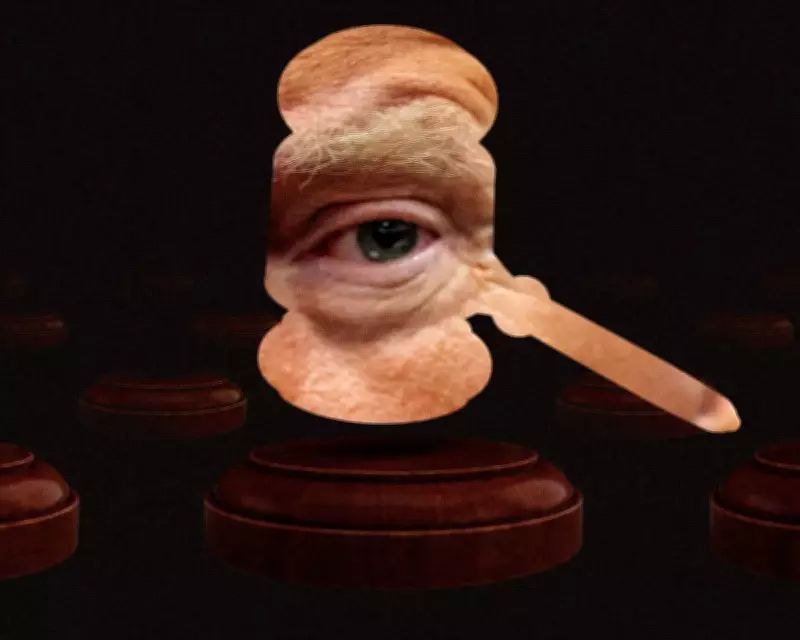
Since January 2025, the Trump administration has fired more than 113 immigration judges and pushed out others through buyouts and reassignments, replacing them with military lawyers and political appointees. The Guardian spoke with a dozen judges who had been fired or accepted buyouts, and others still on the bench, to understand what is unfolding inside the immigration courts and what it may signal for the broader American justice system.
A Pattern of Purges
David Koelsch, a former immigration judge based in Maryland, resigned four months before the killing of Alex Pretti by federal agents in Minneapolis. He had spent four years as a supervisory asylum officer at the Department of Homeland Security before nearly eight years on the bench as an immigration judge in Baltimore. "I was actually planning on retiring in two years when I turn 62," he said. His departure came amid a broader push by the Trump administration, supported by Elon Musk's "department of government efficiency" (Doge), to offer buyouts to federal employees seen as obstacles to its deportation agenda.
Koelsch said the erosion of judicial independence did not begin with Trump. He also criticized the Biden administration's use of prosecutorial discretion to remove cases from immigration courts, calling it "a numbers game" designed to reduce the backlog. Since leaving the bench, Koelsch taught law, was able to have health insurance through his wife's job, and secured a full-time position at the faith-based refugee resettlement organization World Relief.

Firings Without Explanation
On 21 November 2025, Jeremiah Johnson, a judge at the San Francisco immigration court, was fired along with two other judges. Johnson had been on the bench since 2017, appointed by then-attorney general Jeff Sessions. He granted asylum in a large share of his cases, a rate significantly higher than the national average. The firing of judges in the San Francisco area came as the administration moved to shutter the San Francisco immigration court, which went from 21 judges at the start of 2025 to just four early this year, according to NPR. The court closed 1 May, leaving a backlog of 120,000 cases.
Johnson, now an executive vice-president of the National Association of Immigration Judges (NAIJ), rejected the suggestion that his record reflected bias. "They claim they have to reverse the Biden era, that judges have implicit bias, and they have a duty to weed it out," he said. "Well, then, tell me I have an implicit bias. Tell me that's why I'm being fired. If you say I have implicit bias, show me the statistics. Be exact."
Legal Challenges and Contradictions
A group of fired judges has already filed suit against the Department of Justice, challenging the administration's authority to terminate immigration judges without cause or explanation. In a landmark ruling, the Merit Systems Protection Board said it had no jurisdiction to review their removal. The fired judges are appealing against the decision to the US court of appeals for the federal circuit.
Some fired judges have pointed to a contradiction in the government's own actions. Carmen Maria Rey Caldas, 46, noted that the government paid her severance, a benefit typically reserved for employees separated without cause. "The government doesn't state a reason," she said. "And in fact, they just paid me severance. So arguably, that means they are admitting that there's no cause because otherwise I wouldn't be due severance."
Military Judges Fill the Slots
As immigration judges are being fired across the country, the Trump administration has also launched a public hiring campaign to fill the vacancies, advertising for candidates to "become a deportation judge." On 27 August 2025, the defense secretary, Pete Hegseth, authorized up to 600 military lawyers from the Judge Advocate General (JAG) Corps to serve as temporary immigration judges – a move the justice department paired with waiving longstanding requirements that temporary judges have at least 10 years of immigration law experience. The New York City Bar Association condemned the move as "an unprecedented departure from established practice."

Even those jobs are not safe. In December 2025, Christopher Day, a US army reserve lawyer serving as a temporary immigration judge in Annandale, Virginia, was fired after just five weeks on the bench. According to the Associated Press, federal data shows that Day granted asylum or other relief in six of his 11 cases, a rate that diverged sharply from other military-appointed judges, who ordered removal in about 78% of cases.
Intimidation and Ethical Strain
As the administration began assigning military judges and less-experienced appointees to fill the growing vacancies, those with immigration backgrounds who remain on the bench described a deepening culture of uncertainty. Rey Caldas described more intimidation: "They're going into meetings and being told directly that if they grant a bond in certain cases, they will be taken off the bench." Supervisory judges, she said, were entering judges' offices to demand explanations for routine continuances.
Koelsch said many of those sitting judges were experienced and principled. "I know several excellent immigration judges, some of whom I mentored," he said. "They're fantastic judges, and they're not liberal, they're not conservative. They're like umpires or referees in a game. They call it as they see it."
Several current and former judges described an administration aggressively pushing for third-country deportations and setting no bond, or imposing higher bond amounts. Some said the internal pressure had, at times, felt like "bending the knee" to politics rather than principle. The administration has reached deportation agreements with numerous countries, many of which advocates and Democratic senators believe were pressured by US officials through financial incentives, eased visa restrictions, or diplomatic leverage.
Consequences for American Democracy
The overhaul of the immigration courts – the mass firings, the intimidation, the threats to remove judges from the bench – has created an impossible tension for those who remain: between their ethical obligations and the need to keep their jobs. Several current judges who spoke to the Guardian on condition of anonymity said the strain had taken a deep emotional toll.
Koelsch fears that the loss of seasoned immigration judges will have consequences far beyond the courts – including for American citizens. A ProPublica investigation in October 2025 found that more than 170 US citizens had been detained by immigration agents during raids and protests.
At the same time, the strain on the system has deepened as courts face a backlog of more than 3m cases. The second Trump term has also seen a historic rise in habeas corpus petitions – legal challenges filed by immigrants claiming their detention is unlawful. According to ProPublica, more habeas cases have been filed since January 2025 than under the last three administrations combined.
But the administration's focus has remained squarely on deportation. Since the start of Trump's second term, ICE has deported more than 605,000 people, according to DHS records, with the administration publicly setting a goal of 1m removals a year.
Many judges fear the consequences will shape the foundations of American democracy itself as they see alarming use of executive orders to reconfigure immigration courts across the country. "If such a thing exists in the United States as a tribunal where you're never going to be heard, where the outcome of your case is predisposed, then why would that be different in any other type of tribunal?" said Rey Caldas. "If we're willing to accept this here, then obviously this can also be the case in criminal courts. And in tax court. And in any other type of federal proceeding."
She paused, adding: "It erodes the idea that the US is in fact a country of law."
Many judges who spoke with the Guardian believed that much of the purging had been possible because immigration judges sat within the justice department, part of the executive branch, which means they serve at the pleasure of the attorney general – and, by extension, the president. Several expressed support for establishing an independent immigration court, free from executive control. But those who have witnessed the overreach of this presidency first-hand warned that the damage may already extend beyond what structural reform alone can repair.
"If the president can effectively say who gets immigration status and who doesn't, whether or not the law would give them the right to immigration status, then we're past a system of laws, and we are fully living at the whim of an individual," said Rey Caldas.