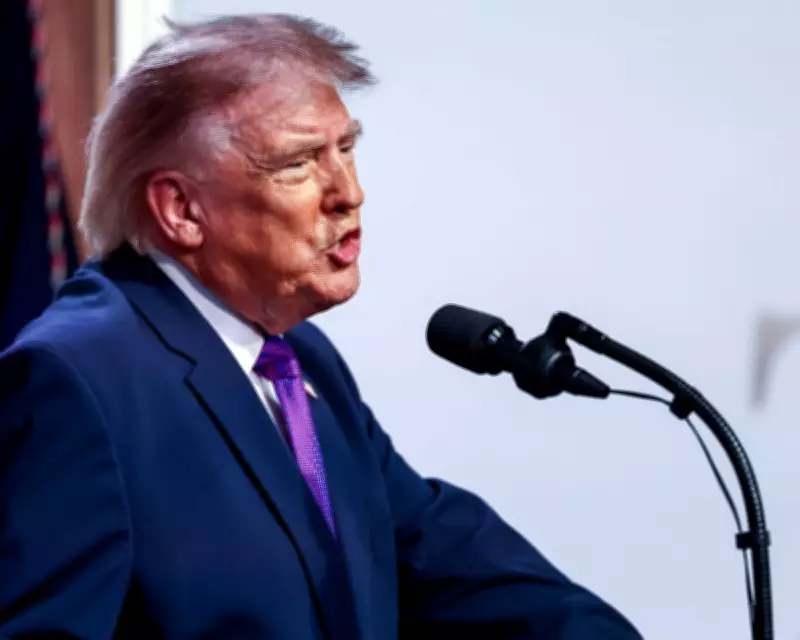
Donald Trump has stated that he called off a planned attack on Iran on Tuesday at the request of Gulf states, including Qatar, Saudi Arabia, and the United Arab Emirates, to allow peace talks to continue. In a post on Truth Social on Monday, the US president said he had been asked to do so by the leaders of these countries.
Trump claimed he was told a deal would be made that is "very acceptable" to the US, adding that there would be "no nuclear weapons for Iran." However, he emphasized that he had informed his military leaders "to be prepared to go forward with a full, large scale assault of Iran, on a moment’s notice, in the event that an acceptable Deal is not reached."
Iran's Response and Diplomatic Moves
The announcement came as Iran’s foreign military spokesperson, Esmail Baghaei, claimed that Pakistan has shared Tehran’s latest proposal with the US. This development adds a new layer to the ongoing diplomatic efforts between the two nations.

Public Opinion and Economic Impact
Trump has repeatedly threatened to launch new strikes on Iran, only to retreat at the last minute. The war on Iran is deeply unpopular with the American public and is hitting consumers hard with increased oil and fertiliser costs resulting from the reduced flow of vessels through the critical Strait of Hormuz. Negotiations on Iran’s nuclear programme and the strait of Hormuz have reached a deadlock, and the US’s blockade of Iranian ports is failing to force Tehran into making painful concessions even though Iran is suffering an escalating economic crisis.
Planned Targets
Trump did not specify what targets the US had planned to strike on Tuesday, but officials said the military could have targeted Iran’s ballistic missile sites, according to the New York Times. The situation remains tense as both sides continue to navigate the complex geopolitical landscape.