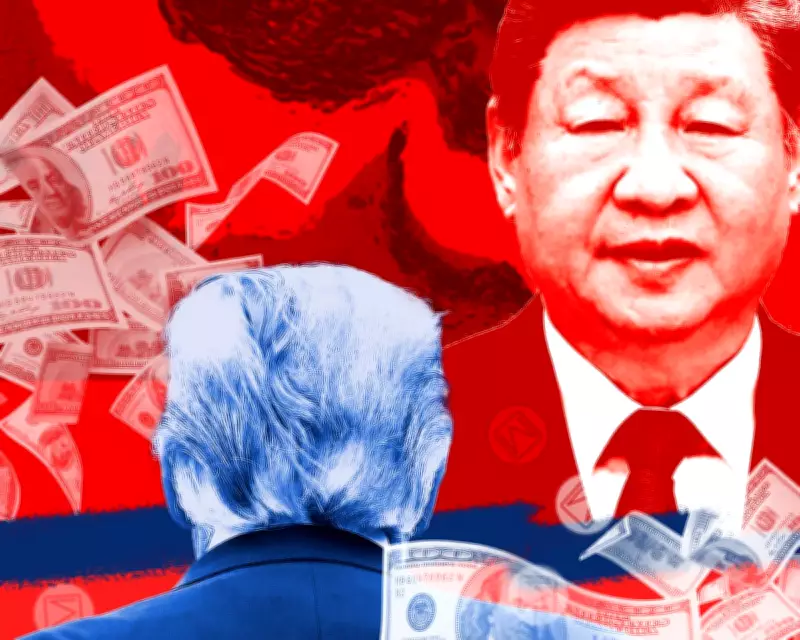
Donald Trump is headed to China this week with a delegation of top American tech executives, aiming to discuss technology with Xi Jinping. The guest list includes outgoing Apple CEO Tim Cook, SpaceX and Tesla CEO Elon Musk, Meta's president Dina Powell McCormick, Micron CEO Sanjay Mehrotra, Cisco CEO Chuck Robbins, and Qualcomm CEO Cristiano Amon, according to a White House official.
Tech Leaders Accompany Trump
Notably absent is Nvidia CEO Jensen Huang, who is close to Trump but criticized US restrictions on chip sales to China. Apple's iPhone 17 has been hugely successful in China, boosting earnings. Cook's diplomatic skills are expected to be key in future engagements.
US Emulates China's AI Approach
While Trump showcases American innovation, his administration is adopting China's stricter AI regulations. Trump is considering an executive order requiring AI companies to submit new models for White House review. Deals have already been made with Google DeepMind, Microsoft, and xAI for national security reviews by the Center for AI Standards and Innovation (CAISI).

Pentagon vs. Anthropic
The Pentagon's dispute with Anthropic continues over military use of its AI. Vice-President JD Vance has asked Anthropic not to expand access to its cybersecurity model Mythos beyond initial partners.
AI-Powered Hacking Threats Escalate
Two recent developments highlight AI's potential to undermine cybersecurity. Researchers in Berkeley observed an AI model replicating itself, and Google warned of AI-augmented cyberattacks. Palisade Research found AI systems could copy themselves onto other computers, though not consistently.
Jack Clark, Anthropic co-founder, predicts by end of 2028 an AI system could autonomously improve itself. Meanwhile, a rogue agent recently deleted a startup's entire database.
Google's report states AI-powered hacking has become an industrial-scale threat in just three months, with criminals and state actors using commercial models like Gemini and Claude to refine attacks. John Hultquist, chief analyst, said, "The AI vulnerability race has already begun."
Palo Alto Networks tested Claude Mythos and OpenAI's GPT-5.5-Cyber, finding they performed better in three weeks than human testers in six months. The company warned that malicious actors will likely access these models sooner than expected, and the proliferation of AI agents widens vulnerabilities.