Donald Trump has stated that the growing financial strain on Americans due to the war with Iran is 'not even a little bit' motivating him to seek a peace deal with Tehran. With US inflation at a three-year high and fuel costs climbing after a sharp rise in oil prices, the US president said on Tuesday that he is not concentrating on the economic hardship caused by the conflict.
Inflation and Economic Pressures
US inflation surged to 3.8% in April, the fastest pace since 2023, driven largely by energy costs that have escalated since the US and Israel launched attacks on Iran in late February. Gasoline now averages over $4.50 per gallon, the highest in four years, according to AAA. Food prices have risen nearly 4%, electricity and utility bills have increased, and airlines have raised fares by more than 20%.
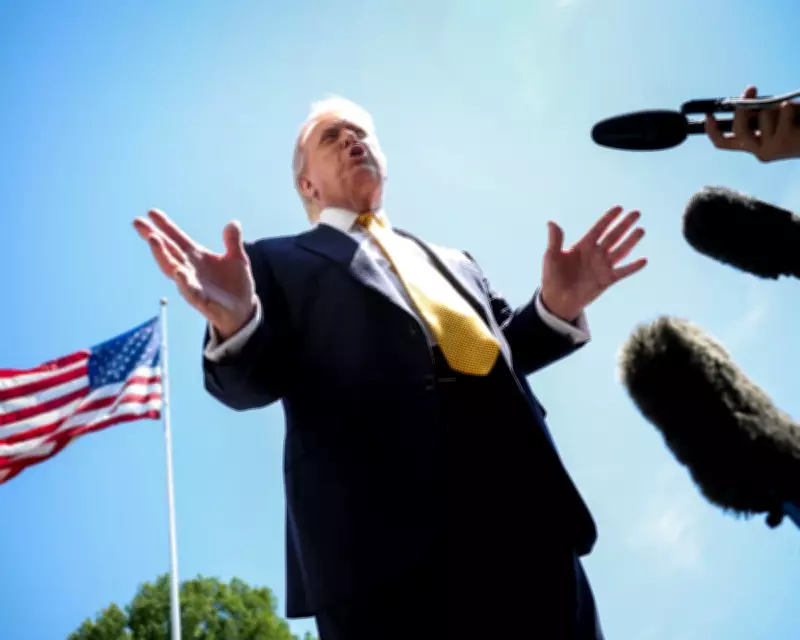
'The only thing that matters when I’m talking about Iran is they can’t have a nuclear weapon,' Trump told reporters at the White House before departing for China. 'I don’t think about Americans’ financial situation. I don’t think about anybody. I think about one thing: We cannot let Iran have a nuclear weapon. That’s all.'

Midterm Election Context
These remarks come ahead of the US midterm election campaign season, which is expected to be dominated by concerns over affordability. Trump’s top officials have struggled to explain when economic pressures might ease. Energy Secretary Chris Wright said in March that fuel could return to prewar levels by summer, but later stated he 'can’t make predictions.' In April, he told CNN that prices falling below $3 a gallon 'might not happen till next year.'
Trump himself, when asked for a forecast, suggested prices could go lower, 'or the same, or maybe a little bit higher' by November. Kevin Hassett, Trump’s top economic adviser, told Fox News that relief was coming 'relatively quickly and certainly ahead of the election,' claiming the president assured him the 'war is close to being over.'
Global Impact
The economic strain of the war has been felt worldwide. Inflation is accelerating in Australia, Canada, and South Korea. British households have been warned of a fresh cost-of-living crisis, and Asian manufacturers are passing higher costs down the supply chain. Secretary of State Marco Rubio suggested Americans should count themselves fortunate, as other countries are suffering 'big time,' noting the US, as a net oil exporter, is 'insulated to some degree.'
On Tuesday, Trump echoed this comparison, noting that before the war, inflation was at 1.7%. He predicted a resolution would bring a 'massive drop in the price of oil' and that worst-case forecasts—$300-a-barrel crude, a stock market crash of 25% or more—had not materialized. 'A lot of people predicted that,' he said. 'Well, it didn’t happen.'
Consumer Confidence and Public Appearances
A University of Michigan survey from April found consumer confidence has fallen to levels last seen in 2022, when inflation peaked due to Covid-19 disruptions. Trump’s recent public appearances have featured boasts about the stock market, dismissals of inflation concerns, and updates on the rising cost of a new White House ballroom. On Tuesday, he insisted his economic policies were working 'incredibly' and that Americans would see the payoff once the war ends.
'When this war is over, oil is going to drop, the stock market is going to go through the roof, and truly, I think we’re in the golden age right now,' Trump said. 'You’re going to see a golden age like we’ve ever seen before.'