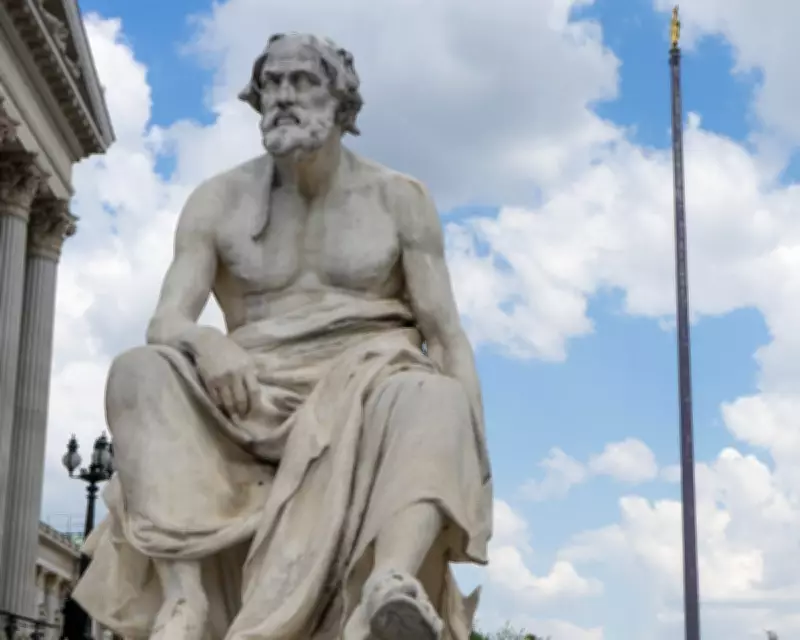
A recent letter to the editor challenges the common interpretation of the so-called Thucydides trap, a phrase invoked by Chinese President Xi Jinping in his meeting with former U.S. President Donald Trump. The letter, written by Tim Rood and Phil Coughlin, argues that the translation of Thucydides' original Greek text has been misleadingly altered, affecting the historical lesson it conveys.
The Misinterpretation of Thucydides
The Thucydides trap refers to the idea that war is inevitable when a rising power threatens an established one. This concept, popularized by Harvard political scientist Graham Allison, is based on a translation from Thucydides' History of the Peloponnesian War. Allison uses the translation: "it was the rise of Athens and the fear that this instilled in Sparta that made war inevitable." However, Rood and Coughlin point out that this phrasing is not entirely accurate.
A More Accurate Translation
The scholars note that a more precise translation of Thucydides' Greek would be: "the Athenians growing great and creating fear in the Spartans compelled them towards making war." This version emphasizes a subjective impression of necessity on the part of the Spartans, rather than an absolute, unavoidable fate. Thucydides' history, they argue, illustrates how perceptions of necessity can become self-fulfilling prophecies.

The Historical Context of the Translation
Interestingly, the translation used by Allison was introduced in a 1903 revision of Richard Crawley's 1874 edition by his nephew Richard Feetham. This revision occurred at a time when the threat of "inevitable war" between Britain and Germany was gaining traction. Rood and Coughlin suggest that this historical context may have influenced the wording, making it more aligned with contemporary fears of an unavoidable conflict.
Implications for Modern Politics
The letter expresses hope that Allison's potentially misleading reading of Thucydides can help modern politicians avoid the trap more effectively than their early 20th-century predecessors. By understanding that the perception of inevitability can be a driving force, leaders might be able to prevent conflicts from escalating unnecessarily.
In a humorous aside, Phil Coughlin comments on Xi Jinping's mention of the Thucydides trap to Donald Trump, noting that Trump's difficulty with pronouncing classical names like "Thucydides" or "Peloponnese" might ironically prevent a meaningful discussion on the topic.