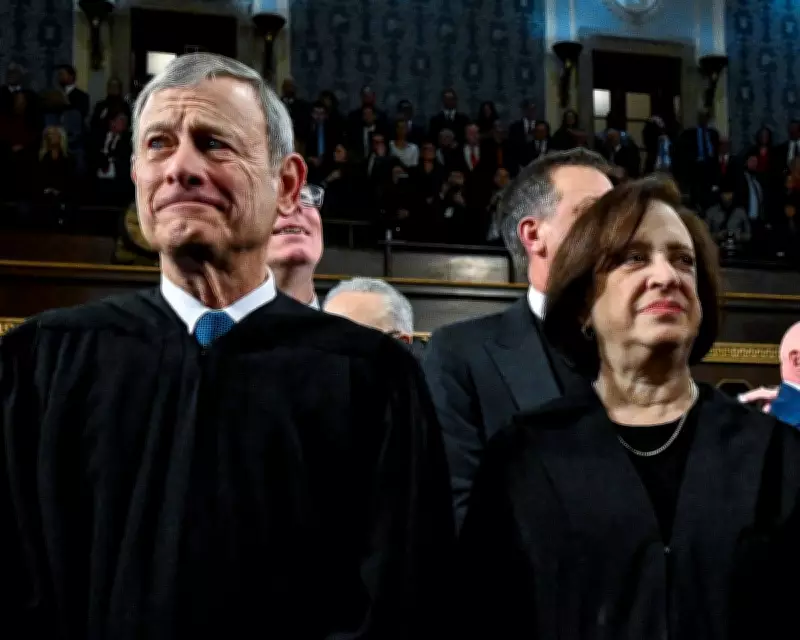
The US Supreme Court, led by Chief Justice John Roberts, has dealt another blow to voting rights, effectively dismantling key protections of the Voting Rights Act (VRA) of 1965. In a landmark 6-3 ruling, the court weakened Section 2 of the VRA, which had been the primary federal check against racial gerrymandering in many Republican-controlled states. This decision marks a dramatic reversal of progress made since the civil rights era, allowing states to redraw electoral maps in ways that dilute minority voting power.
Historical Context and Impact
After Reconstruction, Southern states implemented poll taxes, literacy tests, and discriminatory districting to suppress Black voters, leading to Jim Crow laws. The VRA of 1965 was enacted to end such iniquity. However, the Supreme Court's recent ruling effectively turns back the clock, reviving a system where formal voting rights exist but political power remains elusive for minorities. The speed of this reversal is striking: following the decision, Republicans are swiftly redrawing maps to dismantle previously protected majority-minority districts.
Consequences for Minority Representation
In cities like Memphis, one of the "blackest" in America, concentrated Black urban votes that could elect a candidate in a single district can now be split across several. By "cracking" Memphis, Tennessee Republicans could win all nine House seats instead of the current eight. Repeating this across the South could net Republicans up to a dozen House seats by erasing majority-minority districts. This built-in advantage may allow them to control the House even while losing the popular vote, potentially helping Donald Trump's allies retain power in Congress.

Partisan Gerrymandering and the Electoral Arms Race
Both major US parties have engaged in widespread gerrymandering, but they have largely canceled each other out. The court's decision removes constraints on red states, prompting blue states to respond with aggressive countermeasures. History suggests a new electoral arms race. When Donald Trump urged Republicans to launch a gerrymandering blitz last summer, Democrats responded by winning a referendum in Virginia to redraw the state's congressional map, potentially flipping four Republican-held seats. This matter is now before a judge.
The Court's Reasoning and Dissent
The Supreme Court now insists that states have no compelling interest in accounting for race when drawing maps. In 2013, when the court struck down another key VRA provision requiring federal approval for voting rule changes, Chief Justice Roberts argued that "our country has changed" and the law's "strong medicine" was no longer needed. Southern states immediately implemented voter ID laws and restrictions previously blocked. In a dissenting opinion, Justice Elena Kagan warned that the majority decision jeopardizes districts that give minority voters a political voice. She is right that such gains could quickly disappear.
Conclusion
The current Supreme Court is deeply compromised. Its decisions, if left unchecked, will undermine American democracy. The court must be confronted and transformed by the next Democratic administration. The erosion of voting rights is a direct threat to the principle of racial equality in electoral opportunity.