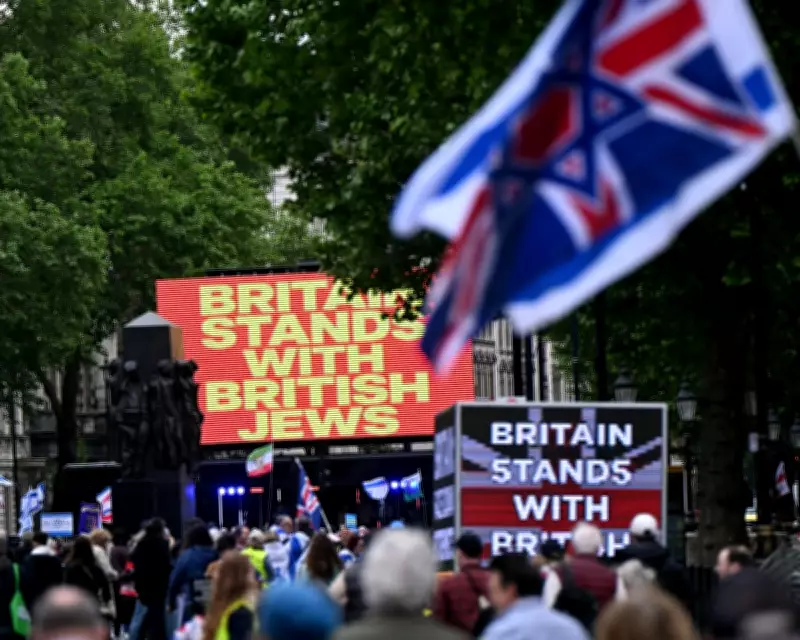
At a recent rally against antisemitism in central London, Rabbi Charley Baginsky, co-leader of Progressive Judaism, faced boos as she addressed the crowd. This was not the first time; last year, she and her colleague Rabbi Josh Levy were jeered off stage at a similar event outside Downing Street.
Political Divisions on Display
The rally highlighted a deepening political divide among British Jews. While some attendees understood the booing of Labour minister Pat McFadden as a reaction to perceived inaction on antisemitism, they were dismayed when Liberal Democrat leader Ed Davey received similar treatment. In contrast, Reform UK deputy leader Richard Tice and Conservative leader Kemi Badenoch were warmly received.
This moment reflects how some liberal and left-wing British Jews feel isolated as right-wing figures seize the initiative in condemning antisemitism and defending Israel. For some, fighting antisemitism requires broad alliances with other minority communities and anti-racist movements. But others view those spaces with suspicion, arguing that hostility towards Jews is often minimized or tolerated within them.

Shifting Political Allegiances
Recent research by the Institute for Jewish Policy Research (JPR) found that support for the two main parties among British Jews has dropped to 58%, the lowest ever recorded. The Green Party now enjoys 18% support, compared to 11% for Reform UK. However, community leaders note a rightward shift among some Jews, driven by disillusionment with Labour and growing concerns about antisemitism.
Raphi Bloom of the Jewish Representative Council said Labour was once a "natural home" for Jewish values, but the Jeremy Corbyn era weakened that bond. Since the October 7 attacks, he said, "a number of Jewish people" have moved rightward or prioritized safety over ideology. He noted that Reform UK has dealt with antisemitism issues "swiftly," attracting "genuine allies" from the Conservatives.
Progressive Voices and Concerns
Rabbi Baginsky argues that antisemitism must be tackled alongside all forms of hate, including Islamophobia, racism, and misogyny. But she acknowledged that message is hard to convey when some prefer to "draw the walls up." A letter signed by 2,000 people urged organizers to withdraw an invitation to Reform leader Nigel Farage, citing allegations of teenage antisemitism. The letter reflected support for Baginsky's inclusive approach.
Independent councillor Andrew Walters, a British Orthodox Jew, warned against aligning too closely with the right. He said parties that "despise other groups" should be viewed with skepticism, and that the far right is using anti-Muslim and anti-immigrant agendas to attract Jews. "It's a short-term fallacy to say 'my enemy's enemy is my friend,'" he added.
Polarization and Internal Tensions
David Feldman of the Birkbeck Institute for the Study of Antisemitism identified two dynamics driving divisions: growing disagreement over Israel, especially among younger Jews less likely to identify as Zionists, and deepening arguments about the causes of antisemitism. Some believe the pro-Palestine movement is the main driver, while others see antisemitism as rooted in far-right ideologies.
David Davidi-Brown of the New Israel Fund UK said his organization withdrew support for the rally after invitations to political leaders. He expressed concern about rhetoric that flattens entire movements into hostile caricatures. Rabbi David Mason of Hias+Jcore warned against stirring up fear against migrants and refugees, noting that Jewish history in Britain began with barriers and mistrust.
Despite the tensions, communal leaders emphasized unity. Bloom warned that Jews gravitating towards figures like Tommy Robinson are "playing a very dangerous game" and that booing progressive rabbis was "absolutely wrong." He added, "We're not running away. We believe we have a strong future here, but we need allyship from many in wider society."