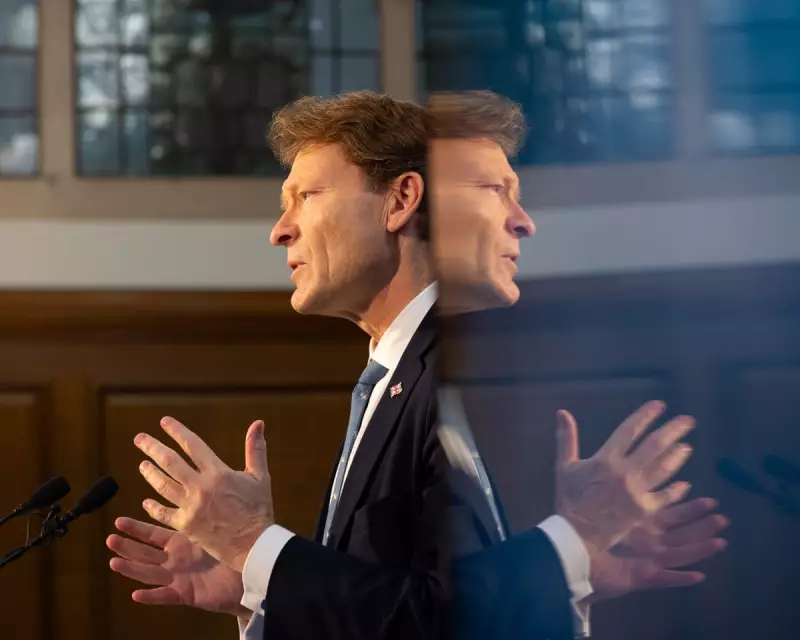
In what some might call a seasonal surprise, Reform UK deputy leader Richard Tice opened a press conference with a rare, seemingly heartfelt apology. The event, held at Church House in Westminster, was ostensibly called to address the fallout from his controversial comments about children with special educational needs and disabilities (Send).
A Strained Attempt at Contrition
"I want to begin with an apology," stated Tice, striking a tone that observers noted sounded uncharacteristically genuine. For the past fortnight, the party had kept him largely out of the spotlight after he claimed it was "insanity" for disabled children to wear ear defenders in classrooms. The remarks provoked anger from some Reform supporters who have children with Send requirements.
Tice sought to make amends, suggesting his earlier point about overdiagnosis was really an expression of pleasure that children were getting help. He pivoted to new phrasing, announcing, "We need to stop thinking of children as disabled. We need to think of them as differently abled." The statement was met with silence and visible discomfort from the small audience, including stony-faced colleague Lee Anderson. Critics were quick to point out that the term "differently abled" is widely considered patronising within the Send community.

Mounting Incoherence and Contradiction
The conference, Reform's second in two days, quickly unravelled into a spectacle of confusion. Tice's policy announcements lacked clarity, promising to turn every church into a special school while simultaneously vowing to end the era of private-equity-funded schools. He asserted that profit was both "very bad and very good," leaving journalists and attendees baffled.
His attempt to navigate contentious past issues proved equally problematic. When questioned, he refused to retract his defence of Nigel Farage against allegations of racist and antisemitic remarks made in his youth, dismissing it as "old news." He also declined to condemn Reform mayoral candidate Chris Parry, who told Labour's David Lammy to "go home to the Caribbean." Tice framed such language as part of the "rough and tumble" of holding government to account.
A Party Grappling with Internal Tensions
The sparse attendance at the hired venue spoke volumes. With only three rows of chairs partially filled, the event underscored Tice's struggle to command authority. Lee Anderson, seated in the front row, appeared deeply unimpressed throughout, his expression growing darker. The atmosphere contrasted sharply with the previous day's conference, where MP Danny Kruger controversially welcomed support from a pornography star.
By the end, Tice's performance collapsed into total incoherence, as if he were ad-libbing without a clear direction. He managed to praise and condemn the BBC in the same breath, labelling it both brilliant and fit only for destruction. The display painted a picture of a politician crushed by his own contradictions, desperately seeking approval but unable to articulate a coherent belief system beyond a need to be liked.
The episode leaves Reform UK facing renewed questions about its direction and the competence of its leadership beneath Nigel Farage. Tice's botched apology and subsequent ramblings suggest a party struggling to reconcile its anti-establishment rhetoric with the practical demands of policy and public accountability.