NT Government's Response to Indigenous Child Death Criticized as Deeply Alarming
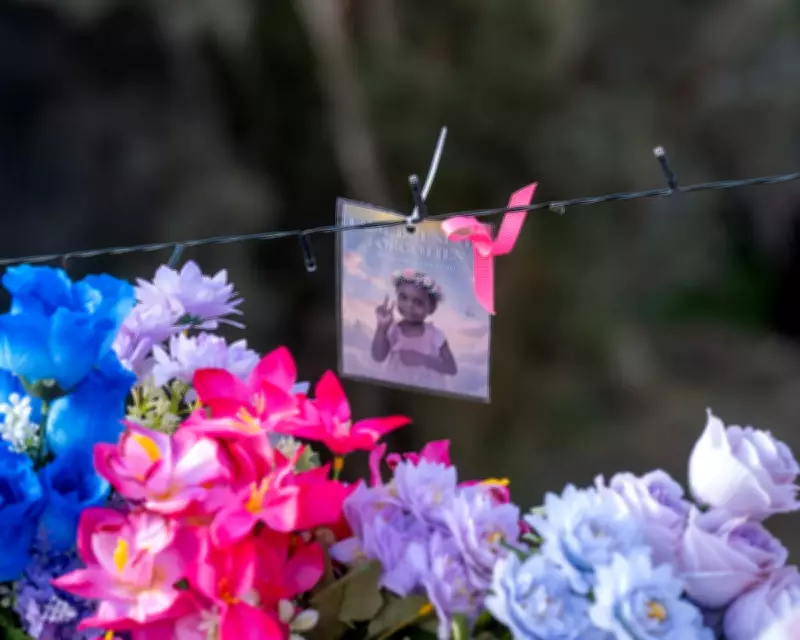
Almost 20 years after the Northern Territory intervention, governments are repeating the same mistakes and failing Aboriginal children, according to prominent academics Fiona Stanley and Marcia Langton. The NT government's inquiry following the tragic death of Kumanjayi Little Baby in Alice Springs is 'deeply alarming,' they write.
The weight of evidence is unambiguous: supportive services for the health and wellbeing of mothers, carers, and children are what best ensure the safety, healthy growth, and socialisation of Aboriginal children. Yet the NT government has chosen an inquiry headed by a former police commissioner, with no Aboriginal involvement, and is simultaneously eradicating child protection officers. Widespread criticism of the inquiry's terms of reference has done nothing to change course.
The statistics demand attention. Aboriginal children make up only about 20% of the NT's child population, yet they represent 90% of children in the child 'protection' system and 95% of children detained. As the Uluru Statement from the Heart puts it plainly, it is not because they are not loved.
Too often, media, columnists, leaders, and politicians reach for the law-and-order response, demanding approaches that cause more harm than good. Understanding the social determinants of children's health and safety requires a different lens altogether.
Evidence of What Works Ignored
The evidence for what works is not new. In 2015, there were 75 Aboriginal community-controlled family and children's services across the nation, successfully helping Aboriginal children find pathways to participation in Australian society. The Abbott, Turnbull, and Morrison governments axed them. The children who depended on those services are now teenagers. They missed out on the nurturing environments that help young people avoid out-of-home care, suicide, truancy, and detention. The consequences are visible in the town camps around Alice Springs and across many NT communities.
The Howard government's NT intervention offers an even starker lesson. Ostensibly aimed at reducing child sexual abuse following the Little Children are Sacred report, it was hugely costly, opposed by virtually every Aboriginal organisation, and by any measure a disaster. Child sexual abuse increased every year after the intervention. No lesson appears to have been learned.
Community-Controlled Services Are Trusted
We have clear and consistent evidence that when Aboriginal people are engaged in service provision, those services are trusted and used. When they are administered by non-Aboriginal bureaucrats, typically remote from the communities they serve, they fail. Robin Granites, the grandfather of Kumanjayi Little Baby, has put it directly: 'We understand the language, the culture, the lived experience.'
Two patterns explain successive government failures. First, most Aboriginal-controlled welfare services – in early childhood, health, child protection, education, diversionary programs, and justice – are either chronically under-funded or have had their funding cut entirely. Second, services developed and implemented without Aboriginal input consistently fail to deliver.
AbSec, the Aboriginal child, family, and community peak organisation in New South Wales, has documented this clearly. Despite decades of reviews and policy commitments to shift investment, the NSW child protection system remains overwhelmingly crisis-driven. The majority of funding continues to flow to out-of-home care, with only a modest proportion directed to early intervention and family support. As AbSec has reported, the failure to meaningfully shift funding toward earlier supports and Aboriginal community-controlled organisation (ACCO)-led services perpetuates the overrepresentation of Aboriginal and Torres Strait Islander children at every stage of the child protection system. It fails to acknowledge the deep strengths that Aboriginal families bring to raising children strong in culture.
Need for Early Intervention and Family Support
The same finding has been replicated across every Australian jurisdiction. We need early family support interventions rather than the criminalisation and institutionalisation of children. The latter dehumanises children, leads to social dislocation, and in too many cases to prison. A growing number of Aboriginal children have spent their entire lives cycling through institutional systems.
Some communities have built their own responses to this injustice. For more than 30 years, the Maari Ma Health Aboriginal Corporation has supported Aboriginal and Torres Strait Islander families and children across Wilyakali and Barkindji country in far west NSW, including Broken Hill and surrounding communities. These models exist – but there are far too few of them to meet the accelerating levels of need.
The Secretariat of National Aboriginal and Islander Child Care (SNAICC) made the case plainly in its 2025 Family Matters report, recommending that the Australian government commit to a national, systematic, and sustainable approach to funding ACCO-led integrated early years services. The Aboriginal and Torres Strait Islander early years sector, SNAICC argues, offers one of the most powerful opportunities for changing trajectories for children and families – providing support that is culturally grounded, holistic, trauma-informed, and responsive to complex needs. If only such services existed at the scale required.
Large-scale reform and sustained investment in healing and strengthening families are what is needed to reverse current rates of child removal. Such reforms must be developed in full partnership with Aboriginal and Torres Strait Islander peoples.
The NT inquiry should have invited Catherine Liddle, CEO of SNAICC, to sit on its panel. It should have invited Robin Granites to share his wisdom about the interactions between Aboriginal people and the justice system. If those conducting the inquiry were willing to listen, they might yet get some of this right.
Prof Fiona Stanley is a patron of The Kids Research Institute Australia. Marcia Langton is a Yiman and Bidjara woman from Queensland and a laureate professor of Australian Indigenous studies at the University of Melbourne.