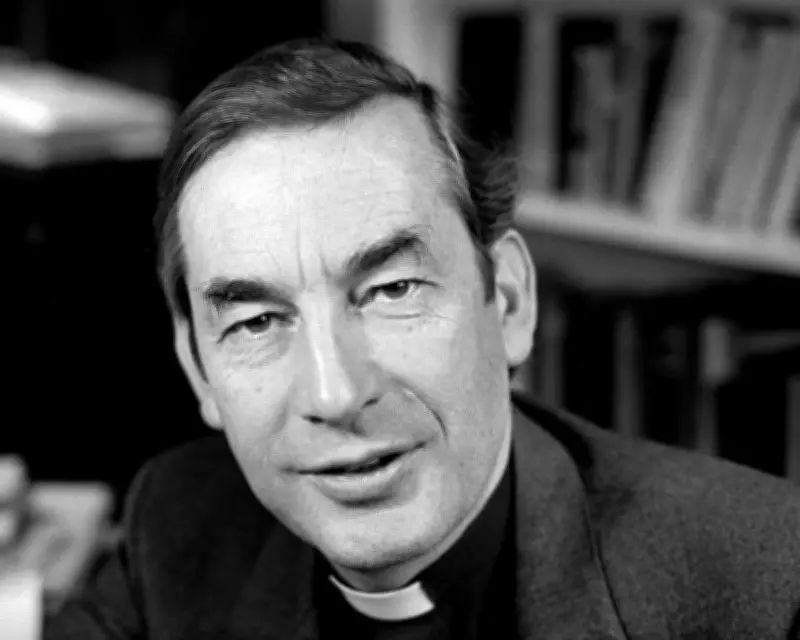
The Rt Rev Lord Harries of Pentregarth, known to millions as Richard Harries, has died at the age of 89. He was widely recognized for his 54-year contribution to BBC Radio 4's Thought for the Day segment on the Today programme, where his three-minute talks were noted for their cogency, compulsion, and challenge, often laced with literary allusions. His last broadcast aired at the end of March, shortly before he fell ill on Easter Sunday.
Early Life and Military Career
Born in Eltham, south-east London, on 2 June 1936, Richard Douglas Harries was the son of Brigadier William Harries and Greta (née Bathurst-Brown). His father's military postings, including a stint in the US during World War II, meant a peripatetic childhood. He was educated at Wellington College in Berkshire, a traditional school for army officers' sons, and later at Sandhurst military academy. He was commissioned in the Royal Corps of Signals.
Despite his family not being particularly religious, Harries' path to ordination was deliberate. Initially expected to study engineering at Cambridge, a conversation with a fellow army recruit turned his thoughts toward religious belief. He later told the Times in 1989, "If Christianity is true, it ought to be the centre of my life; if it is untrue, I ought to drop it altogether." He described himself as "a liberal catholic, slightly on the conservative side."

Ordination and Academic Career
Harries wrote to Cambridge colleges requesting a change to theology, and Selwyn College offered him a place. After graduation, he trained for ordination at Cuddesdon College near Oxford under Principal Robert Runcie, the future archbishop of Canterbury. He served as curate at Hampstead parish church and chaplain at Westfield College (now part of Queen Mary University of London). He then became lecturer at Wells Theological College and later warden of the merged Salisbury and Wells Theological College.
From 1972, he was vicar of All Saints, Fulham, for nine years, and from 1981, dean of King's College London. His appointment in 1987 to the Oxford diocese was popular, bolstered by his experience as a broadcaster, author, and parochial leader. He managed a large multicultural diocese with 500 clergy and three suffragan area bishoprics, a cathedral within an Oxford college, a car factory complex, and a rural hinterland.
Episcopacy and Controversies
Harries was a progressive voice within the Church of England, supporting women's ordination, opposing homophobia, promoting ethical investment, and advancing interfaith relations, especially with the Jewish community. He also advocated for just war theory, having studied for a doctorate on the subject, and supported Britain's nuclear deterrent.
He occasionally courted controversy. He and others took the church commissioners to the high court over ethical disinvestment from apartheid South Africa. However, his name was often mentioned as a future archbishop, though Margaret Thatcher's preference for evangelical George Carey prevented that.
The greatest controversy of his episcopacy came in 2003 when he promoted the appointment of Jeffrey John, a gay but celibate dean, as suffragan bishop of Reading. Despite careful planning and support from Archbishop Rowan Williams, conservative evangelicals opposed the move, threatening schism. Williams backed down, and John was forced to stand aside. Harries expressed disappointment, stating, "I believe Jeffrey John conformed to the church's criteria."
Retirement and Peerage
Harries retired as bishop in 2006 and was immediately granted a life peerage, taking the title Lord Harries of Pentregarth from a small Welsh village in Ceredigion, where his family had roots. In the House of Lords, he served as a crossbencher, intervening frequently on ethical issues such as opposing the Iraq war. He continued writing, producing at least 35 books, including works on faith, art, literature, and a 2021 memoir, The Shaping of a Soul.
Personal Life
Harries married Josephine Bottomley, a paediatrician, in 1963. He cared for her for over a decade after she developed vascular dementia. She survives him, along with their children Mark and Clare, four grandchildren, and his sister Linda and brother Charles.

Rowan Williams once described Harries as "that rarity, a Christian public intellectual." He died on 29 April 2026.