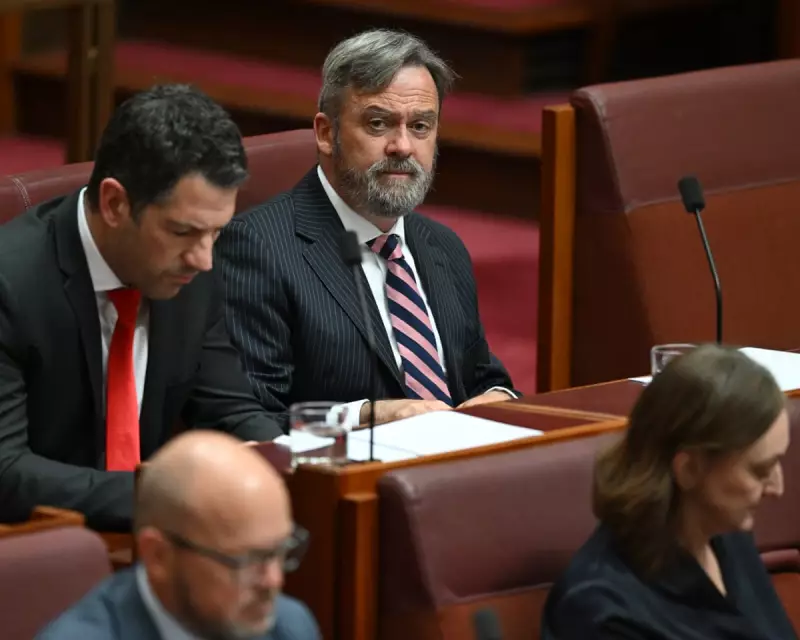
In a significant intervention within the Liberal party, Senator Andrew McLachlan has forcefully argued that embracing a net zero emissions target is not just compatible with conservative values, but is a fundamental duty. This comes as the party undertakes a major post-election review of its policies.
A Conservative's Case for Environmental Stewardship
Senator McLachlan, who describes himself as a conservative, roots his environmental stance in a profound belief that humans are stewards, not owners, of the planet. He expressed concern that a faction within the political right views nature merely as a resource to be exploited for wealth, a perspective he fundamentally rejects.
He revealed that during party room debates, he sometimes questions if he is in a 'real conservative' minority, despite his conviction that a core conservative principle is to leave the planet healthier for future generations.

The Imperative of Targets and Accountability
Addressing the internal debate on emissions reduction, the senator was unequivocal about the need for clear targets. Drawing from his professional and army background, he stated that targets are critical for achieving any objective, including the national effort to decarbonise.
He issued a direct challenge to his colleagues, asserting that you cannot claim to be of the political right and shy away from accountability. He reminded the party that the net zero by 2050 target was originally adopted under former Prime Minister Scott Morrison and reaffirmed by Peter Dutton.
Abandoning this target now, he argued, would make it impossible to hold the Labor government to account on an aspiration that was once the Liberals' own.
Reconciling with the Electorate and the Pacific
Senator McLachlan dismissed the idea that walking away from net zero would be popular with voters, particularly those in inner-city electorates lost to 'teal' independents. He described the teal movement as a symptom of the Liberal party's failure to demonstrate a genuine commitment to the environment.
He also highlighted the international dimension, expressing deep concern for Pacific nations. Abandoning the net zero target would be seen as abandoning our sisters and brothers in the Pacific, who rely on Australia's friendship and commitment to their collective wellbeing in the face of climate change.
Looking forward, his ambition is clear: for Australians to view the Liberal party as the best choice to manage the economy on the journey to decarbonisation. The pathway back to government, he concluded, lies in reconciling with nature and proving the party's commitment to a healthy world for future generations.