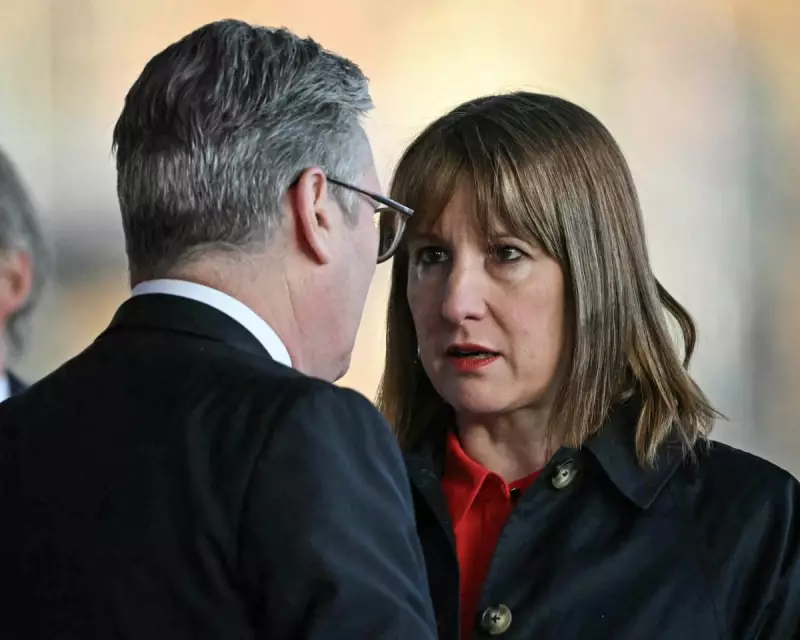
Keir Starmer's Labour government faces a profound crisis of credibility as Chancellor Rachel Reeves prepares to deliver an exceptionally difficult budget next week, having been forced into a humiliating U-turn on taxation policy.
The Taxation Retreat That Shook Westminster
By instinct and conviction, Rachel Reeves positions herself as a traditionally social democratic, centre-left Labour chancellor. However, when she rises to deliver her budget statement, those core qualities will be remarkably difficult to discern. The chancellor finds herself hemmed in on every side by avoidably tight commitments on taxation, spending and borrowing.
The root of this predicament lies in Labour's decision during the 2024 election campaign to rule out increasing all three main personal taxes - a choice that former Conservative minister David Willetts described this week as catastrophic. Reeves might have secured more fiscal flexibility if the new government had moved decisively to declare the triple-tax pledge unsustainable after examining the Treasury books.

Instead, the chancellor misjudged the political landscape. She waited until this month before beginning to argue, entirely correctly, that the tax pledge needed to be broken to fulfil Labour's other commitments and regain direction. Yet within little more than a week, she was forced to abandon this position in a dramatic retreat that has damaged her authority.
Labour's Internal Divisions Surface
The primary cause of this U-turn stems from the complex politics of the modern Labour party. With Labour already sliding in opinion polls, backbench MPs revolted against breaking a manifesto commitment. The rebellion grew so serious that some began plotting a new leadership challenge.
Party whips delivered the crushing assessment that an income tax rise would not pass the House of Commons, an event that could have brought the entire government down. Faced with this reality, Reeves had no choice but to cave to internal pressure.
This taxation debacle represents far from the only example of Labour's internal divisions. Equally pivotal was June's backbench revolt against welfare reform, which followed Reeves's similarly unpopular cuts to winter fuel payments. In both cases, backbenchers demonstrated their power on behalf of claimants, forcing two significant about-turns on government welfare spending plans.
The pattern continued this week as Home Secretary Shabana Mahmood faced more doubters on the Labour benches than among Conservative or Liberal Democrat MPs during her marathon defence of tougher refugee policies in the Commons.
The Fundamental Question Facing Labour
The consequence is a Labour party that appears fundamentally conflicted - unwilling to cut spending, equally resistant to raising taxes, and potentially requiring dragging to voting lobbies when contentious measures require parliamentary approval. In essence, Labour has transformed into an alliance of positions, interests and instincts rather than a unified political force with clear direction.
Some responsibility lies with poor leadership, but not exclusively. There has always been tension within Labour between its working-class base and its white-collar, ideologically driven supporters. More crucially, the old core Labour vote of the 20th century has disappeared entirely, along with the industrial Britain that generated it.
Polling data reveals a dramatic transformation. Until the mid-1980s, approximately 80% of Labour's support came from manual workers and their families, compared with 20% from middle-class workers. By Tony Blair's 1997 victory, the working-class share had fallen to 59%, while middle-class support rose to 41%. In 2010, white-collar Labour voters exceeded blue-collar ones for the first time.
Britain has become significantly more middle class, better educated, more outward-looking and more liberal, yet Labour continues to struggle adapting to this intricate social transformation. The party expends considerable effort trying to capture working-class Reform supporters while seemingly enjoying berating its middle-class progressive electorate.
When a political party faces in too many directions simultaneously, the question becomes unavoidable: what, in today's Britain, is the fundamental point of Labour?