The Progressive Challenge: Confronting Faragism's Appeal
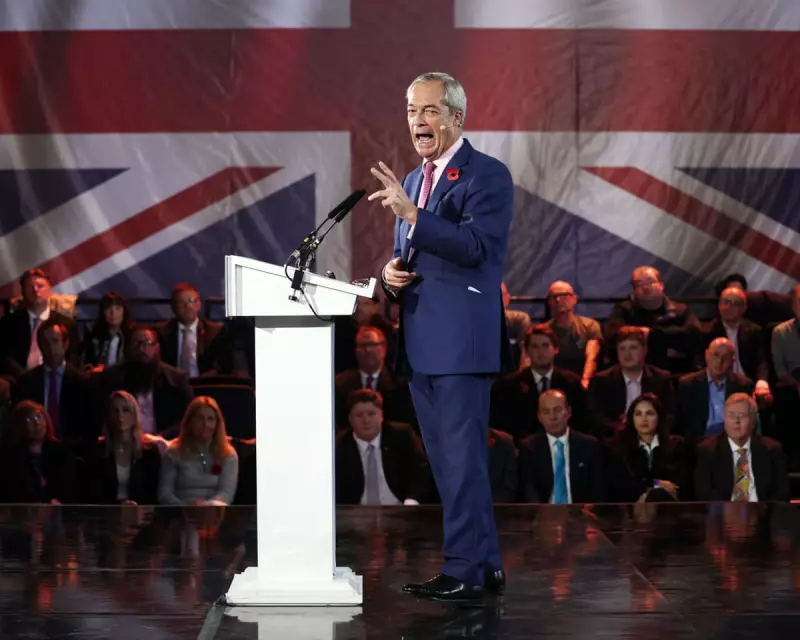
On 10 November 2025, Nigel Farage delivered a significant speech in London, underscoring the growing influence of his political movement. As Reform UK gains traction in polls across England, Scotland, and Wales, the Labour party faces a critical challenge: how to effectively counter this surge without resorting to simplistic moral condemnation.
Learning from Political Philosophy
The debate recalls when Harvard professor Michael Sandel advised Labour in 2012 during Ed Miliband's leadership. Sandel, who recently won the prestigious $1m Berggruen prize for philosophy, had urged the party to anchor its concerns for social justice in traditions of solidarity, civic virtue and community. This synthesis never materialised, creating a vacuum that Faragian 'national conservatism' has filled.
Post-Brexit Britain has seen Reform UK monopolise discussions of community, place, and cultural identity while progressives have largely focused on universal rights and celebrating diversity. This polarisation has created a political landscape where many on the left view the confrontation as a moral crusade: liberal tolerance versus reactionary authoritarianism.

Beyond Moral Certainty: A New Approach
Julian Coman, a Guardian associate editor, argues that resistance politics alone is insufficient to counter Reform's broad appeal. The modern left's guiding assumptions, developed during the decades following the Cold War, increasingly appear outdated. As historian Timothy Garton Ash observed, drawing on philosopher Pierre Hassner, 'humankind does not live by liberty and universality alone.'
The migration of less well-off voters to nationalist, authoritarian politics indicates that not everyone felt represented by the progressive emphasis on individual rights and freedoms that dominated from the 1980s onward. This shift, while advancing important social revolutions, created blind spots regarding communal wellbeing and social cohesion.
Signs of Change Within Labour
Two prominent Labour figures are showing potential pathways forward. Home Secretary Shabana Mahmood argues that establishing 'order and control' on immigration is necessary to rebuild public trust and create the foundation for a more generous politics. Meanwhile, Greater Manchester Mayor Andy Burnham has highlighted the need to escape subjection to 'rootless international capital' and restore sovereign control over economic choices.
Both approaches represent moves toward a politics that preserves ethical universalism while foregrounding values of social cohesion and collective obligation. As Sandel suggested in a recent autumn interview, the centre-left urgently needs to develop an 'alternative idea of national community' to counter racialised versions promoted by the far right.
The British left faces a crucial period of adaptation. Without developing a compelling vision that addresses both universal values and communal belonging, progressives risk ceding the next chapter of Britain's political history to reactionary forces. The challenge requires understanding Reform's appeal while offering a superior alternative rooted in both ethical principles and practical governance.