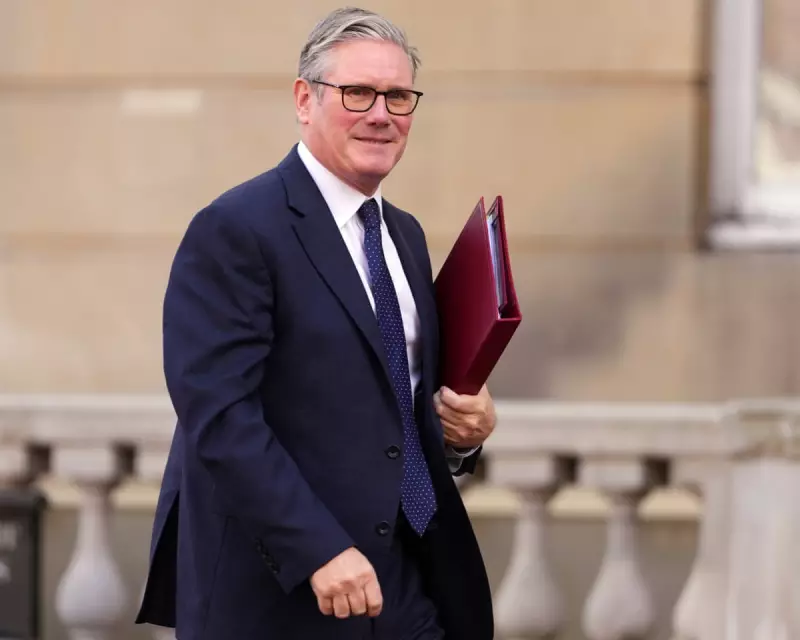
Sir Keir Starmer's Labour government is facing mounting criticism as internal conflicts threaten to derail its agenda just months after securing a decisive election victory. The party that promised stability and competence now finds itself embroiled in damaging briefings and leadership speculation.
Briefing War Exposes Deep Divisions
The political landscape has been dominated by revelations about anonymous hostile briefings from within Starmer's inner circle targeting potential leadership challengers. Particularly prominent in these internal manoeuvres is the speculation surrounding Wes Streeting's alleged leadership ambitions, which has become what one observer called a 'huge distraction from everything that should be dominating political thinking.'
Readers of the Guardian have expressed profound disappointment in the government's direction since taking office. One correspondent from Rugby, Warwickshire, articulated the growing public sentiment: 'I want everyone who has a role in this government to distinguish themselves from their predecessors. They can do this by showing that they understand their purpose: to act only in the interests of the country.'

Lack of Vision Threatens Public Confidence
The fundamental criticism levelled against Starmer's leadership is the apparent absence of new or different ideas to tackle the multiple crises facing Britain. As one reader from Stoke-on-Trent noted: 'Neither Starmer nor the faction that helped him become prime minister have any new or different ideas to address the multiple problems facing the country.'
This sentiment echoes the Guardian's editorial from 12 November, which argued that Starmer 'has failed to signal a resonant or consistent purpose to his leadership; he shows no natural capacity for public persuasion.' The criticism suggests that while Labour successfully positioned itself as an alternative to both Jeremy Corbyn's left-wing platform and the Conservative government, it has struggled to define what it actually stands for.
From Victory to Potential Disaster
What makes the current situation particularly concerning for Labour supporters is the party's apparent ability to transform election victory into political crisis. The very public nature of the internal conflicts has raised questions about Starmer's control over his own team and the government's strategic direction.
The current strategy appears limited to what critics describe as 'triangulating to the right' and 'mere self-preservation to stay in charge' rather than developing substantive policies. The anonymous briefings against potential challengers have further damaged the government's credibility at a time when it should be focusing on delivering its election promises.
As public confidence in politicians continues to decline, the Labour government faces the urgent task of demonstrating that it can govern effectively and unite behind a clear vision for the country's future.