The Politics of Pessimism vs Progressive Hope
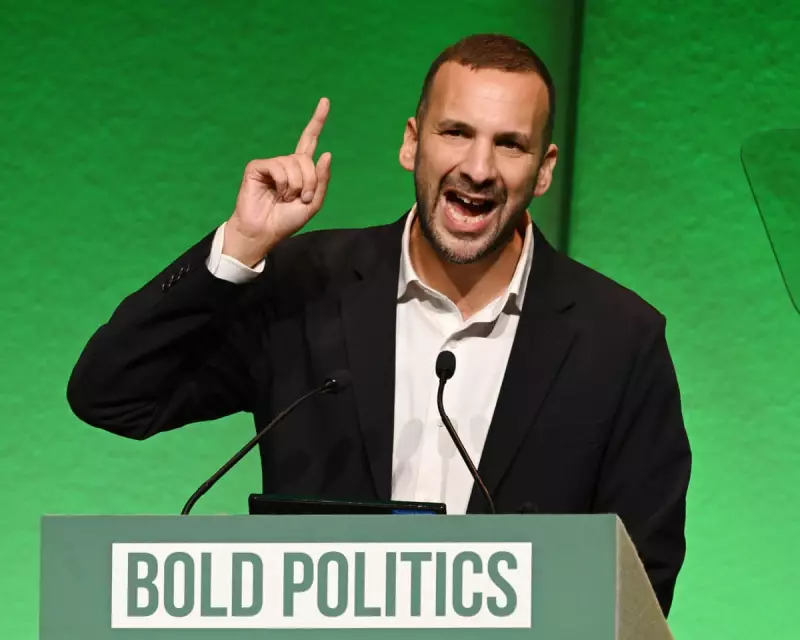
In contemporary British politics, a curious double standard prevails: while right-wing narratives dominate media coverage and political discourse, progressive policies offering hope and substantive change are routinely dismissed as unrealistic or naive. This fundamental bias was starkly illustrated recently when Darren Jones, one of Sir Keir Starmer's most influential ministers, criticised the Green party for making what he termed "undeliverable" promises ahead of the next general election.
The Systematic Dismissal of Progressive Policies
Jones's remarks, made to the Guardian, provide crucial insight into how Labour intends to counter the Greens as they emerge under leader Zack Polanski as a viable electoral threat. However, they also reveal a deeper political phenomenon where left-wing policies are consistently portrayed as childish fantasies, while centre and right-wing ideas are framed as sensible and realistic, regardless of their actual merit or public support.
This pattern extends far beyond electoral manoeuvring. When progressive politicians advocate for improved living conditions for ordinary citizens, they frequently face accusations that their pledges are impractical. Meanwhile, policies that concentrate wealth and power among the elite become normalised as the inevitable status quo.

The handling of the controversial two-child benefit limit exemplifies this dynamic. Introduced by the Conservatives in 2017, the policy has proven both a moral and economic failure, significantly contributing to increasingly expensive child poverty and subjecting women to distressing rape exemption rules. Despite this, the Labour government spent 18 months claiming scrapping it was unaffordable, with Starmer even suspending Labour MPs who opposed the policy. Only after renewed pressure from 100 civic organisations did Chancellor Rachel Reeves hint at possibly eliminating it.
Media Bias and the Crisis of Political Imagination
The structural bias against progressive ideas is reinforced by significant media imbalances. Research from Cardiff University revealed that Reform UK featured in 25% of all BBC News at Ten bulletins between January and July this year, while the Liberal Democrats - with 14 times more MPs - appeared in just 17.9%. Similarly, Nigel Farage's party was referenced in nearly 20% of ITV News at Ten bulletins compared to the Lib Dems' 6.2%.
This media landscape enables hard-right ideas, like mass deportations, to be presented as mainstream, while left-wing or even centre-left thinking is marginalised from public discussion. The consequence is a political system rigged against meaningful change and ill-equipped to address Britain's mounting crises, including soaring private rents, rising unemployment, and crumbling public services.
Yet evidence suggests public appetite for progressive solutions is growing. The Green party's increasing support and Zohran Mamdani's recent mayoral victory in New York indicate voters are questioning the narrative that positive change is unattainable. Policies dismissed by the establishment as radical - such as rent controls and nationalised energy, both of which majority of Britons support - are increasingly viewed by the public as logical and necessary.
The pervasive narrative of national decline contains a fundamental truth: Britain faces serious problems. However, the culprits aren't immigrants or disabled people, but rather a social and economic structure requiring transformation. Most voters already recognise the system is broken; what they need is inspiration that it can be fixed. The ideas frequently dismissed as "undeliverable" may be precisely what Britain most requires to build a better future.