Jaguar Land Rover (JLR) has reported a staggering 99% drop in annual profits, attributing the decline to the combined impact of US tariffs and a significant cyber-attack that disrupted its manufacturing operations for several months.
Financial Performance
Britain's largest carmaker posted a pre-tax profit of just £14 million for the fiscal year ending in March, a dramatic plunge from the £2.5 billion recorded in the previous year. Revenues also suffered, falling to £22.9 billion, which represents a decline of more than a fifth compared to the prior 12-month period.
Challenges Faced
The company encountered a series of setbacks during the year. Former US President Donald Trump's automotive tariffs, initially set at 25% before being reduced to 10% for the UK, created turmoil in JLR's crucial export market. This was compounded by a cyber-attack on August 31 that forced the shutdown of most systems and factories for weeks, with lingering effects felt through the autumn.

Additionally, JLR faced stiff competition in China, where a surge of new products from numerous carmakers impacted sales. The company employs approximately 33,000 people in the UK.
Industry Context
JLR is not alone in grappling with a challenging automotive landscape. Japanese manufacturer Honda reported its first annual loss in 70 years as a listed company, driven by a 1.6 trillion yen (£7.4 billion) write-off on electric vehicle investments after Trump removed subsidies for battery cars.
PB Balaji, who became JLR's chief executive shortly after the cyber-attack, acknowledged the difficult year but highlighted the company's resilience. He noted that JLR ended the year on a positive note and has recovered strongly.
Future Plans
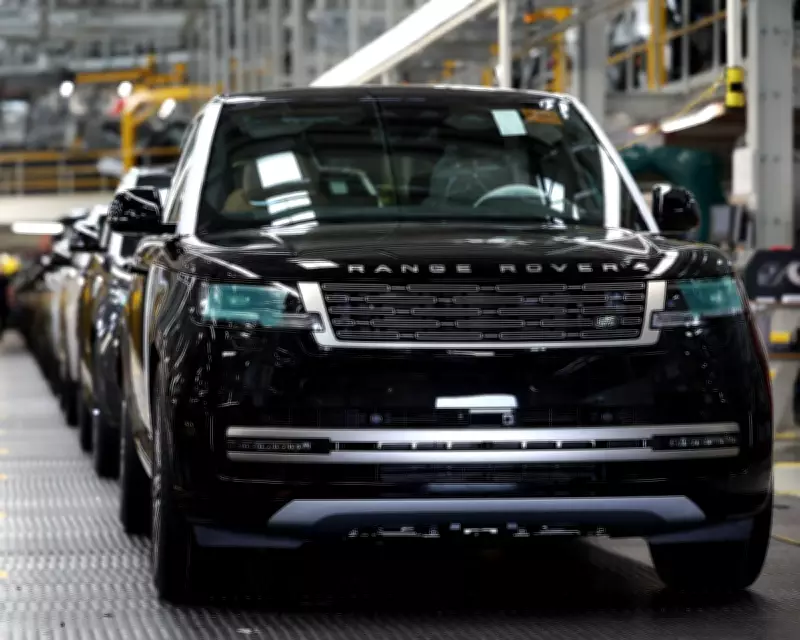
Looking ahead, JLR plans to launch the delayed Range Rover Electric in the second half of this year, along with smaller electric SUVs and a new Jaguar EV called the Type 01. The electric Range Rover was originally slated for 2025 but was postponed due to weaker-than-expected demand for battery vehicles.
Balaji emphasized the importance of the UK government reaching an agreement with the EU to include British carmakers in any new rules on “Made in Europe.” Such rules, designed to protect European industry from Chinese competition, could exclude UK manufacturers from EU incentives for EVs, placing them at a post-Brexit disadvantage.
JLR produces its Range Rover and upcoming Jaguar models in Solihull, West Midlands, and smaller SUVs like the Discovery Sport in Halewood, Merseyside. These models could be affected by proposals limiting company cars to those manufactured within the EU.
Financial Resilience
The cyber-attack and investments in new models led to a cash burn of £2.2 billion for the full year. However, JLR maintains that it remains resilient and well-positioned to address geopolitical, inflationary, and regulatory challenges, with £6.9 billion in available funds.