Israel's Eurovision broadcaster KAN has received a formal warning just days before the 2026 Eurovision Song Contest begins in Vienna, Austria. The warning came after several promotional videos appeared on social media platforms, including X, featuring Israeli representative Noam Bettan encouraging viewers to use all 10 of their votes on Israel when he performs in the first semi-final on May 12.
The 28-year-old singer, whose song is titled Michelle, recorded the promotional message in multiple languages: Azerbaijani, Dutch, English, French, German, Greek, Italian, Maltese, Portuguese, Spanish, Swedish, and Ukrainian. Eurovision Song Contest Executive Director Martin Green confirmed that KAN has been reprimanded for violating competition voting rules.
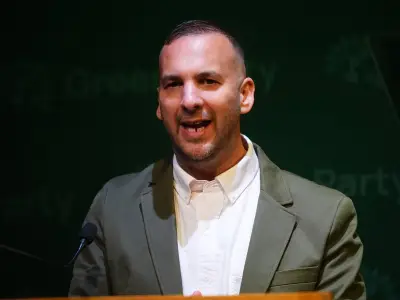
In a statement, Green said: 'We were made aware that videos instructing viewers to vote 10 times for Israel had been published and distributed by the artist representing KAN. Within 20 minutes, we had contacted the Israeli delegation and asked them to immediately stop all distribution of the videos and remove them from all platforms where they had been published. They did so.' He added: 'We will continue to closely monitor any promotional activity and take appropriate steps as necessary.'
KAN's Response and EBU Rule Changes
In response, KAN reported that the campaign is not financed by any particular group, claiming that Eurovision fans are the ones choosing to support their entrant. They insisted that they would always abide by the rules of the European Broadcasting Union (EBU).
Last November, the EBU implemented significant changes to the voting rules to 'strengthen trust and transparency' after extensive consultations following the 2025 contest in Basel, Switzerland. Green said at the time: 'We've listened and we've acted. The neutrality and integrity of the Eurovision Song Contest is of paramount importance to the EBU, its members, and all our audiences.'
Four major changes were introduced:
- Clearer rules of promotion: Participating broadcasters and artists are forbidden from actively engaging in or facilitating promotional campaigns by third parties that could influence voting outcomes. Any attempts to unduly influence results will lead to sanctions.
- Reduced maximum votes: For 2026, fans can only vote up to 10 times (down from 20) via phone calls, SMS, or online. Fans are encouraged to share support across multiple entries.
- Return of professional juries: Professional juries of music experts return for the semi-finals for the first time since 2022, creating a roughly 50/50 split between jury and audience votes in the final. The number of jurors increases from five to seven, with an expanded pool including journalists, critics, teachers, choreographers, and stage directors. At least two jurors must be aged 18 to 25. All jurors must sign a formal declaration to vote independently and impartially.
- Enhanced technical safeguards: The EBU will work closely with its voting partner to prevent fraudulent or coordinated voting activity and monitor suspicious patterns.
Controversy Surrounding Israel's Participation
Israel's involvement in Eurovision has been a point of contention for several years, leading some fans to boycott the event. Spain, one of the Big Five, withdrew in protest. Chair of RTVE José Pablo López stated: 'As joint organisers of the Eurovision Song Contest, we share a collective responsibility. While Israel has regularly participated in the competition, the current events and the genocide currently taking place make it impossible for us to look the other way.'
Despite outside pressure following the Gaza conflict, the EBU has allowed Israel to remain in the contest for the past three years. This has sparked fury given that the EBU banned Russia from participating in 2022 after the invasion of Ukraine, following threats of boycotts from other nations. Speculation about the EBU's refusal to ban Israel includes the fact that one of Eurovision's most prominent sponsors is the Israeli beauty brand Moroccanoil.