The balance of global power is shifting fast, but Britain is stuck in the same old Brexit rut. Without a reckoning about the epic strategic error of leaving the EU, there is no serious debate about the country's future place in the world.
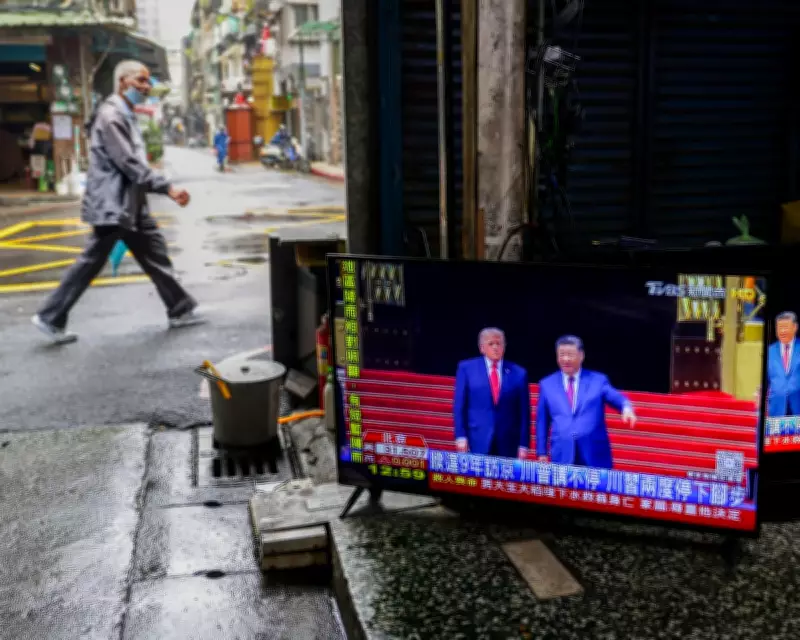
While the Labour party was in meltdown last week, Donald Trump was visiting China. By the time Wes Streeting had sent his resignation letter to Keir Starmer, the US president had completed a two-hour bilateral meeting with his Chinese counterpart, Xi Jinping, and moved on to sightseeing. The events unfolded in parallel, but in the competition for media and Westminster attention the superpower summit could not rival manoeuvres against the prime minister. That is normal. A domestic crisis will always bump foreign events off the news agenda.
There were no surprises in Beijing. Trump was on his best behaviour. In public, the two leaders stuck to a script of mutual flattery and conflict aversion. What they said in private – on trade, on Taiwan, on AI, on Iran – may prove significant. It is hard to judge when the contents are secret. Andy Burnham's chances of winning a byelection in Greater Manchester probably did not come up.

Likewise, Sino-US relations are not going to feature on the campaign trail in Makerfield over the coming weeks. It is not what party strategists call a doorstep issue. When voters have limited bandwidth to receive political messages, candidates are advised to stick only to prominent public concerns. That usually excludes the world beyond Britain's borders.
There are exceptions. Gaza has been a driver of support for Greens and independent candidates in recent ballots, but as an engine of outrage, not a coherent account of what the UK government – let alone a local councillor in Hackney – might realistically achieve in the Middle East.
Starmer performs better in the international arena than on the domestic stage. Even his rivals for the Labour leadership praise the decision not to let Britain get embroiled in the US-Israeli war on Iran. Streeting's resignation letter singled it out as an example of courage and statesmanship. It stands out also as a marker of good judgment against the gung-ho impulses that Nigel Farage and Kemi Badenoch indulged in during the first days of the conflict, and soon regretted.
But the prime minister gets no credit for getting a big foreign-policy call right, and not just because voters have other things on their minds. Keeping British forces out of battle does not prevent Britain feeling the consequences of war. Economic pain caused by the closure of the strait of Hormuz is not confined to combatant nations, or even felt most keenly by them. Starmer's military abstention does not prevent an energy-price spike feeding into inflation, which exacerbates the pressure on already squeezed household budgets. It also boosts market expectations that the Bank of England will be forced to raise interest rates, which drives up gilt yields, which means the government has to spend more on servicing its debts, leaving less revenue for the kinds of public goods that Labour MPs wish the chancellor could finance more generously.
Turbulent Gulf waters ripple around the globe and slosh over doorsteps in Makerfield. The same applies to the Trump-Xi meeting, although the impact is more subtle. The summit symbolised China's status as a superpower at, or close to, parity with the US. No single country can touch the top two in terms of economic might and technological advancement. Europe is a contender but only if it marshals collective continental wealth with strategically focused investment.
Britain can choose to be a partner in that project or accept a role as adjunct. National power could be boosted in an alliance of neighbours with broadly aligned global interests. Or it can be circumscribed by the Brexit cult of sovereignty that sees regulatory harmonisation with Europe as colonisation but welcomes subordination to US tech giants and industrial lobbies, which it calls free trade.
British politics is not grappling with this predicament, which requires an honest audit of exorbitant costs and negligible benefits of life outside the EU. That is less taboo than it was two years ago, when Starmer fought a general election imagining he could make Brexit work. Now he calls it a disaster. But the terrain is still tricky for Labour.

To stand a chance of winning a seat where a majority voted leave in 2016, Burnham feels he must treat the referendum result as a totem of immutable democratic will. In his first major speech since announcing he would stand in the byelection on Monday, the mayor of Greater Manchester said Brexit had been damaging, but also that the last thing we should do right now is revisit those arguments. He promised a relentless domestic focus to fix our own country. Such parochialism is understandable in the circumstances, but still disheartening in a speech that was otherwise thoughtful in surveying the roots of Britain's economic dysfunction. Burnham would rather not have addressed the matter at all, but Streeting had put it on the table days earlier by expressing his preference for rejoining the EU.
This is not just a Labour pathology. Farage, the ideological godfather of Brexit, does not dare boast of it as an accomplishment. His model of future Britain is as a satrapy in a Maga-led US empire. Given Trump's unpopularity on this side of the Atlantic, the Reform UK leader keeps that to himself. Badenoch's culture-warrior tendency steers her the same way. Her most memorable intervention on Europe was to endorse a speech by JD Vance, in which the US vice-president described continental liberals as a greater threat to democracy than Vladimir Putin.
The Tories have no sensible strategic concept for Britain in the 21st century. When Starmer visited Beijing earlier this year, Badenoch derided it as kowtowing. In his place, she would not have gone, she said. Such hawkishness was meant to prove loyalty to Washington's side in the great power rivalry. Presumably, she disapproves of Trump lavishing compliments on Xi, saying it is an honour to be his friend. Maybe she just thinks British prime ministers need a cue from the White House before performing the kowtow.
Opposition leaders do not have to think about foreign matters if they do not come up on the doorstep. That is the trap Labour fell into. The electoral advantage in shutting down hard questions about Britain's place in the world postponed the search for answers and confined it to the barren field of Brexit-believing policy options. Having failed to situate national problems in their proper global context, Labour ended up splashing around in the shallow end of political debate. That is the comfort zone of demagogues who blame the country's ills on immigrants and benefits claimants.
It is hard to make a compelling doorstep campaign out of a complex geopolitical situation, especially for an incumbent government. It risks sounding like evasion of responsibility, passing off mistakes in office as global misfortunes. But that, too, is a reason why the error of Brexit has to be tackled head-on. There is a reason why take back control was such an effective slogan in the referendum. It spoke to feelings of anxiety and lack of agency in a world of disorienting change.
Those feelings have not gone away. They are more severe because Britain's capacity to influence global events was diminished, not boosted, by leaving the EU. This is the argument at its core. I suspect a lot of people are open to persuasion, if not persuaded already: the road to control leads back to Europe.