
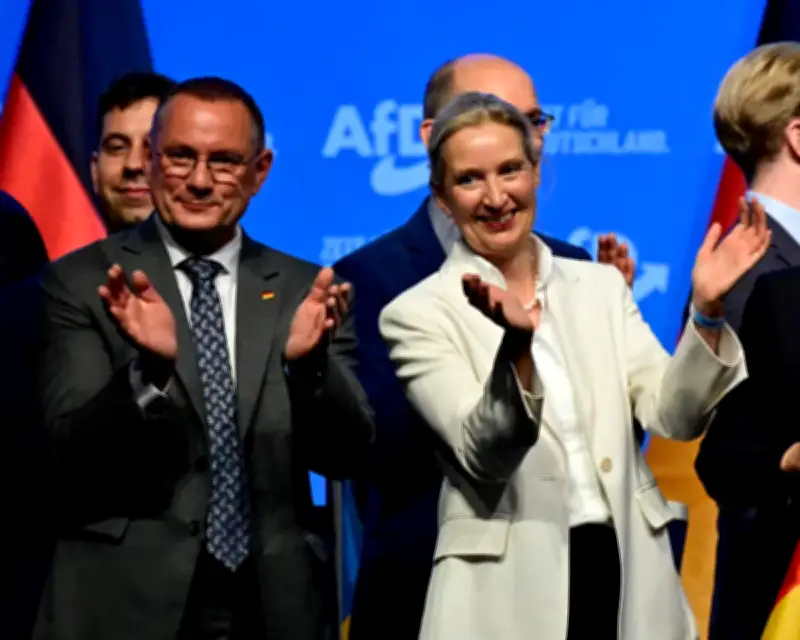
Germany's political strategy of isolating the far-right Alternative for Germany (AfD) through a so-called firewall may have backfired, according to a new analysis published by the Guardian. The approach, intended to prevent the party from gaining mainstream influence, appears to have contributed to its rise in public support rather than containing it.
Firewall strategy and its unintended consequences
The firewall, a consensus among mainstream parties to avoid any cooperation with the AfD, was designed to deny the party legitimacy and power. However, the analysis suggests that this exclusionary tactic has allowed the AfD to portray itself as a victim of the political establishment, rallying voters who feel disenfranchised. According to the Guardian, the party's poll numbers have climbed steadily, with recent surveys showing the AfD at around 20% support nationally, a significant increase from previous years.
The strategy's proponents argue that it was necessary to uphold democratic norms and prevent the normalization of extremist views. Yet critics point out that the firewall has not only failed to diminish the AfD's appeal but may have created a rallying effect, as the party frames its exclusion as proof of a corrupt system. The Guardian's analysis cites political scientists who note that the firewall has become a central theme in the AfD's campaign messaging, helping it to mobilize supporters.
Impact on political landscape and public discourse
The rise of the AfD has reshaped Germany's political landscape, forcing mainstream parties to confront difficult questions about how to address the far-right challenge. The firewall has also led to increased polarization, with debates over immigration and national identity dominating public discourse. According to the analysis, the AfD's success has emboldened other far-right movements across Europe, raising concerns about the broader implications for democratic stability.
One unnamed official quoted by the Guardian said, "The firewall was meant to protect our democracy, but it may have done the reverse by giving the AfD a platform to claim they are the only ones fighting for the people." This sentiment underscores the growing frustration among some politicians who believe the strategy needs to be reconsidered.
Future of the firewall and political responses
As the AfD continues to gain ground, there are calls for a reassessment of the firewall. Some analysts suggest that engaging with the party on specific policy issues could weaken its anti-establishment narrative, while others warn that any form of cooperation risks legitimizing its extremist elements. The Guardian's analysis concludes that the firewall's future is uncertain, with mainstream parties divided on how to proceed.
The situation highlights a broader dilemma facing democracies worldwide: how to counter anti-democratic forces without undermining democratic principles themselves. The Guardian notes that the outcome of this debate in Germany will likely influence strategies in other countries grappling with similar far-right movements. The final impact of the firewall remains to be seen, but its current trajectory suggests that it has not achieved its intended goal of containing the far right.




