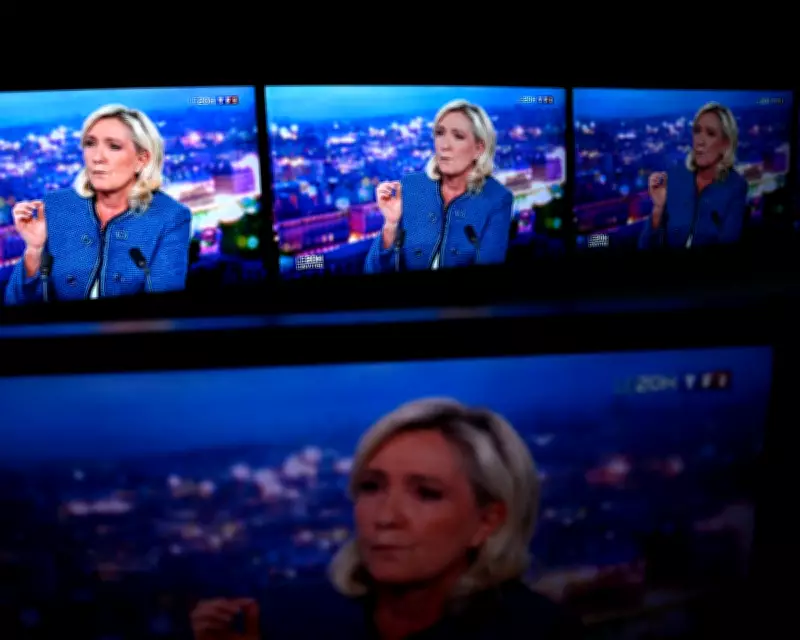
A political firestorm has erupted in France after a parliament inquiry report called for sweeping cuts to public broadcasting, igniting a culture war ahead of next year's presidential election. The report, published on Tuesday by Charles Alloncle of the Union of the Right for the Republic (UDR) party—allied with Marine Le Pen's far-right, anti-immigration National Rally (RN)—recommends drastic reforms to state TV and radio.
Key Recommendations of the Report
Alloncle's five-month inquiry into the 'neutrality, workings and financing' of public broadcasting proposes that the French president directly nominate the heads of public broadcasters, with parliamentary and senate approval. It also suggests a 25% budget reduction, merging several major channels, cutting youth broadcasting, slashing gameshow and entertainment budgets by 75%, and reducing sport budgets by 33%.
Alloncle argued that French state TV and radio are 'ill-adapted to our era,' face a financial crisis, and have 'lost touch with what French people want,' necessitating a complete overhaul. However, critics on the left and centre have condemned the report, noting that inquiry hearings were marred by heated rows and suspensions. Socialist MP Ayda Hadizadeh, who sat on the panel, described the process as a 'tribunal' aimed at 'killing public broadcasting.'

Far-Right Support and Criticism
Marine Le Pen praised the inquiry, saying it 'shone a light' on public broadcasting's 'downward spiral, misguided financial management, and multiple attacks on political neutrality.' RN MP Anne Sicard claimed her party was 'treated like the enemy' by the state broadcaster. Meanwhile, Jordan Bardella, RN party president and potential presidential candidate, reiterated plans to privatise public broadcasting if the far right wins the next election.
The report faces opposition from centrist and leftist politicians. Agnès Pannier-Runacher, a Macron centrist MP and former minister, called the inquiry 'shameful,' accusing Alloncle of targeting state media for not sufficiently promoting far-right ideas. She likened the move to attacks on media independence in Hungary under Viktor Orbán or the US under Donald Trump.
Background and Broader Context
The inquiry unfolds against the rising dominance of Vincent Bolloré's private media empire, which critics say amplifies reactionary voices and boosts the far right. Bolloré's CNews became the most-watched news channel in France last year and is highly critical of the state broadcaster. This week, NGO AC !! Anti-Corruption filed a legal complaint alleging that Bolloré's Lagardère News tried to influence the inquiry by sending MPs lists of hostile questions. Alloncle denied receiving any such questions.
France Télévisions, which includes four national and 24 regional channels, is a key film and drama financier, while Radio France dominates podcasting. President Emmanuel Macron scrapped the TV licence fee in 2022, but a long-term funding model remains undefined. Prime Minister Sébastien Lecornu called the report a 'missed opportunity' but acknowledged the need for reform. France Télévisions head Delphine Ernotte dismissed the report as a biased 'ideological reading' that would weaken public broadcasting historically. Centre-right MP Jérémie Patrier-Leitus, who presided over the inquiry hearings, accused Alloncle of being 'dishonest' and using the report to 'prepare the mood' for privatisation. Alloncle denied this, noting his report stops short of recommending privatisation.
The government is not obliged to adopt the recommendations, but the row underscores deep divisions over public broadcasting's role in French democracy.