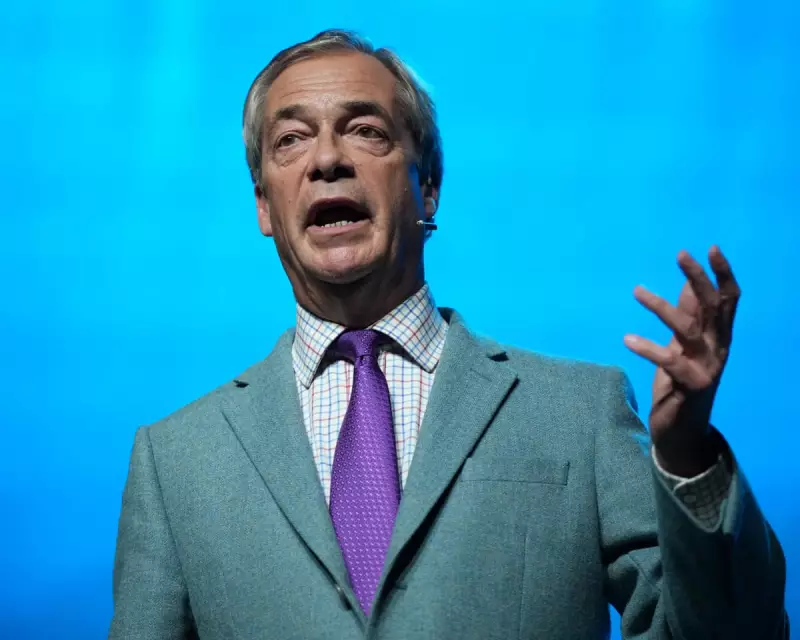
Farage's Controversial Response to Racism Allegations
Nigel Farage, the leader of Reform UK, has finally broken his silence regarding explosive allegations about his school days at Dulwich College in south London. The Guardian published a report one week ago featuring multiple sources who recalled Farage making racist and antisemitic comments during the late 1970s and 1980s when he was a pupil at the prestigious institution.
In a pooled interview conducted by BBC Wales political editor Gareth Lewis, Farage offered what many are calling a qualified denial. When pressed specifically about whether he had ever racially abused other pupils, Farage responded with the telling phrase: "Not with intent." This marked a significant departure from his party's initial response, where a Reform UK spokesperson had dismissed the claims as "entirely without foundation."
The fuller version of the interview, broadcast on the Today programme, reveals more nuanced questioning that placed Farage under considerable pressure. Political analysts have praised Lewis's persistent approach in extracting this admission from the veteran politician.

Reform UK's Russian Bribery Scandal Deepens
Meanwhile, Farage faced additional scrutiny over a separate but equally damaging scandal involving his party. Nathan Gill, the former Reform UK leader in Wales, was sentenced to ten and a half years in prison on Friday for accepting bribes while serving as an MEP. The court found that Gill had taken payments to deliver speeches favourable to Russian interests.
What makes this particularly concerning for Farage is that Gill was serving as a Brexit party MEP - the predecessor to Reform UK - when he committed these offences. When questioned about whether he was investigating if other party members had been similarly targeted by Russian influence operations, Farage offered a surprising defence of his inaction.
"I haven't got a police force, I haven't got access... I can't access your phone messages, I can't access your emails," Farage told journalists. He insisted that Gill represented a solitary "bad apple" and claimed he had asked all party members whether they had taken improper payments, with everyone denying any wrongdoing.
Political Fallout and Labour's Response
The Labour party has condemned Farage's handling of both controversies as fundamentally inadequate. Anna Turley, the Labour chair, issued a strongly worded statement highlighting Farage's previous assurances about Gill's character before his conviction.
"Nigel Farage assured the public his former right-hand man was decent and honest before he was found to have taken pro-Russian bribes," Turley stated. "Now he says he's as sure as he can be that there's no pro-Kremlin links in Reform UK. He was wrong before, and the public can have no confidence in his judgement now."
The Daily Mirror captured the escalating scandal with a striking front-page headline, amplifying pressure on Farage to take more substantive action regarding potential Russian influence within his party.
As both controversies continue to develop, political observers note that Farage's dual challenges - addressing historical racism allegations while managing a contemporary bribery scandal - represent one of the most significant tests of his political career and judgement.