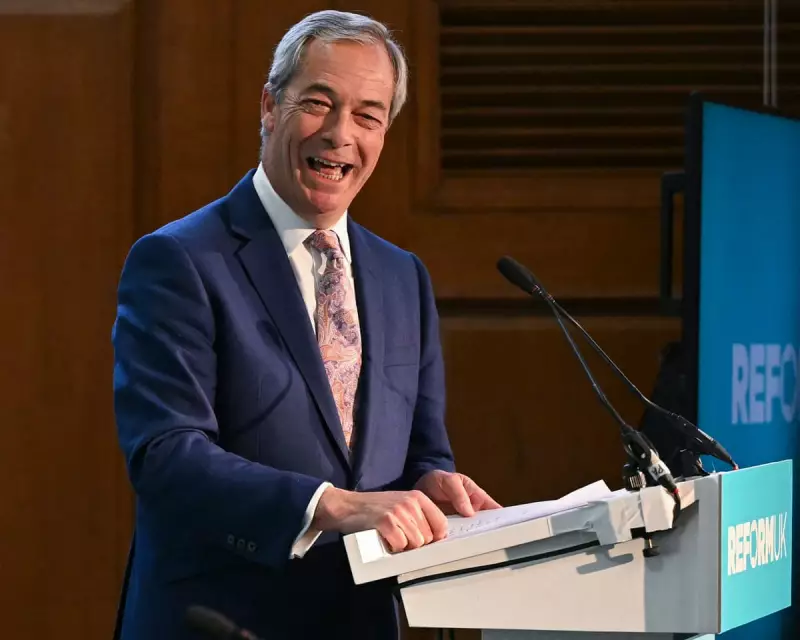
Senior government ministers have intensified pressure on Reform UK leader Nigel Farage to personally address what they describe as "repulsive" allegations of racist behaviour during his teenage years at Dulwich College.
Growing chorus of condemnation
Liz Kendall, the Secretary of State for Science, Innovation and Technology, expressed her shock at the detailed accounts published by the Guardian, while Welsh Secretary Jo Stevens questioned whether Farage's views had genuinely evolved since the alleged incidents occurred in the late 1970s and early 1980s.
Approximately twenty individuals have now come forward with testimony claiming they either witnessed or were victims of abusive behaviour by the Reform leader during his school years. The accounts paint a disturbing picture of targeted harassment, particularly against Jewish students.

Victim speaks out
Peter Ettedgui, an award-winning film director now aged 61, provided one of the most detailed accounts of the alleged abuse. The creator of documentaries including Kinky Boots and McQueen described how Farage would allegedly approach him and make comments such as "Hitler was right" and "gas them" while making hissing sounds simulating gas chambers.
Ettedgui told the Guardian's Today in Focus podcast: "Once he found out I was Jewish, you know, that was it. I have this incredibly clear memory of him persistently heckling and hectoring me as a Jew."
The director expressed frustration at Farage's failure to issue a straightforward apology, suggesting the Reform leader could easily have said: "Yes, I did say some extraordinarily upsetting things to people that were racist. And I unreservedly apologise to them for that."
Contrasting responses raise questions
Farage's current approach appears to mark a significant shift from his response to similar allegations made in 2013 by Channel 4's Michael Crick. At that time, Farage acknowledged he might have said "some ridiculous things" while stopping short of admitting to racist remarks.
Reform UK aides have dismissed the latest allegations as "entirely without foundation" and claimed they represent "one person's word against another." A spokesperson suggested that "if things like this happened a very, very long time ago, you can't necessarily recollect what happened."
This blanket denial has concerned some of Farage's former school contemporaries who spoke to the Guardian, particularly given the number and consistency of the accounts now emerging.
Political implications
The controversy emerges at a sensitive political moment, with a recent YouGov poll showing Reform UK leading Labour by ten percentage points. Welsh Secretary Jo Stevens articulated the concerns of many when she questioned whether someone with such alleged background should aspire to lead the country.
"If he doesn't explain himself," Stevens warned, "the assumption will be that he did say that. And then you do wonder if he'd formed those views at that age, how much has he changed, if at all? Do you want that sort of man running the country?"
As pressure mounts for a personal response from Farage, the allegations threaten to overshadow his party's recent polling success and raise fundamental questions about character and accountability in British politics.