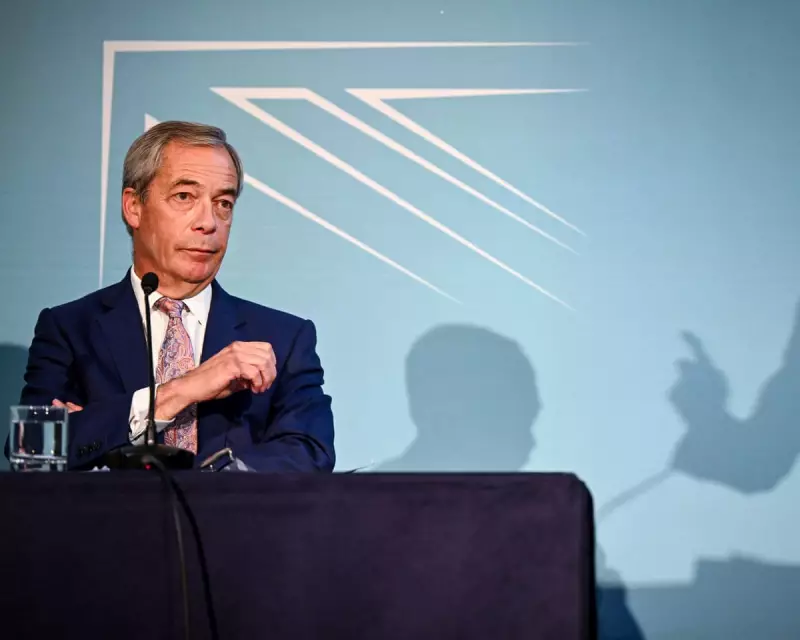
Nigel Farage has issued a comprehensive denial of allegations that he engaged in racist and antisemitic behaviour during his teenage years at Dulwich College, with the former government extremism adviser describing his response as deeply concerning.
Credible Witness Accounts Challenge Farage's Denial
Lord Walney, who served as the Conservative government's adviser on political extremism, has expressed significant concern over the Reform leader's blanket rejection of multiple detailed accounts from school contemporaries. The cross-bench peer stated that testimonies reported by the Guardian appeared credible and suggested Farage's response would worry many observers.
The allegations include claims that Farage targeted ethnic minority children for abuse while attending the prestigious south London public school, sang a disturbing song referencing the killing of Jewish, black and south-east Asian people with the lyrics "Gas em all", and burned a school roll during a year when there were reportedly more students with the surname Patel than Smith.

Contrasting Responses to Historical Claims
Farage's current position marks a significant shift from his previous acknowledgment of questionable behaviour when confronted with similar claims by Channel 4 in 2013. At that time, he admitted saying "some ridiculous things" during his school years, though he qualified this by adding they were "not necessarily racist things... it depends on how you define it".
In response to the fresh allegations, a spokesperson for Reform, which currently leads in opinion polls, told the Guardian the claims were "entirely without foundation" and characterised them as a deliberate attempt to smear their party leader.
Political Figures Voice Serious Concerns
Lord Walney, the former Labour MP John Woodcock appointed by Boris Johnson as an adviser on political violence and extremism, emphasised that a prospective prime minister should not casually dismiss such serious allegations. He noted: "These detailed testimonies from Mr Farage's contemporaries appear credible and describe a degree of extremism that cannot be summarily dismissed as irrelevant simply because it was alleged to have occurred when he was a teenager."
Among those providing accounts was Bafta and Emmy-award winning director Peter Ettedgui, 61, who claimed Farage repeatedly verbally abused him when they were both 13 and 14 years old. Ettedgui alleged: "He would sidle up to me and growl: 'Hitler was right,' or 'Gas them,' sometimes adding a long hiss to simulate the sound of the gas showers."
The Guardian spoke with more than a dozen of Farage's contemporaries from Dulwich College, with several reporting witnessing racist behaviour. However, not all former classmates recalled such incidents or considered Farage bigoted during his school years.
Anna Turley MP, chair of the Labour party, described the allegations as "disturbing" and called for Farage to urgently explain himself. She stated: "We have seen Farage's weakness in the face of the divisive politics in Reform's ranks. They are dragging our politics to a dark place."
The Liberal Democrat home affairs spokesperson, Max Wilkinson, commented: "A lot of people say stupid and offensive things at school, but most grow out of it. Sadly, in Nigel Farage's case he's made a career out of it instead."
Georgina Laming, director of campaigns at Hope Not Hate, added: "These revelations are sadly no surprise. Nigel Farage has consistently expressed anti-immigrant and intolerant views and shown voters who he really is."
Several contemporaries who experienced Farage's alleged behaviour said they were motivated to speak out by his failure to show contrition about his past, raising questions about how historical attitudes might inform current political leadership.