The Breaching of Europe's Defences
A dangerous realignment is sweeping across European politics as traditional conservative parties increasingly abandon longstanding principles to court far-right movements. This strategic shift, championed by Italy's Prime Minister Giorgia Meloni, threatens to dismantle decades-old democratic firewalls designed to contain extremist elements.
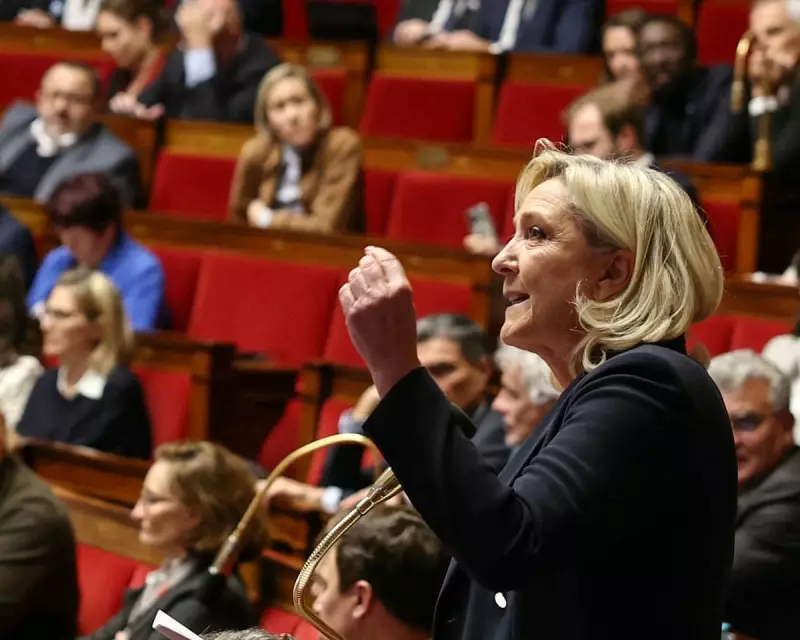
The fragility of France's cordon sanitaire against Marine Le Pen represents perhaps the most significant development in this worrying trend. For years, a mobilised "republican front" successfully united centre-right and left-wing voters to block Le Pen's ascendancy. However, this defensive line is now visibly fraying as the conservative Les Républicains party searches for relevance amid declining fortunes.
From Marginal to Mainstream: The Italian Blueprint
Giorgia Meloni's remarkable political journey demonstrates the potential rewards of this strategy. Her Brothers of Italy party, with its roots in postwar neofascist movements, has transformed from a marginal force scoring just 4% in general elections less than a decade ago to a hegemonic power currently polling at 31%. This dramatic rise was achieved through what amounts to a reverse takeover of the Italian right, absorbing rather than confronting extremist elements.

Meloni explicitly endorsed this approach during a speech to France's Identité-Libertés party, led by Marine Le Pen's niece Marion Maréchal. She emphasised the need for "the unity of the right and the centre-right" while expressing hope that such unity could eventually emerge in France.
The French Front Cracks Open
Evidence of the crumbling defences emerged unmistakably last month when French MPs passed a motion put forward by the far right on immigration – the first time parliament had definitively breached the cordon sanitaire. Meanwhile, senior conservative figures have stopped discussing the threat Le Pen and her protégé Jordan Bardella pose to mainstream French values.
More alarmingly, former LR president Laurent Wauquiez has openly contemplated political cooperation with Sarah Knafo, a rising star in Éric Zemmour's virulently Islamophobic Reconquête party. Wauquiez and influential colleagues now argue that the chief political threat comes from the supposed extremism of the left, a narrative aggressively promoted by billionaire Vincent Bolloré's multimedia empire.
A Continental Pattern Emerges
This troubling development extends far beyond French borders. In the Netherlands, the centre-right VVD party has declared itself willing to contemplate a coalition including the far right during government formation talks. In Germany's east, cooperation between the Christian Democrats and Alternative für Deutschland at local level has become normalised.
The European parliament witnessed a landmark break with protocol last week when conservative MEPs allied with far-right parties to water down climate legislation. As with the French national assembly vote, this represented a significant first, prompting one green MEP to bleakly observe: "It's a shitty sign for European majorities, it is a shitty sign for Europe."
Historical Warnings and Future Dangers
Recent political history offers sobering lessons for parties considering accommodation with extremists. In the United States, moderate Republicanism's attempt to harness Trumpian fire proved a path to political oblivion rather than renewal. In Britain, the Conservative party's determination to keep pace with Nigel Farage risks delivering similarly disastrous results.
Despite these cautionary tales, with crucial French presidential elections approaching in 2027, a growing section of the formerly Gaullist right appears ready to hang on to Marine Le Pen's coat-tails. For those who value that political tradition, and for mainstream European politics more broadly, this represents both a sorry and deeply depressing state of affairs that threatens the continent's democratic foundations.