The Fundamental Divide in American Politics
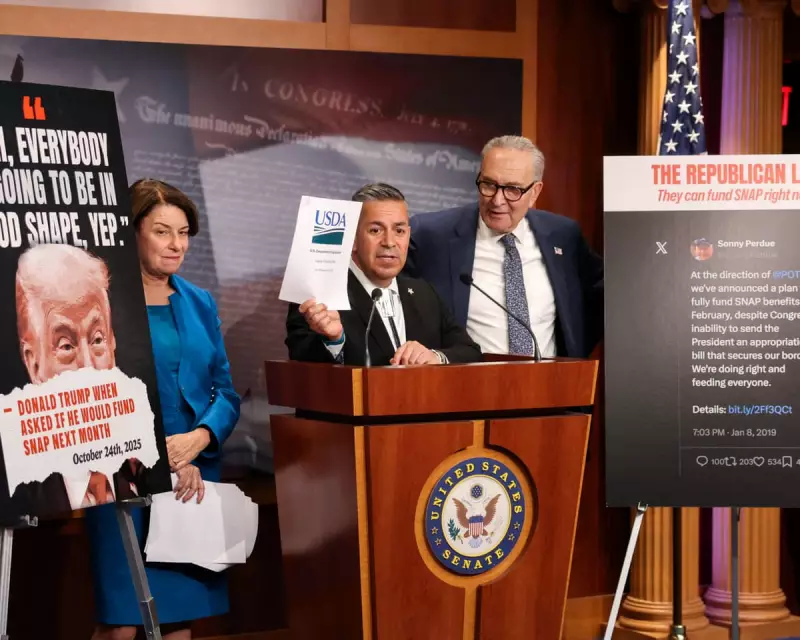
As another US government shutdown crisis unfolded, a familiar pattern emerged in Washington's political theatre. While Democrats held temporary bargaining power, their inability to maintain unity ultimately led to another collapse in negotiations, allowing Republicans to secure their objectives.
This failure occurred despite significant public pressure favouring the Democratic position. Most Americans blamed Republicans for the shutdown, and practical consequences like mounting flight delays were increasing pressure to reopen government services.
A Historical Pattern of Democratic Disunity
This recent collapse represents a deeper, long-standing asymmetry in American politics. Democrats consistently struggle with internal discipline while Republicans maintain remarkable unity even under pressure.

The pattern extends back decades. In 1994, President Bill Clinton failed to pass his healthcare plan despite Democratic control of both congressional chambers. In 2002, most Democratic senators supported George W. Bush's Iraq war resolution. More recently, Senators Joe Manchin and Kyrsten Sinema repeatedly blocked President Joe Biden's legislative agenda.
Now, with Senate Democrats possessing leverage to force Republicans to restore expiring healthcare subsidies that could prevent insurance price hikes for millions, they again surrendered their position.
The Psychological and Structural Roots
This political asymmetry stems from fundamental differences between the parties' identities and structures. Democrats pride themselves on their "big tent" approach, welcoming diverse and often conflicting viewpoints. Republicans emphasize strong leadership and ideological consistency.
Research by linguist George Lakoff suggests Democrats represent the "nurturing parent" archetype - accepting, empathetic, and inclusive. Republicans embody the "strict father" model - controlling, disciplined, and authoritative.
This fundamental difference explains why Democratic messaging often appears muddled while Republican communication remains sharp and focused. Even during the shutdown, when Democrats advocated for healthcare cost reductions, polls showed voters still preferred Republicans on economic issues.
Implications for American Democracy
The consequences extend beyond legislative battles. As the United States grows more unequal and politically divided, this asymmetry shapes the nation's democratic foundations.
Democratic supporters typically prioritize equal political rights, equal opportunity, and the rule of law. Meanwhile, Trump-era Republicans increasingly emphasize order, control, and patriarchal authority - values reflected in recent Supreme Court decisions favoring the "unified executive" theory over democratic principles.
This doesn't excuse Democratic leadership failures. Chuck Schumer failed to maintain party discipline at a critical moment, and eight Democratic-aligned senators broke ranks to support Republican positions.
The Path Forward for Democratic Voters
The solution isn't for Democrats to adopt authoritarian tactics, especially when such approaches threaten democratic institutions. Instead, voters who support Democratic policies must recognize that unity cannot be assumed within the party.
Republican voters can typically rely on their representatives to maintain disciplined positions. Democratic supporters must actively demand unity and toughness from their elected officials, holding them accountable when they fail to stand firm.
The lesson is clear: when Democratic voters want their representatives to resist pressure and maintain negotiating positions, they must communicate those expectations unequivocally and enforce consequences for failure.