Major Political Realignment Among British Jewish Community
A dramatic political realignment is underway within Britain's Jewish community, according to groundbreaking research from the Institute of Jewish Policy Research (JPR). Support for the traditional main parties has experienced what researchers describe as a "collapse," falling to historic lows while alternative parties gain significant traction.
Support for Labour and the Conservatives among British Jews plummeted to just 58% by July 2025, a staggering drop from nearly 84% recorded in 2020. This represents the lowest level of combined support for the two main parties ever recorded in the study's history.
The Green Surge: Progressive Values Trump Foreign Policy
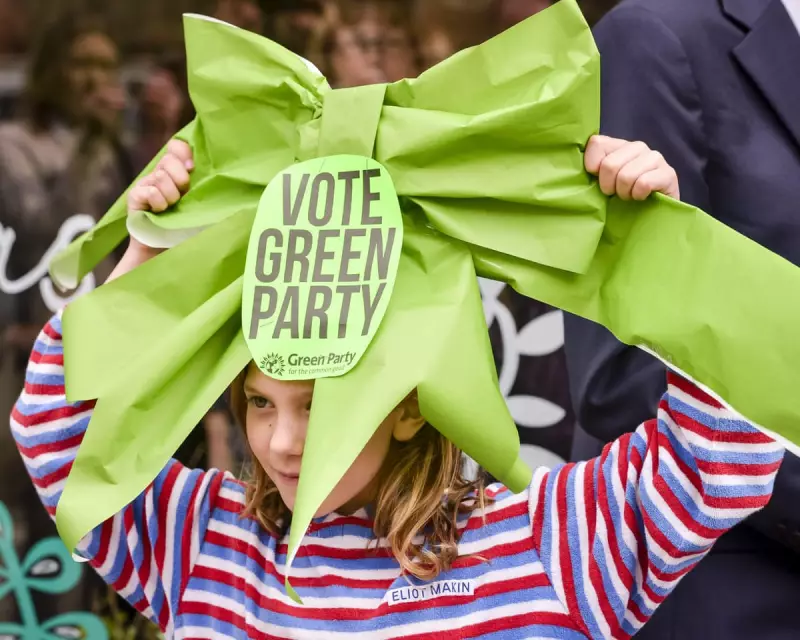
Perhaps the most surprising finding involves the Green Party's remarkable growth within the Jewish community. By June 2025, nearly one in five British Jews (18%) backed the Greens, representing a 9% increase since the August 2024 general election.

This growth significantly outpaces the 1% rise in Green support among the wider electorate during the same period. The trend is particularly notable given the Green Party's stance on Israel, having officially labelled it an "apartheid state" during their 2024 Manchester conference.
Dr Jonathan Boyd, JPR's executive director, noted that the increase suggests "for a significant minority of Jews, domestic priorities and progressive values outweigh foreign policy concerns." The research indicates Green support is strongest among younger, unaffiliated and anti-Zionist Jews.
Reform UK's Appeal to Orthodox and Zionist Voters
Meanwhile, Reform UK has also made substantial inroads, with support among British Jews jumping from 3% in August 2024 to 11% by June 2025. Although this increase lagged behind the 14% rise Reform enjoyed with the wider electorate, it represents a significant shift.
Reform UK proves more attractive to male, older, orthodox, and Zionist Jews, creating a clear demographic divide within the community. The JPR described this surge as "striking" given the party's rhetoric on immigration and nationalism that might typically alienate minority communities.
The report suggests that when mainstream parties are perceived as "weak or hostile," significant parts of the Jewish population may gravitate toward voices promising strength and clarity, regardless of ideological baggage.
Driving Forces Behind the Political Fragmentation
Three primary factors are driving this political fragmentation according to the comprehensive study, which surveyed 11,000 British Jews:
The war in Gaza and its polarising effect on Jewish attitudes has created deep divisions within the community. Rising antisemitism, culminating in the Heaton Park Synagogue terrorist attack, has heightened security concerns. Meanwhile, a broader collapse of trust in mainstream parties mirrors trends in wider British society.
These combined factors are pushing Jewish voters toward parties that offer clarity—whether through populism or radical progressivism. The report warns that if these trends continue, British Jews are likely to become more politically polarised, potentially prompting further internal community tensions.
The research also revealed interesting comparisons with the general electorate. Jewish voters remain less likely to support Reform UK (11% vs 28% nationally) but more likely to back the Green Party (18% vs 7% nationally). Support for the Liberal Democrats remained "low and stable" at 9% among British Jews.
This political shift represents what researchers believe may be a structural change in Jewish political identity, marking the end of an era where the Labour and Conservative parties could reliably count on Jewish support.