The British Chambers of Commerce (BCC) has issued a stark warning that the government's plans to double tariffs on steel imports pose an enormous threat to Britain's already struggling manufacturing sector. In a letter seen by City AM, BCC Director General Shevauna Haviland urged Business Secretary Peter Kyle to water down the measures, which are set to take effect in July.
Immediate Hardship for Importers
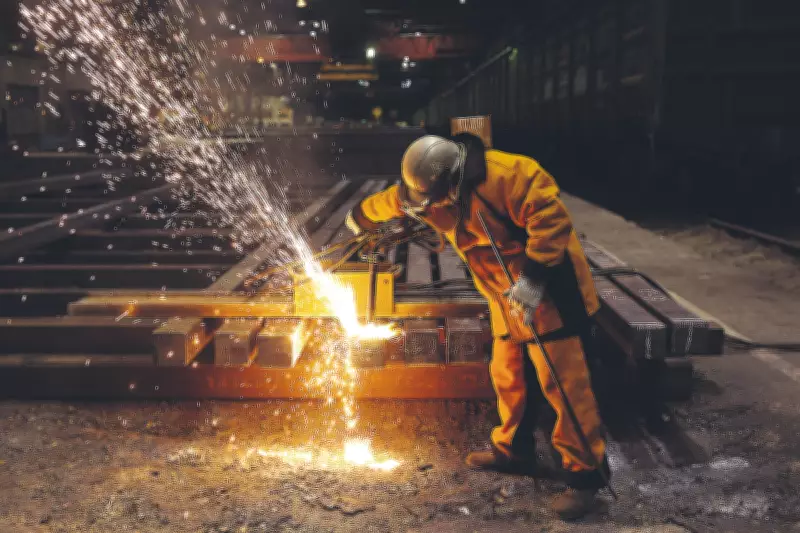
Haviland wrote that the incoming duties on foreign-produced steel would cause "immediate hardship" for importers, particularly those in downstream sectors such as construction, engineering, and carmaking. The government plans to slash the quota of tariff-free steel imports by an average of 60 percent and double the import duty on all steel beyond that to 50 percent. For some steel products, the quota reduction could reach as high as 90 percent.
"The revised quotas and tariffs have the potential to create significant financial and logistical problems for downstream sectors using steel," Haviland wrote, accusing the government of appearing to favor "domestic primary production companies" over firms that rely on imported steel.

Global Context of Steel Tariffs
The UK's move mirrors similar actions by the United States and the European Union, both of which have dramatically ramped up steel tariffs in the past year to protect their domestic industries. Donald Trump introduced steel duties as part of his first wave of tariffs last year, while the EU's response is also due to come into force in July. However, the UK's reduction in tariff-free quotas is steeper than that of the EU, raising concerns among British manufacturers already grappling with high energy costs and trade barriers.
Calls for Extended Transition and Reduced Quota Cuts
Haviland urged the Department for Business and Trade to extend the transition period to a full year, arguing that this would better accommodate "the timelines of steel supply and sourcing chains and commercial contracts." She also called on Kyle to reconsider the more extreme quota reductions, particularly the 90 percent cuts for certain steel types. Both moves would "help avoid hardship to many firms otherwise negatively impacted by the new quota/tariff regime," she wrote.
The intervention comes just days after Prime Minister Keir Starmer confirmed plans to return British Steel to public ownership for the first time in decades. The government took control of the struggling steelmaker last year after negotiations with its Chinese owner Jingye stalled, sparking fears that the plant's last remaining coal-fired furnace would be shut down.
Broader Steel Strategy
Both the tariffs and British Steel's nationalization are part of a broader steel strategy unveiled by the government in March. The strategy aims to boost domestic production so that half of all UK demand could be met by UK steelmakers. However, Haviland warned that ratcheting up trade barriers would harm many BCC members and could push some toward less sustainable producers to keep costs down.
A government spokesman said: "The new steel trade measure aims to strike the right balance between protecting UK steel production and maintaining secure supply for the whole UK. We continue to take feedback from industry as we implement the measure, and we will conduct a review after 12 months to ensure it remains effective."