
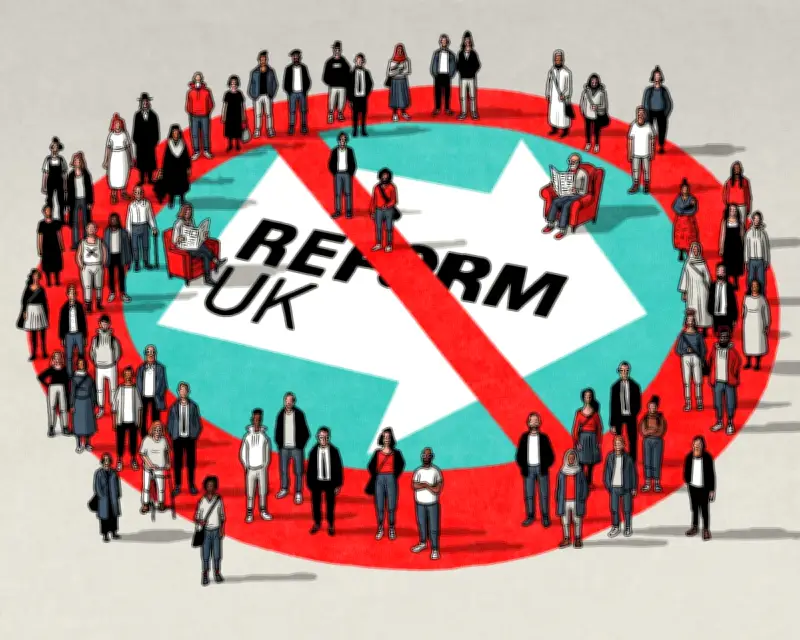
A new study of nearly 9,000 Britons reveals that the anti-Reform electorate is split into two distinct groups: leftwing urbanites and rightwing economic conservatives, with women particularly opposed to Nigel Farage's party. The research, published today by the anti-racism charity Hope Not Hate and based on a large survey by Focaldata, identifies voters who could be persuaded to vote against Reform in a snap election. These voters are among the most important in the country, yet they are not who many might expect.
Who are the anti-Reform voters?
The study shows that half of the anti-Reform electorate skews young, minority ethnic, and graduate, often living in cities and leaning left. However, the other half is not on the left at all. The joint-largest group in the Farage resistance is described by Hope Not Hate as “rightwing on cultural issues and very rightwing on economics.” These voters are concerned that Reform will bring chaos rather than conservative stability.
Women are another key demographic in the fight against Farage. This weakness has been known to analysts for years, and it partly explains why the Reform candidate's sexism in Makerfield helped torpedo his chances. The study highlights that many who dislike Reform do not necessarily object to its anti-migrant rhetoric. One local campaigner in Gorton and Denton noted that comfortable rightwingers helped deny GB News regular Matt Goodwin a victory there, but not for leftwing reasons. “Racism doesn’t offend them; they just think it’s vulgar.”
What works in one seat may not work in another
Dr Jac Larner of Cardiff University, who was frequently consulted by media during the Caerphilly by-election, doubts that lessons from Plaid Cymru's success can be transferred elsewhere. “Plaid can provide an alternative political identity for voters: progressive, working class – and Welsh. In Scotland, the SNP can still do that.” But in England, nationalist politicians are different, often backed by foreign billionaires and focused on remigration.
The study also finds that opponents of Reform share an abhorrence of Westminster. By two to one, they are deeply unhappy with mainstream politicians and media. Writing about Hope Not Hate's earlier analysis of Reform voters, this columnist noted that very few were unreachable by other parties—it's just that most politicians didn't bother to reach out. Starmer's Labour offered a patronizing pat on the head and little on urgent issues like the cost of living.
Implications for the next election
Reform is currently almost neck and neck in the polls with Prime Minister Andy Burnham's party. Constituency-level analysis suggests that, if an election were called tomorrow, Reform would leap from eight to between 100 and 200 seats. Among Labour MPs who could be swept out are party chair Bridget Phillipson, chancellor John Healey, and justice secretary Alex Norris.
The hard-right organisation, which has a mysterious pull on former British National party members, may have a lower electoral ceiling than feared, but its floor remains high enough to deny Burnham an outright majority. Farage faces a parliamentary investigation into whether he should have declared a £5m gift from a crypto billionaire. Despite this, Reform could still lead the next government or become the official opposition.
As the Reform party conference kicks off next week, Farage will likely promise that tomorrow belongs to them. But voters are mainly lending their support, not committing it. The compromises Burnham has begun making on council housebuilding and Thames Water may arouse little ire now, but leftwingers who helped him into parliament may not be mollified for long. If Labour's strategy is to do what Starmer did, with better comms and more social-media dopamine, it will get the same result: a disaster for Labour and for the rest of us.




