The global transition to clean energy is fuelling a dangerous and lawless rush for rare earth minerals in Venezuela, where armed groups have seized control of mining operations, creating a crisis of human rights abuses and environmental devastation along the Colombian border.
The Frontline Patrol
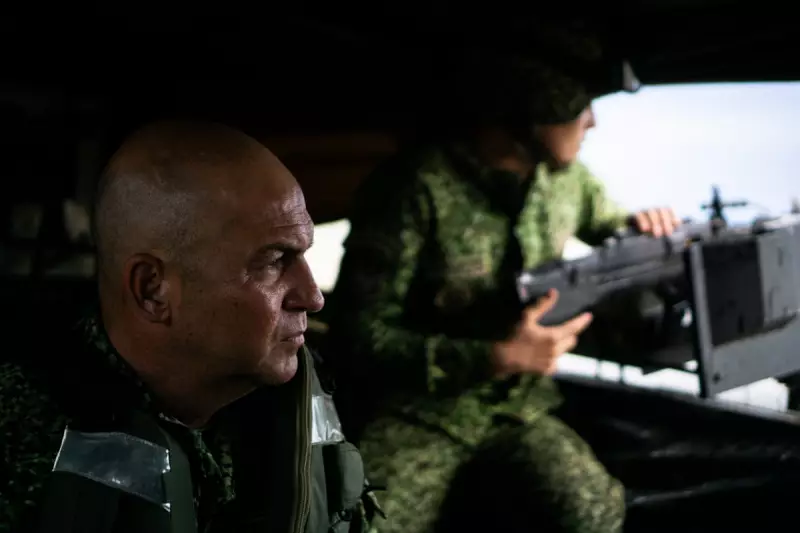
For months, Brigadier General Rafael Olaya Quintero, commander of the Orinoco naval force, has been pursuing traffickers of tin and coltan across the waterways separating Colombia and Venezuela. His mission has gained urgency as the worldwide shift towards renewable energy triggers unprecedented demand for rare earth elements and critical minerals.
These materials are essential components in modern technology, from electric vehicle batteries and wind turbines to fighter jets and guided missiles. This demand is further amplified by increased defence budgets in the EU, US, and China.
The core challenge for General Quintero and his team, based in Puerto Carreño, is that untold quantities of these coveted minerals are being smuggled out through fraudulent schemes designed to conceal their origin before they reach international markets.
"We're talking about groups financing themselves through illicit economies: mining, drug trafficking, extortion, kidnapping," Quintero states. "There is no ideology at this point."
A Region Under Siege
The extraction of these valuable resources is occurring in territories dominated by guerrilla factions, leading to systematic human rights violations and accelerating the destruction of one of the planet's most crucial ecosystems.
This assessment is shared at the highest levels. UN Secretary-General António Guterres recently warned of "an imminent threat [that] grows ever greater," noting that most critical minerals for the energy transition are located in or near Indigenous territories.
The problem is particularly acute in the Amazon Basin. The Guiana Shield, a geological formation over 1.7 billion years old, is rich with deposits of critical minerals like tin, tungsten, tantalum, and rare earth elements.
On the Colombian side of the Orinoco River, Indigenous men from the Curripaco and Piaroa communities display bluish-black stones and gravel. "You can see the difference in the nuggets between tin and coltan," one man explains, speaking on condition of anonymity.
He described years of secretly working mines on the Venezuelan side, moving minerals by canoe under cover of darkness. The landscape changed dramatically in 2023 when hundreds of insurgents from the National Liberation Army (ELN), Colombia's largest active guerrilla group, arrived with Chinese buyers and seized control.
"Months later, they brought in helicopters. They were taking the materials away," he recalls. Indigenous leaders were coerced, threatened, or bribed into compliance. Those refusing to work for the ELN were forced to operate secretly at night.
The ELN's José Daniel Pérez Carrero Front and the Farc dissident group Acacio Medina Front, both designated as terrorist organisations by the US, now control the territory and mines in Amazonas and north-western Bolívar state, while sharing lucrative drug trafficking routes.
Devastating Consequences
The environmental impact is severe and alarming. "They tore everything down and made an airport. It's horrible," one local miner reports. "In two or three years, the entire river will be contaminated because many high-calibre machines have already come in."
The social fabric is equally damaged. Guerrilla groups allegedly control sex work in mining camps, and sources describe executions and improvised jungle prisons used to enforce their rule.
The geopolitical significance of these minerals in Venezuela dates back to 2009, when then-President Hugo Chávez announced the country held a "great reserve" of coltan, which he called "strategic for making long-range rockets." He deployed 15,000 National Guard troops, citing the mineral's role in "countless wars in Africa."
In 2016, his successor, Nicolás Maduro, formalised the Orinoco Mining Arc, designating 112,000 square kilometres for mineral development. However, instead of attracting legitimate foreign investment, the decree created a vacuum filled by armed groups who transformed the industry into an illicit enterprise.
This stands in stark contrast to Brazil's approach. President Luiz Inácio Lula da Silva has adopted a "national sovereignty" strategy for the country's vast niobium and rare earth deposits, maintaining state control while pursuing international partnerships. "If it's critical, I keep it for myself," Lula has stated.
Back on the Colombian border, in a small Puinave Indigenous village, community leader Luis Camelo expresses the desperate reality for locals. "Gold mining is the only means for us to get sustenance for our families," he says, though he notes deposits are depleting.
He shows a jar of glittery blackish sand, an "unknown material" they hope might be valuable. Laboratory tests confirm that samples from the region contain high concentrations of coltan, cassiterite (tin ore), and rare earth elements.
The ultimate destination for these conflict minerals is often China. Dozens of interviews reveal supply chains leading from the jungle to Caribbean port cities and onwards to international buyers. China's recent export restrictions on critical rare earths have intensified this global scramble, pushing Chinese buyers towards regions with weak oversight like the Colombian-Venezuelan border.
For Brigadier General Quintero, the situation is clear. "Rare earths are influencing conflicts at an international level, from commercial matters to geopolitics," he concludes, highlighting how the demand for a green future is powering a destructive present.