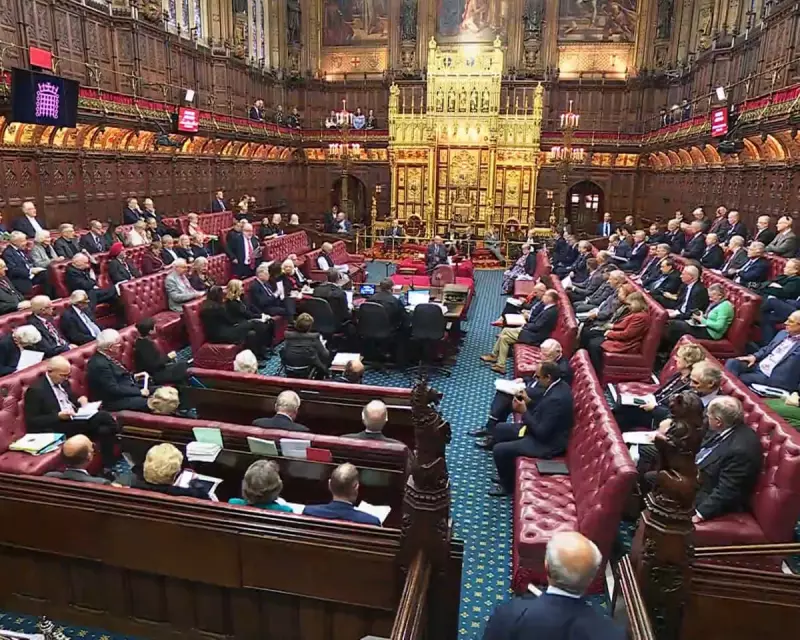
The House of Lords has become the centre of a contentious parliamentary debate as peers carefully examine the proposed assisted dying legislation. The bill, currently undergoing detailed scrutiny in the upper chamber, has sparked intense discussion about its provisions and potential consequences.
The Role of Scrutiny Versus Blocking
Dr Lucy Thomas, a palliative care doctor, defends the Lords' thorough examination of the bill, arguing that peers are fulfilling their constitutional duty rather than obstructing legislation. She emphasises that the bill lacks crucial safeguards present in most assisted dying laws worldwide, notably failing to require that a person must be experiencing unrelievable suffering.
Meanwhile, Margaret Pelling from Oxford expresses concern that some peers appear to be blocking rather than scrutinising the legislation. She argues that many British citizens support having the right to choose their death at life's end and that assisted dying and palliative care should coexist as complementary options.
Fundamental Flaws in the Bill
Dr Thomas highlights several critical issues with the current proposal. The bill would require doctors to treat patients differently based solely on life expectancy: more than six months mandates suicide prevention, while six months or less requires assessment for a lethal prescription. This binary approach raises significant ethical concerns within the medical community.
Furthermore, the legislation gives the state, rather than the individual, decision-making power over when ending one's life becomes acceptable. This contrasts sharply with systems like Switzerland's, which prioritise personal autonomy.
Democratic Process Under Examination
The debate has exposed concerns about the private member's bill process itself. Dr Thomas suggests the real democratic failure lies in how a single MP, backed by well-funded lobbying groups, can advance legislation without proper consideration of safer, more ethically coherent alternatives.
Penelope Jenkins from Kenilworth defends the Lords' role, noting that crossbench peer Tanni Grey-Thompson and others are examining evidence from disabled groups, psychiatrists, and eating disorder specialists whose views were either not selected or ignored during Commons committee stages.
As the debate continues, the fundamental question remains whether the Lords' detailed scrutiny represents proper parliamentary process or an undemocratic blocking mechanism. The outcome will significantly impact end-of-life choices for generations of British citizens.