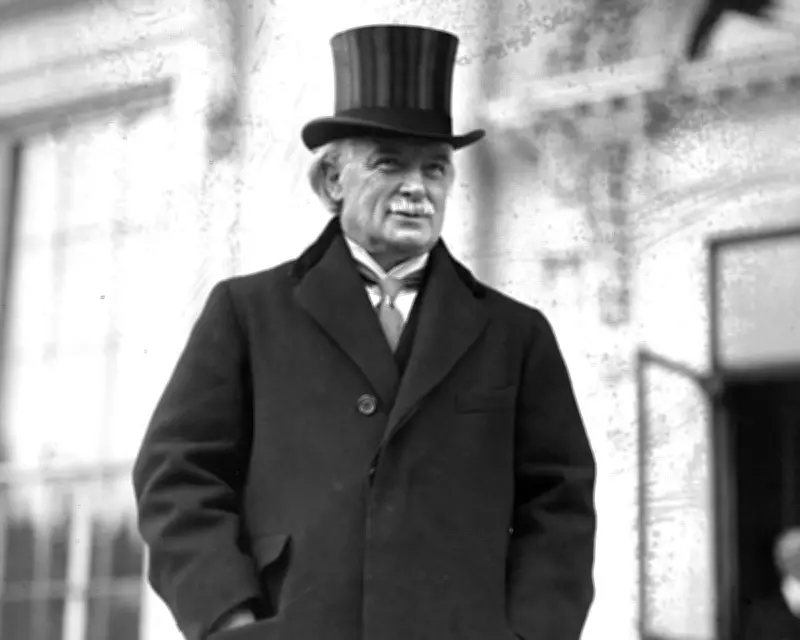
The Historical Precedent: How the Parliament Act 1911 Changed British Politics
The House of Lords once wielded absolute veto power over legislation passed by the House of Commons. This constitutional arrangement endured for centuries until a dramatic confrontation in 1909. The Lords' decision to block Chancellor David Lloyd George's budget triggered a constitutional crisis that reshaped British parliamentary democracy.
The resulting general election placed Lords reform squarely on the political agenda. The re-elected Liberal government responded with the Parliament Act 1911, which fundamentally altered the balance of power between the two chambers. This landmark legislation removed the Lords' absolute veto in nearly all circumstances, though it preserved their ability to delay legislation.
The Modern Application: A Rarely Used Constitutional Mechanism
The Parliament Act represents one of the most powerful tools in the British constitutional arsenal, yet it has been deployed sparingly throughout history. Only seven bills have become law using this procedure since its inception, typically concerning deeply divisive social issues of their respective eras.
The mechanism was refined in 1949, reducing the Lords' delaying power from two years to just one. Under current rules, if the Commons passes legislation that the Lords then blocks for more than a year, the bill can be reintroduced in the following parliamentary session and enacted without the upper house's consent.
This differs significantly from the Salisbury convention, an established parliamentary practice that prevents the Lords from voting down government manifesto commitments. The Parliament Act provides a formal, statutory route around Lords opposition when conventional parliamentary processes have failed.
Contemporary Controversy: The Assisted Dying Legislation
Supporters of Kim Leadbeater's private member's bill to legalise assisted dying are now exploring whether this historical mechanism could break the current legislative deadlock. With the bill facing more than 1,000 amendments and slow progress through parliamentary stages, supporters fear it may fail to pass the Lords before the current session ends in May.
If the legislation does stall in the upper house, proponents are considering two potential routes to invoke the Parliament Act. The first would require Leadbeater or another supporter to successfully secure a top position in the next private member's bill ballot—a process governed largely by chance, though Labour MP John McDonnell has previously achieved this feat twice.
The second, more controversial route would involve government intervention. Although the current administration has maintained strict neutrality on assisted dying, pressure could mount for ministers to allocate parliamentary time to the bill in the next session. This would allow the legislation to proceed while technically maintaining government neutrality, though such a move would undoubtedly provoke significant political controversy.
Constitutional Complexities and Practical Challenges
Applying the Parliament Act to a private member's bill presents unprecedented constitutional complexities. For the mechanism to be invoked, the legislation must be identical to the version originally passed by the Commons, with most experts agreeing that amendments would not be permitted at this stage.
This would require the bill to undergo second and third reading votes again in the Commons without modification. Even if successful, peers could still attempt to block the legislation, at which point the Parliament Act could be formally invoked to bypass the Lords entirely.
The political landscape adds further complications. While Labour leader Keir Starmer personally supports assisted dying legislation, many within his own party oppose it. Government intervention to facilitate the Parliament Act's use would likely trigger significant backlash from Labour backbenchers and could potentially turn some supporters into opponents.
Historical Parallels: When Has This Been Used Before?
The Parliament Act's rare deployments reveal much about Britain's evolving social attitudes. In 2000, the mechanism was used to equalise the age of consent for homosexual acts to 16, overcoming Lords opposition to this significant social reform.
Most recently, in 2004, the Act enabled passage of the Hunting Act, which banned foxhunting with dogs in England and Wales. This remains the most recent use of the procedure, highlighting how it has typically been reserved for legislation that generates profound moral and social divisions.
Each deployment has sparked intense constitutional debate about the proper relationship between the elected Commons and the unelected Lords. The potential use for assisted dying legislation continues this pattern, raising fundamental questions about democracy, representation, and parliamentary sovereignty in twenty-first century Britain.
The Road Ahead: Political Calculations and Constitutional Questions
Should neither the ballot nor government intervention prove successful, supporters of assisted dying legislation would face significant obstacles. The bill's failure would represent another chapter in Britain's long-running debate about end-of-life choices, while simultaneously highlighting the enduring tensions within Britain's parliamentary system.
The coming months will test both the resilience of Britain's constitutional arrangements and the political will to navigate them. As parliamentarians grapple with these complex questions, the shadow of David Lloyd George's 1909 budget—and the constitutional revolution it sparked—looms large over contemporary debates about life, death, and parliamentary power.