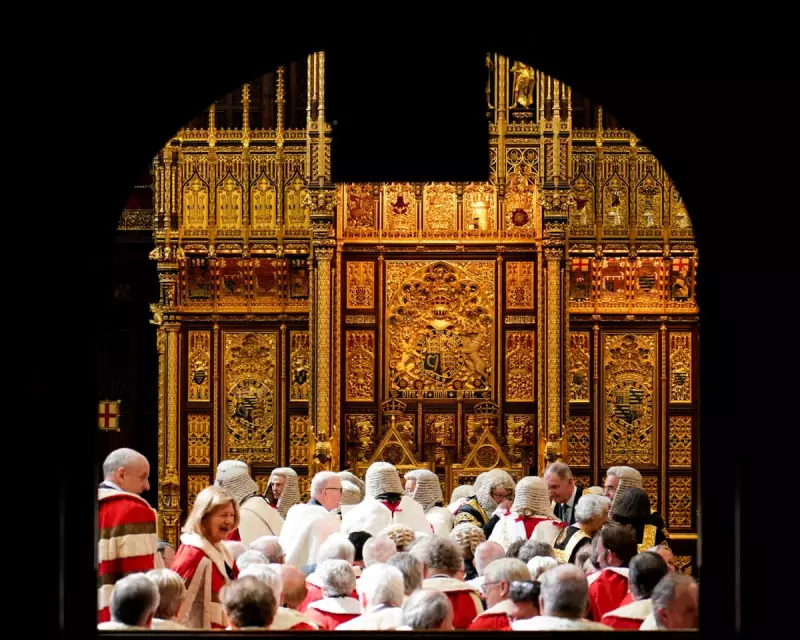
The House of Lords has become the centre of a political storm after blocking Angela Rayner's controversial employment bill, with hereditary peers defending their decision as being in the best interests of British business.
The Business Experience Argument
Nicholas True, Leader of the Opposition in the House of Lords, has hit back at claims that hereditary peers are 'out of touch' for voting against the proposed workers' rights legislation. He argues that many of the peers possess substantial real-world business experience that makes them better qualified to assess the bill's impact than government ministers.
Unemployment has reached 5% with 1.7 million people now claiming unemployment benefits, creating a challenging economic backdrop for new employment legislation. The government's own analysis suggests the bill would cost businesses approximately £5,000 million annually, raising concerns about its timing and potential impact on job creation.
Broad Support Beyond the Hereditary Peers
The opposition to the employment bill extends far beyond the hereditary peers who have attracted criticism. True emphasises that Conservative, Liberal Democrat, crossbench, Unionist and non-affiliated peers all joined forces to amend the legislation.
Remarkably, the government would have suffered significant defeats even without hereditary peer participation. True states that the government would have lost by approximately 100 votes regardless of how the hereditary peers voted, suggesting widespread concern across the political spectrum.
Major Business Organisations Back the Lords' Stance
The position taken by the Lords has received backing from numerous prominent business organisations. The Federation of Small Businesses, CBI, Institute of Directors, Make UK and Care England have all expressed concerns about the proposed legislation.
Notably, former Prime Minister Sir Tony Blair has also aligned himself with those questioning the bill's economic impact. True describes the focus on hereditary peers as a 'red herring' designed to distract from the fact that fewer than two-thirds of Labour peers turned out to support their own party's legislation.
The debate highlights ongoing tensions between workers' rights protections and business competitiveness, with the Lords positioning themselves as defenders of economic pragmatism against what they perceive as potentially damaging government overreach.