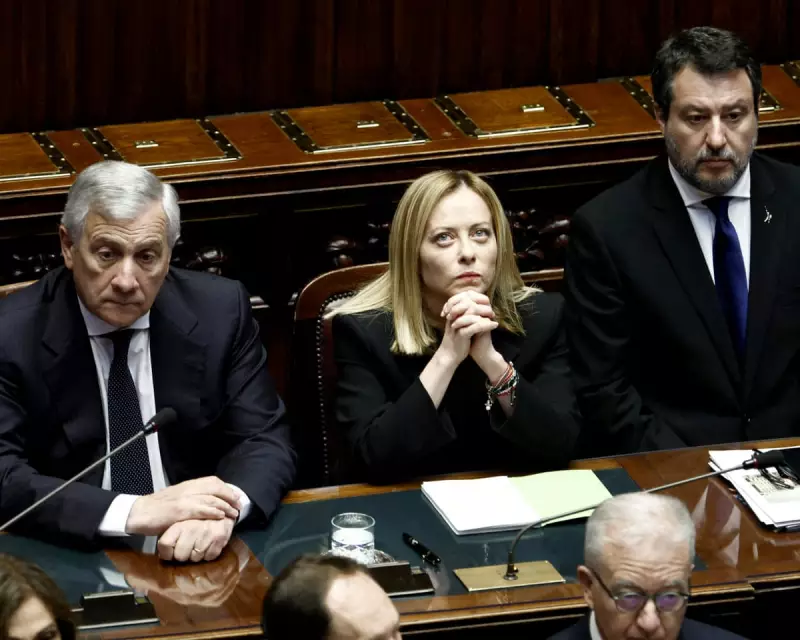
Italy's parliament has unexpectedly delayed a landmark debate on legislation that would fundamentally redefine rape by making sex without explicit consent a criminal offence.
Coalition Rift Stalls Progressive Legislation
The proposed law, which had already passed through Italy's lower house last week, was anticipated to receive final approval in the senate this week. However, the debate has been postponed until January following objections from within Prime Minister Giorgia Meloni's own coalition government.
The legislation represents a rare political agreement between Meloni and her main opponent, centre-left leader Elly Schlein. It specifically stipulates that anyone engaging in sexual acts without obtaining explicit consent could face prison sentences ranging from six to twelve years.
Salvini's Court Concerns and 'Vendetta' Fears
The delay has been orchestrated by Matteo Salvini's League party, a crucial coalition partner where Salvini serves as Deputy Prime Minister. Salvini publicly argued that the proposed law would 'clog up the courts' and could be weaponised for personal revenge.
While expressing theoretical support for the law's principles, Salvini contended the current draft 'leaves too much open to the individual's interpretation'. He warned it risked fuelling conflicts rather than reducing violence, suggesting it could enable false accusations without any actual abuse occurring.
The controversy highlights a significant gap in Italy's current legal framework. Presently, Italian law defines sexual violence as forcing someone into sexual acts through violence, threats, or abuse of authority. The criminal code does not explicitly recognise the absence of consent as sufficient grounds for prosecution.
Political Fallout and Cultural Shifts
The postponement comes amid political turbulence for Meloni's government, following significant electoral losses in southern regions Campania and Puglia to Schlein's Democratic party-led alliance.
Schlein revealed she had confronted Meloni about the delay, demanding she honour their agreement on the legislation. Schlein stated it would be 'a serious thing' if women were 'paying the price' for the government's electoral setbacks. She has conditionally accepted an invitation to Meloni's Atreju festival in December, promising a face-to-face debate on this issue.
Government ministers have attempted to downplay the controversy. Family Minister Eugenia Roccella suggested taking more time to 'pass a convincing bill', while Justice Minister Carlo Nordio attributed the delay to technical issues, maintaining the legislation would ultimately be approved.
The setback occurred despite parliament successfully approving a separate bill this week making femicide a distinct crime punishable by life imprisonment. Both measures were intended to mark the International Day for the Elimination of Violence Against Women on 25 November.