
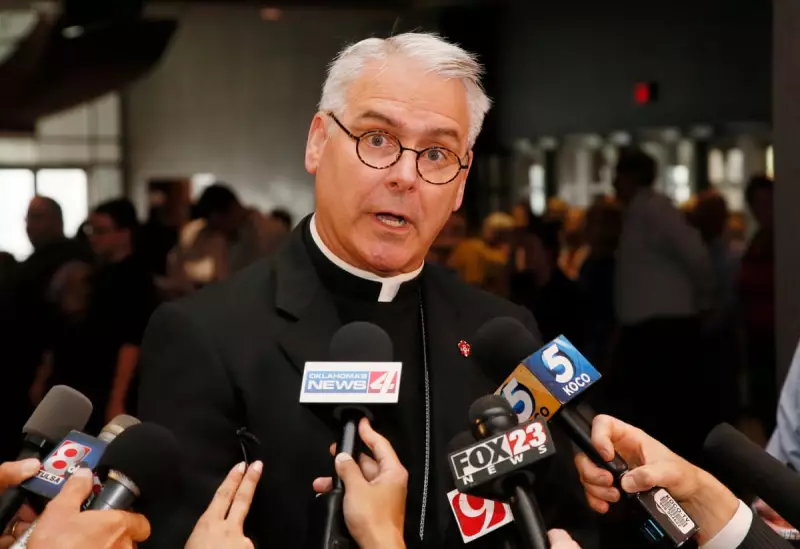
In a significant development for American Catholicism, the United States Conference of Catholic Bishops has elected Archbishop Paul Coakley of Oklahoma City as their new president, signalling a continued conservative direction for the nation's Catholic leadership.
Conservative Leadership Amid Political Challenges
The election took place on Tuesday and serves as a clear indicator of the bishops' priorities during Donald Trump's second presidential term. By selecting Archbishop Coakley, the conference has reinforced its conservative stance while simultaneously advocating for more compassionate immigration policies from the current administration.
Archbishop Coakley emerged victorious after three rounds of voting, defeating the centrist candidate Bishop Daniel Flores of Brownsville, Texas. Bishop Flores, who represents a growing Latino constituency within the American Catholic Church, was subsequently elected as vice-president.
A Known Conservative Voice
Coakley's election comes as no surprise to observers of American Catholic politics. He had been viewed as a strong contender for the leadership position since his election as conference secretary in 2022, which placed him as the third-ranking official.
The Oklahoma archbishop serves as an adviser to the Napa Institute, an organisation known for gathering conservative Catholic powerbrokers. His conservative credentials were further demonstrated in 2018 when he publicly supported Archbishop Carlo Maria Viganò, an outspoken critic of the late Pope Francis who was later excommunicated for divisive positions.
Half of the ten candidates on the ballot represented the conference's conservative wing, reflecting what experts describe as a hierarchy "split down the middle," according to David Gibson, director of Fordham University's Center on Religion and Culture.
Immigration: A Unifying Concern
Despite internal divisions on many social issues, immigration represents a rare area of consensus among American Catholic leaders. The bishops plan to discuss immigration during their current meeting, with even the most conservative members standing in support of migrants' rights.
The conference faces the challenge of determining how strongly to address the Trump administration's stringent immigration measures. Fear of immigration enforcement has already affected mass attendance in some parishes, while local clergy struggle to administer sacraments to detained immigrants.
In a significant development, US Catholic bishops were forced to close their long-standing refugee resettlement programme after the Trump administration cut federal funding for such assistance.
The bishops have sent a letter to Pope Leo XIV, stating their commitment to "stand with migrants and defend everyone's right to worship free from intimidation." The letter elaborated that while they support "secure and orderly borders and law enforcement actions in response to dangerous criminal activity," they "cannot remain silent in this challenging hour while the right to worship and the right to due process are undermined."
Pope Leo recently called for "deep reflection" in the United States regarding the treatment of detained migrants, noting that "many people who have lived for years and years and years, never causing problems, have been deeply affected by what is going on right now."
Archbishop Coakley succeeds Archbishop Timothy Broglio, who led the conference for a three-year term. The new president takes office at a time when the American Catholic Church faces significant challenges both internally and in its relationship with the wider political landscape.




